
Traditional Argentine Dishes
Learn to prepare Bagna cauda: traditional Argentine recipe
A creamy and aromatic bagna cauda, prepared with garlic, anchovies, olive oil, butter, and milk cream. This traditional recipe of Piedmontese roots is served hot to dip vegetables and bread, and is perfect for sharing around the table.
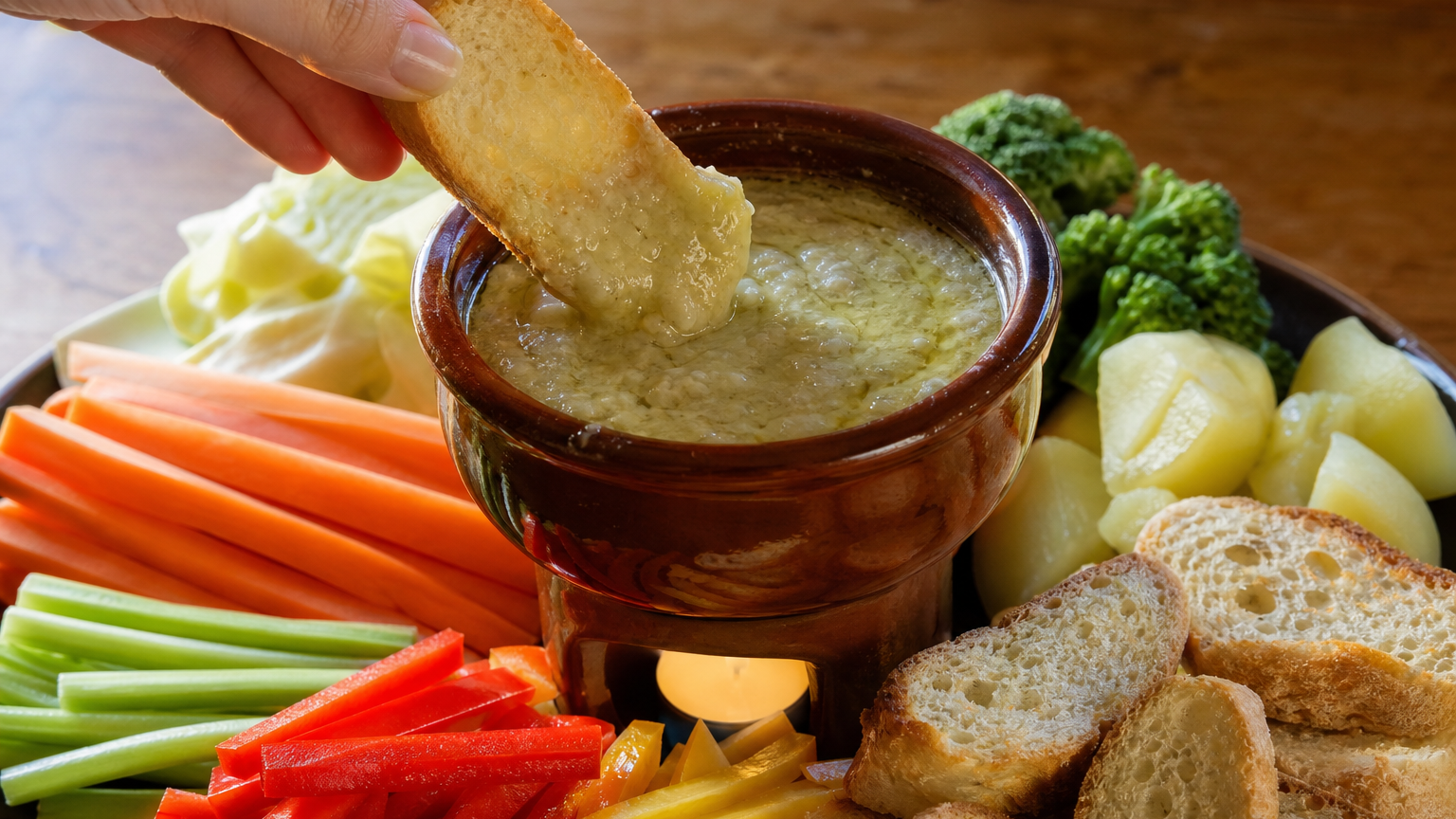
Bagna cauda is a typical hot sauce of Argentine cuisine of Piedmontese influence. The secret lies in cooking the garlic slowly, melting the anchovies completely, and keeping the sauce warm, without letting it boil.
01
Ingredients
Have everything ready before you begin.
- ✓8 anchovy fillets in oil
- ✓8 cloves of garlic
- ✓120 ml of olive oil
- ✓60 g of unsalted butter
- ✓200 ml of milk cream
- ✓Black pepper, to taste
- ✓Salt, only if necessary
- ✓2 carrots
- ✓2 stalks of celery
- ✓1 red bell pepper
- ✓1 yellow bell pepper
- ✓1/2 broccoli
- ✓2 medium potatoes
- ✓200 g of white cabbage
- ✓1 baguette or homemade bread of approximately 300 g
02
Step-by-step method
- 01
Wash all the vegetables thoroughly
Wash all the vegetables thoroughly. Peel the carrots and potatoes, remove the seeds and white parts of the bell peppers, separate the broccoli into small florets, and cut the cabbage into manageable pieces. Cut the celery into sticks.
- 02
Cut the potatoes into large cubes and place them in a pot with cold water
Cut the potatoes into large cubes and place them in a pot with cold water. Bring the water to a gentle boil and cook for 10 to 12 minutes, until the potatoes are tender but firm. Remove them with a slotted spoon and let them drain.
- 03
Cook the broccoli florets in the same water or in another pot for...
Cook the broccoli florets in the same water or in another pot for 3 or 4 minutes. Drain them when they still have their green color and a slight firmness.
- 04
Serve the carrots, celery, bell peppers, and cabbage raw
Serve the carrots, celery, bell peppers, and cabbage raw. In this recipe, the carrots are used raw to provide a crunchy contrast.
- 05
Peel the garlic cloves, cut them in half, and remove the central sprout...
Peel the garlic cloves, cut them in half, and remove the central sprout if it is green or very pronounced. Chop them very finely.
- 06
Place the olive oil, butter, and chopped garlic in a small, thick-bottomed saucepan
Place the olive oil, butter, and chopped garlic in a small, thick-bottomed saucepan. Cook over low heat for 8 to 10 minutes, stirring, until the garlic softens and perfumes the oil. Do not let it brown.
- 07
Add the anchovy fillets, previously drained slightly
Add the anchovy fillets, previously drained slightly. Stir over low heat until they dissolve completely and integrate with the garlic, butter, and oil.
- 08
Add the milk cream gradually while mixing
Add the milk cream gradually while mixing. Cook for another 5 minutes over very low heat, without letting the sauce boil vigorously.
- 09
Add black pepper and taste the sauce
Add black pepper and taste the sauce. Add salt only if necessary, as the anchovies provide enough saltiness.
- 10
If you want a finer texture, pass the sauce through a strainer or blend it briefly...
If you want a finer texture, pass the sauce through a strainer or blend it briefly with a hand blender.
- 11
Cut the baguette or homemade bread into thick slices
Cut the baguette or homemade bread into thick slices. Serve it at room temperature or warm it for a few minutes to make it slightly crispy on the outside and tender on the inside.
- 12
Arrange the carrots, celery, bell peppers, cabbage, potatoes, and broccoli in a large dish
Arrange the carrots, celery, bell peppers, cabbage, potatoes, and broccoli in a large dish. Place the bagna cauda in a clay pot or a heat-resistant container and keep it warm, without boiling.
- 13
Serve the sauce in the center of the table
Serve the sauce in the center of the table. Each diner can dip the vegetables and bread in the bagna cauda, letting the sauce drain slightly before eating.
- Always cook the garlic over low heat and avoid browning it to prevent it from becoming bitter.
- The anchovies must melt completely into the sauce and not remain in large pieces.
- Keep the bagna cauda warm, but not boiling, to preserve its creamy texture and prevent the fat from separating.
- The potatoes and broccoli should remain firm so that they can be dipped without breaking.
- If you use a container without a heat source, reheat the sauce gently when necessary.
- Bagna cauda is best enjoyed freshly prepared and shared in the center of the table.
- If there is leftover sauce, store it covered in the refrigerator and reheat it very slowly the next day, without letting it boil.