
Traditional French Dishes
Learn to prepare Brasseries Kronenbourg S.A.S.: traditional French recipe
Make at home a French-inspired lager, light, golden and refreshing, with moderate bitterness and an elegant floral and spicy profile of Saaz and Hallertau Mittelfrüh hops. An artisanal interpretation, not a copy of Kronenbourg's industrial formula.
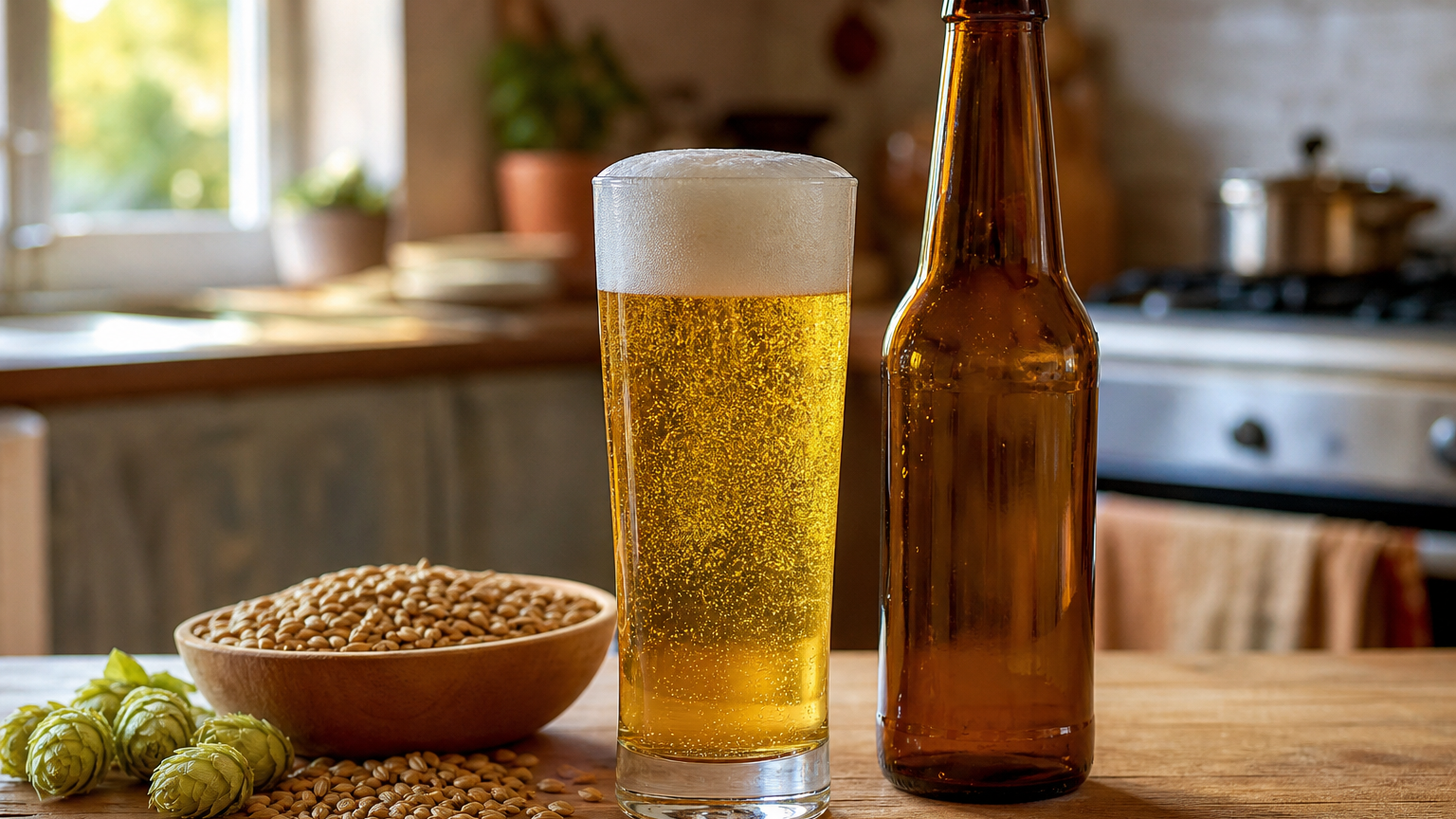
This recipe recreates approximately 20 liters of a clean and balanced lager, inspired by the popular profile of light French beers. Controlled fermentation and cold maturation require patience, but help achieve a clear, dry and refreshing result.
01
Ingredients
Have everything ready before you begin.
- ✓4 kg of Pilsner malt
- ✓500 g of wheat malt
- ✓150 g of Carahell malt
- ✓23 liters of water for mashing
- ✓10 liters of water for sparging
- ✓5 g of brewer's salt
- ✓25 g of Saaz hop
- ✓10 g of Hallertau Mittelfrüh hop
- ✓1 packet of dry lager yeast for 20 liters
- ✓5 g of yeast nutrient
- ✓120 g of sugar for carbonation
02
Step-by-step method
- 01
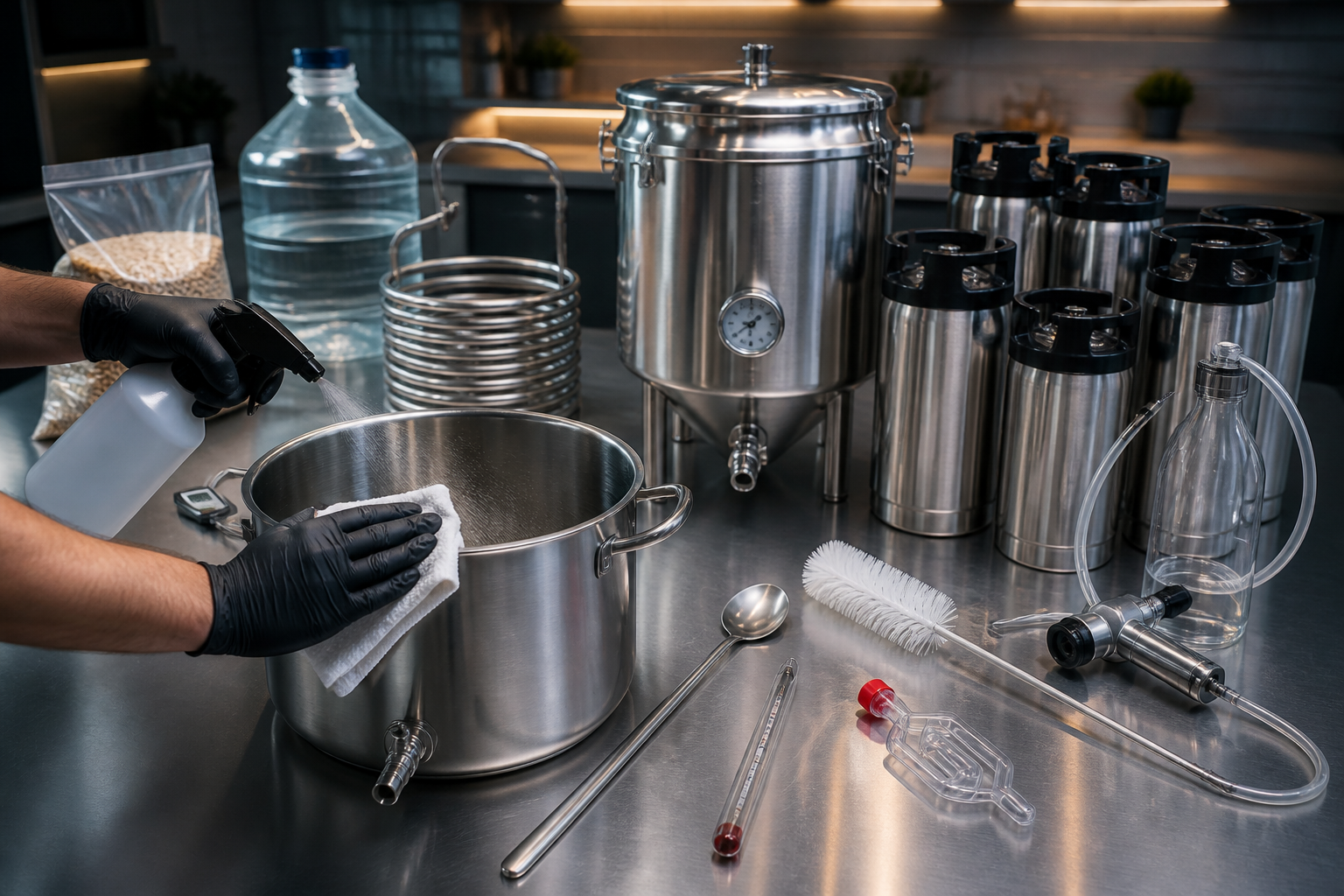
Disinfect equipment
Disinfect the pot, fermenter, spoon, hydrometer, airlock, siphon and bottles. Use low-mineral, odor-free potable water if you don't have brewing water.
- 02
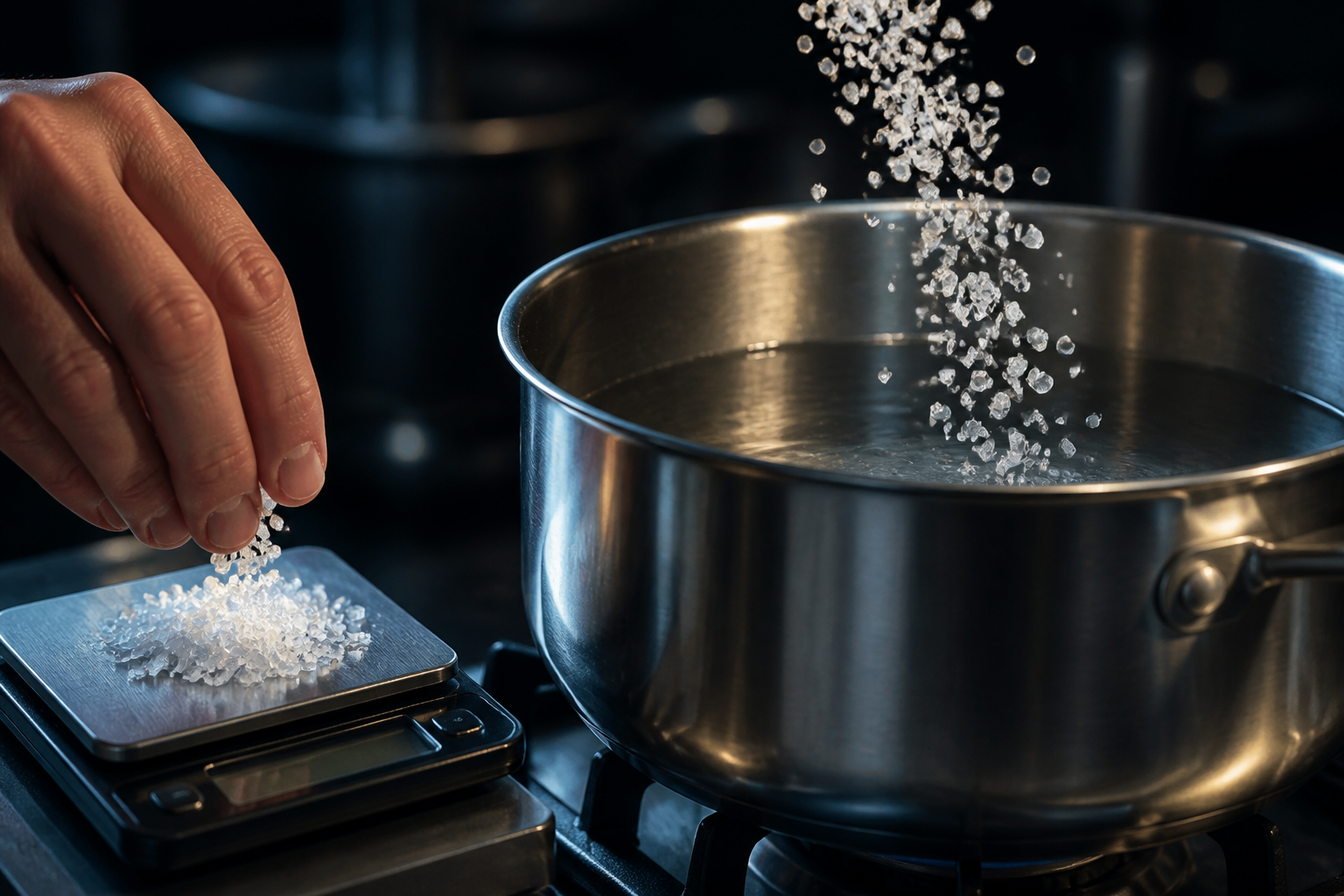
Adjust water
Add 5 g of brewer's salt to the water intended for mashing to gently adjust its mineral profile.
- 03
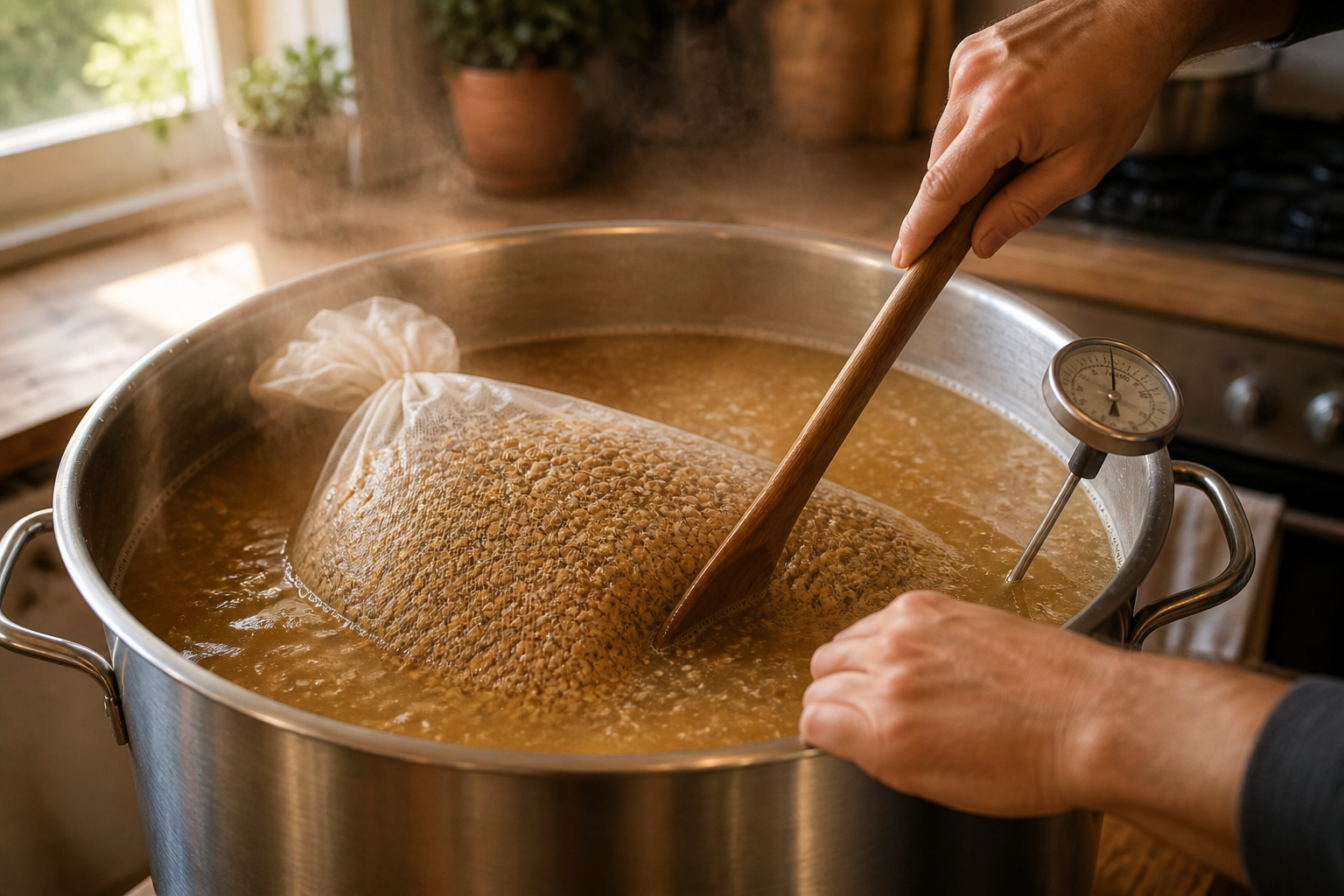
Mash grains
Heat the 23 liters of water to around 72 °C. Place the Pilsner malt, wheat malt, and Carahell malt in the grain bag, submerge them while stirring to avoid lumps, and keep the mixture around 65 °C for 60 minutes.
- 04
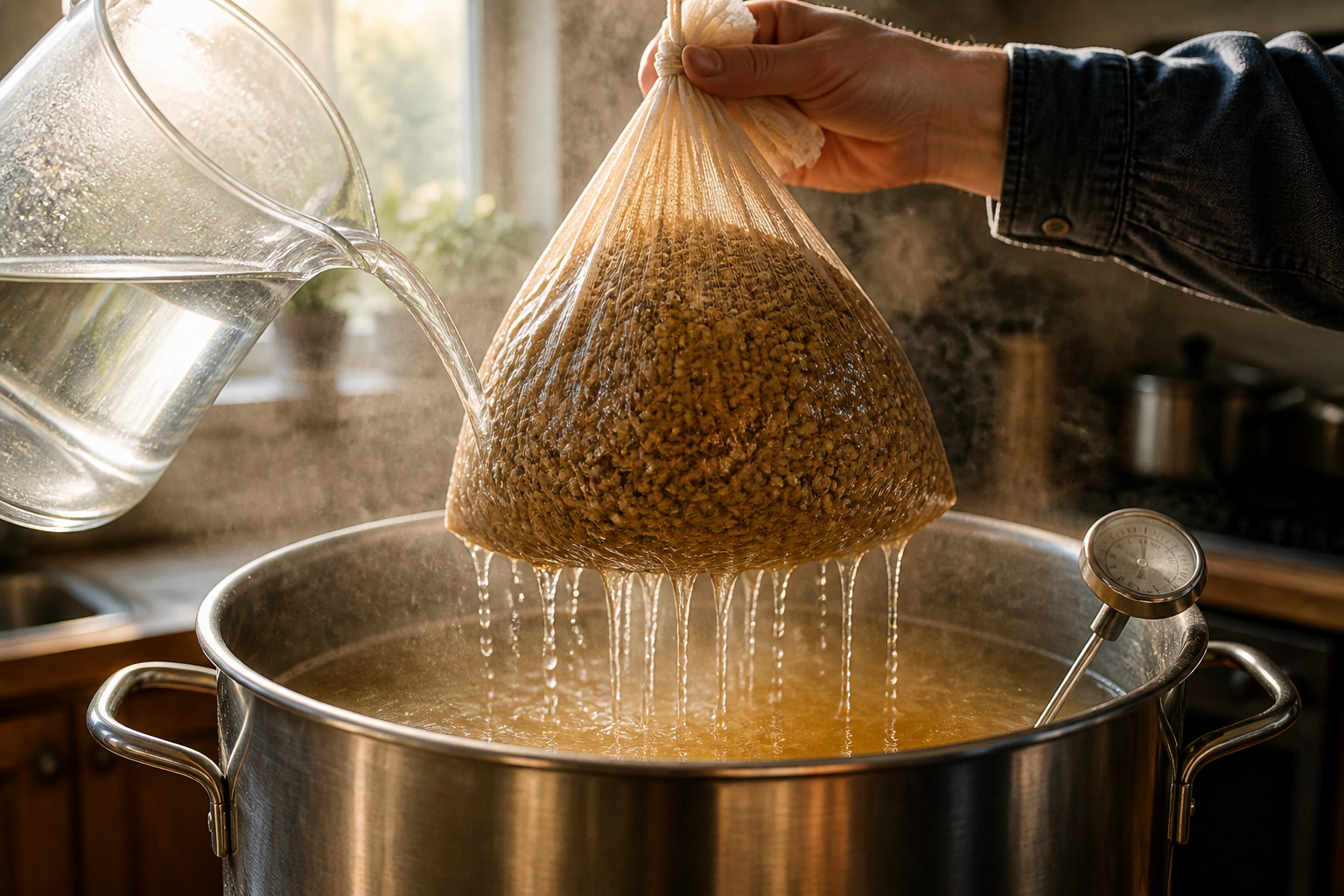
Sparge grain
Avoid exceeding 68 °C. Let the bag drain without squeezing it and gently rinse the grains with the 10 liters of sparge water, heated to approximately 75 °C.
- 05
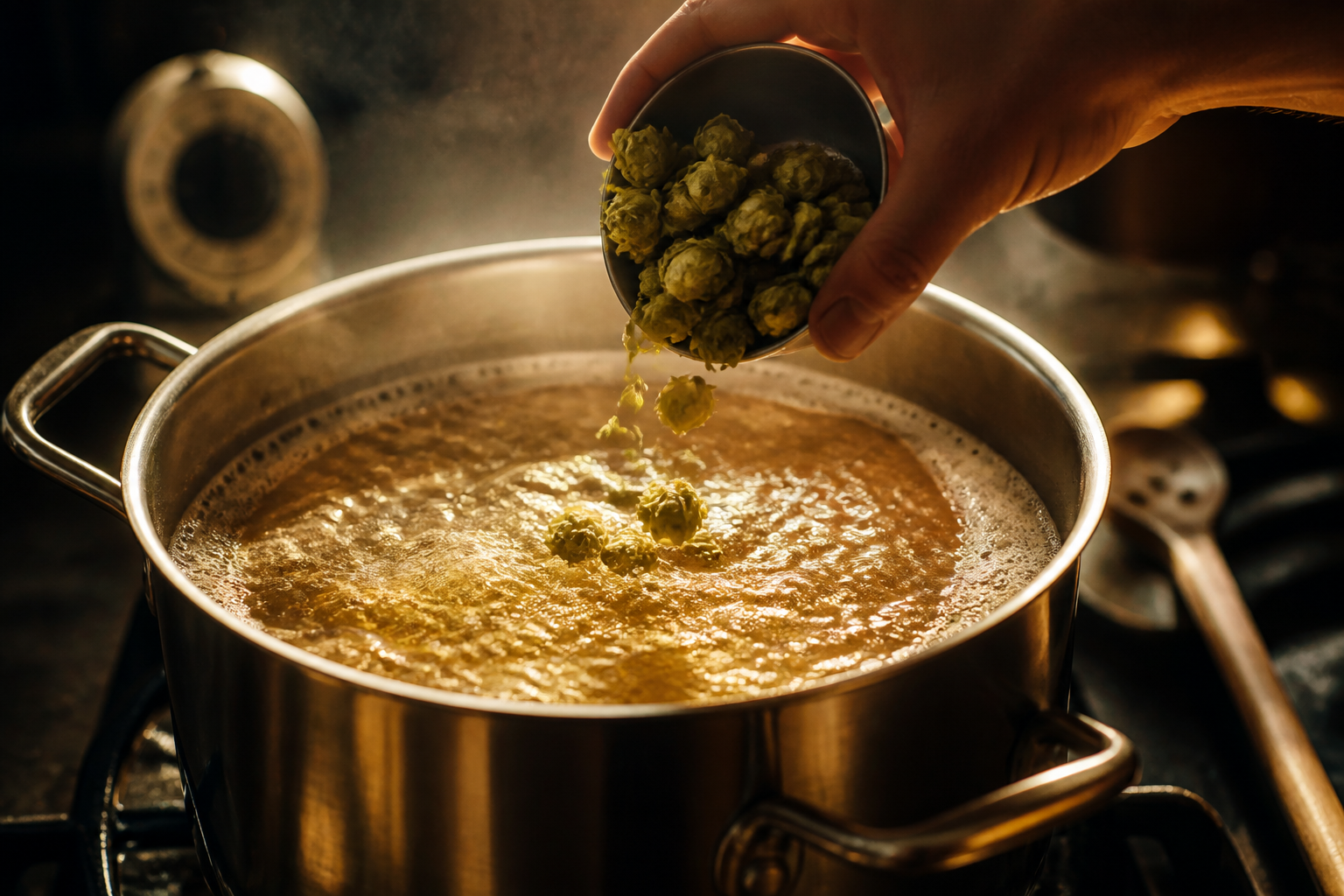
Boil wort
Remove the grains and bring the wort to a boil. When it boils steadily, add 25 g of Saaz hop and maintain the boil for 60 minutes, watching that the foam doesn't overflow.
- 06
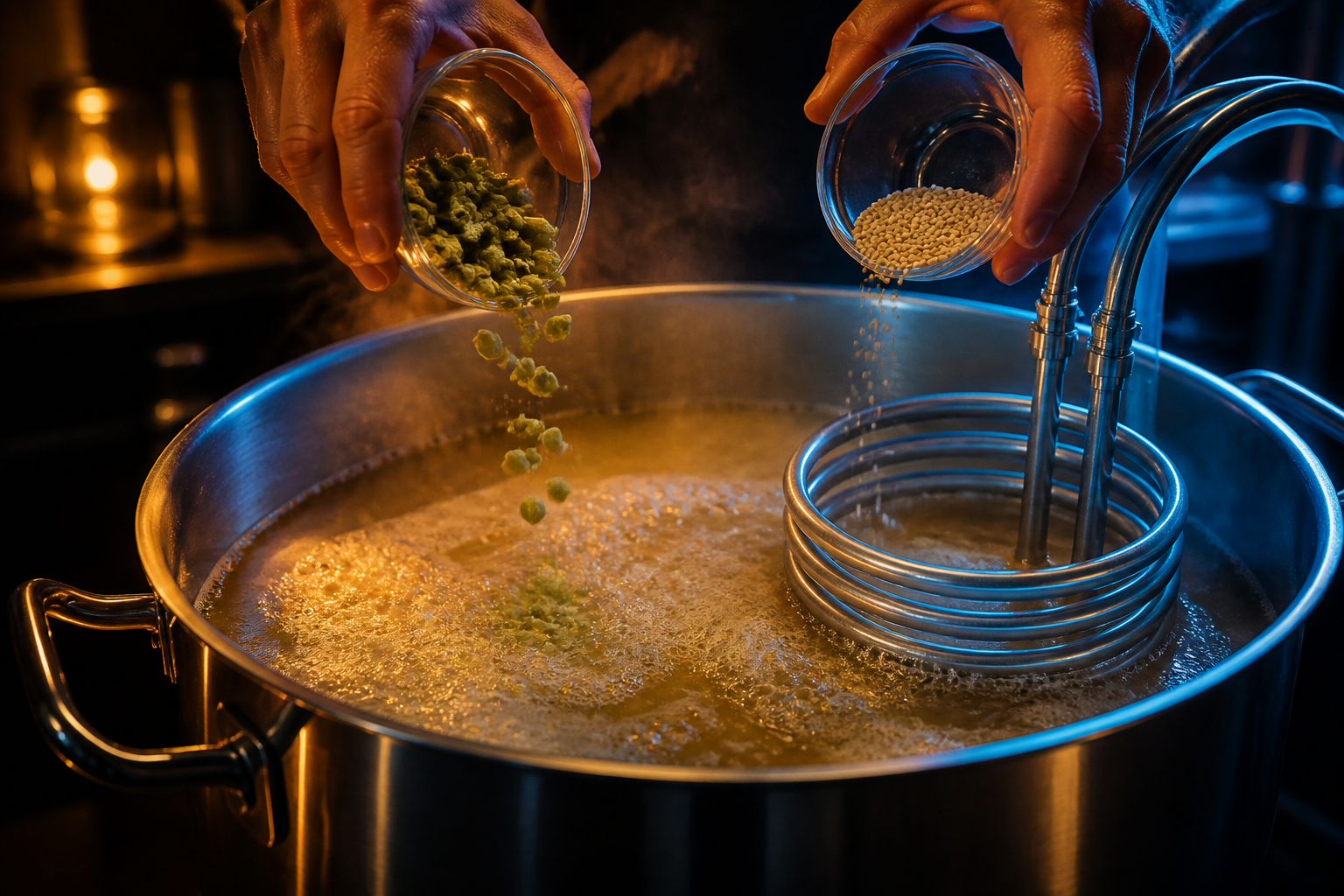
Add hop and nutrient
When 10 minutes are left to finish the boil, incorporate 10 g of Hallertau Mittelfrüh hop and 5 g of yeast nutrient.
- 07
Rapidly cool wort
Turn off the heat after completing the 60 minutes and cool the wort as quickly as possible to around 10-12 °C.
- 08
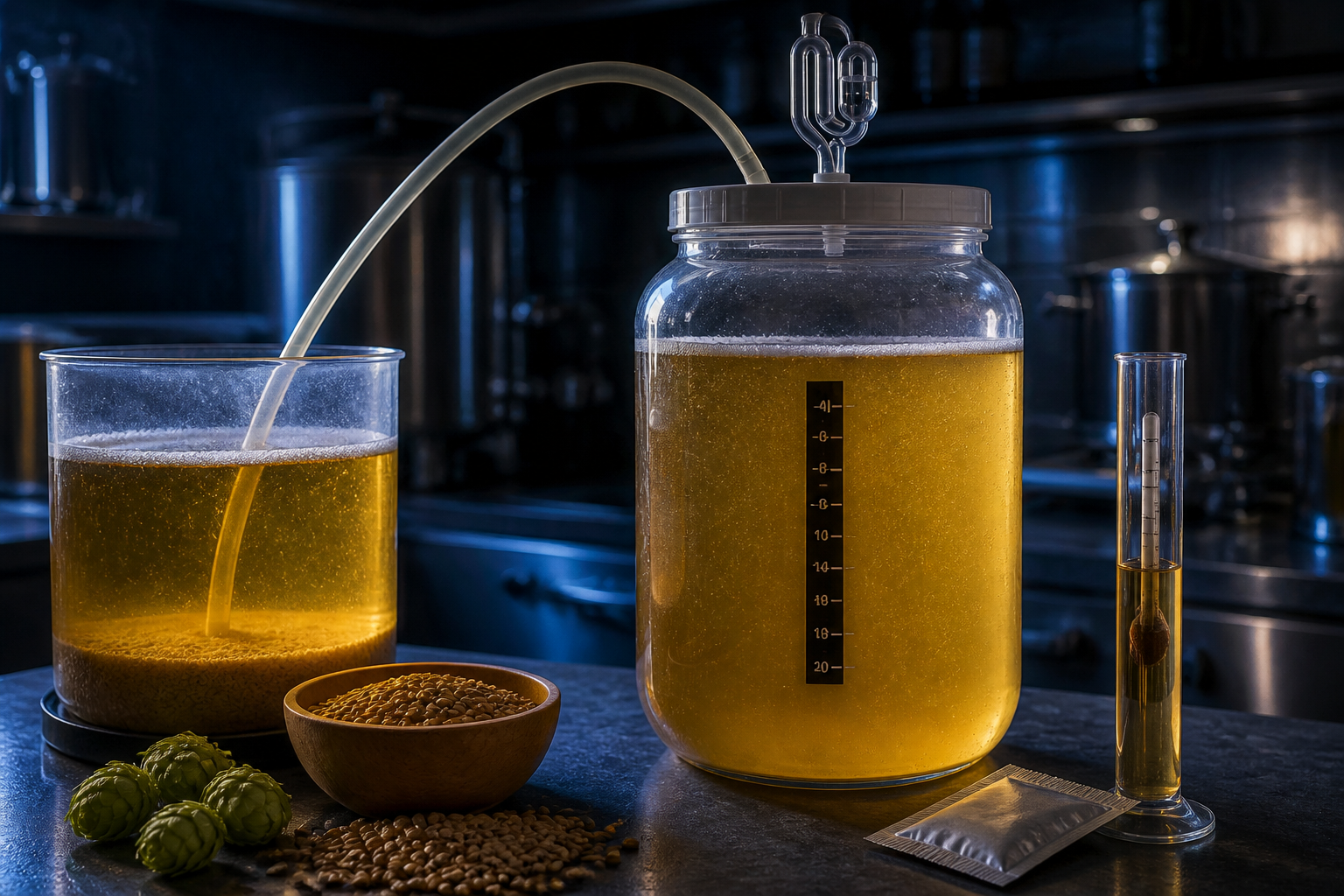
Measure initial density
Transfer the cooled wort to the disinfected fermenter, leaving behind the sediment at the bottom, and measure the initial density with the hydrometer. A reading close to 1.045 may be reasonable, although it will vary depending on the equipment's efficiency.
- 09
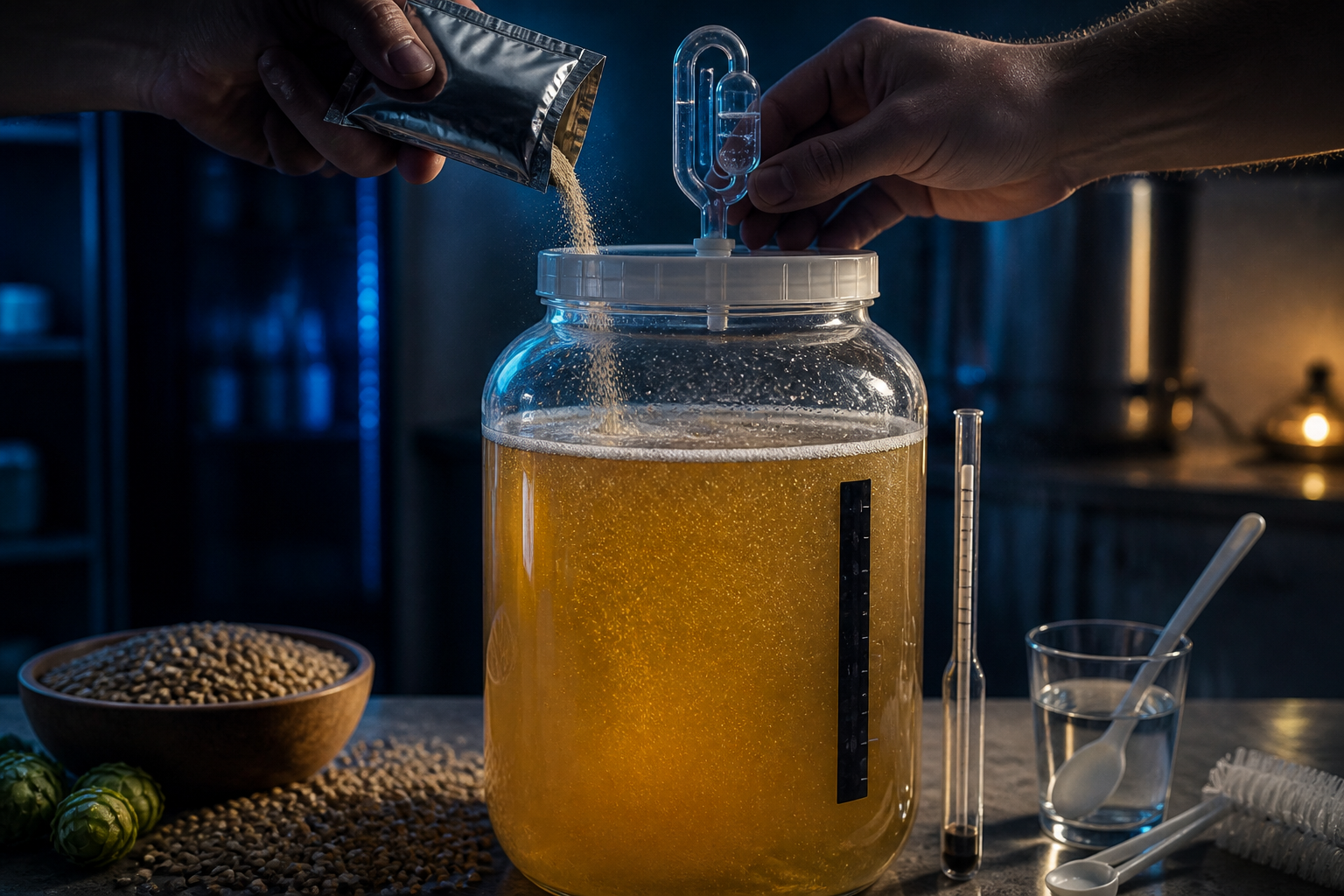
Pitch yeast
Add the lager yeast when the wort is between 10 and 12 °C. Close the fermenter, install the airlock, and place it in a dark, stable location.
- 10
Ferment in cold
Maintain fermentation between 10 and 12 °C for the first 10 days. When activity decreases and density approaches 1.010, gradually increase the temperature to 15-16 °C over two days.
- 11
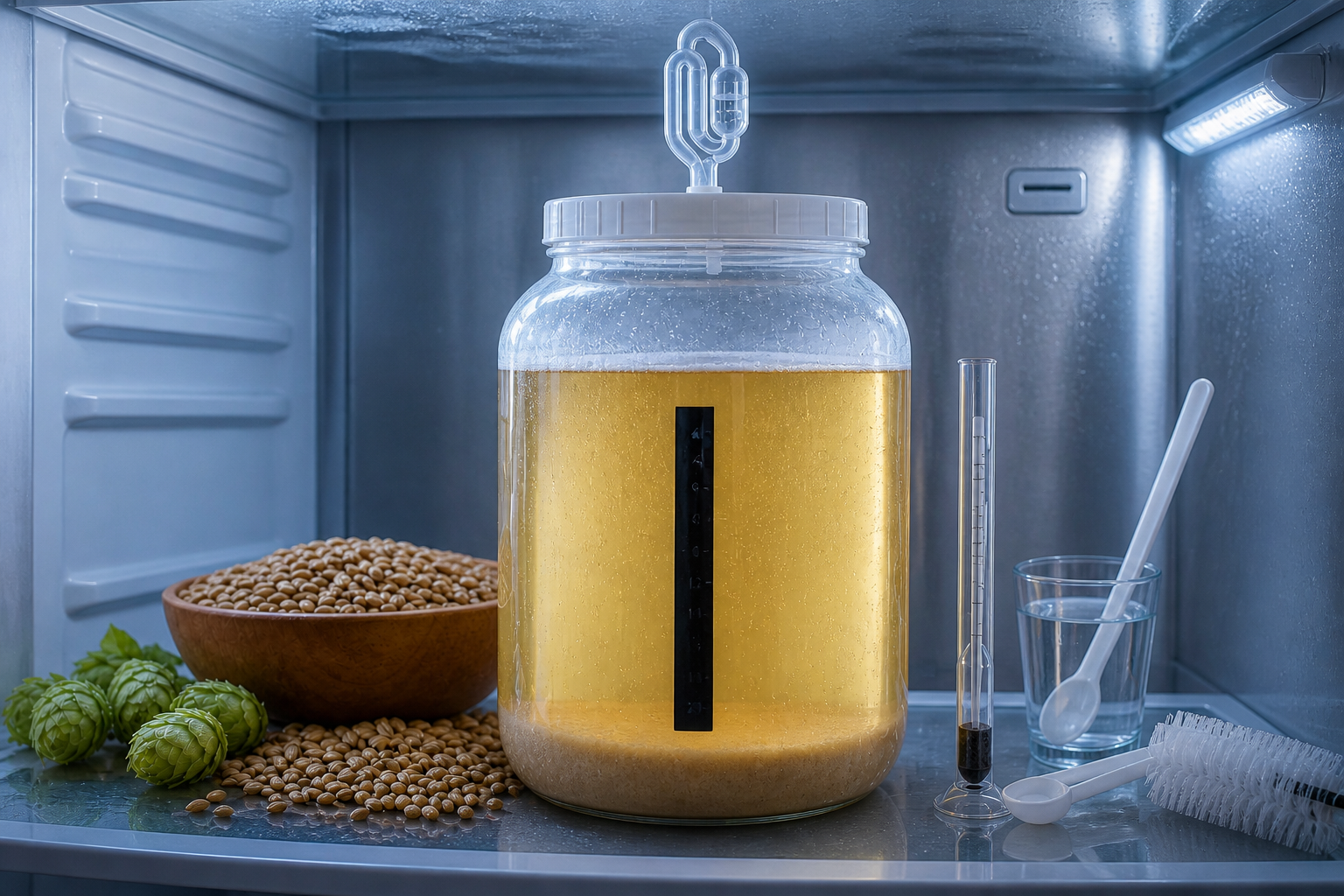
Cold mature
Afterwards, slowly cool the beer to 2-4 °C and let it mature for 2 to 4 weeks. Don't bottle while the density is still changing; it should remain stable for at least two consecutive days.
- 12
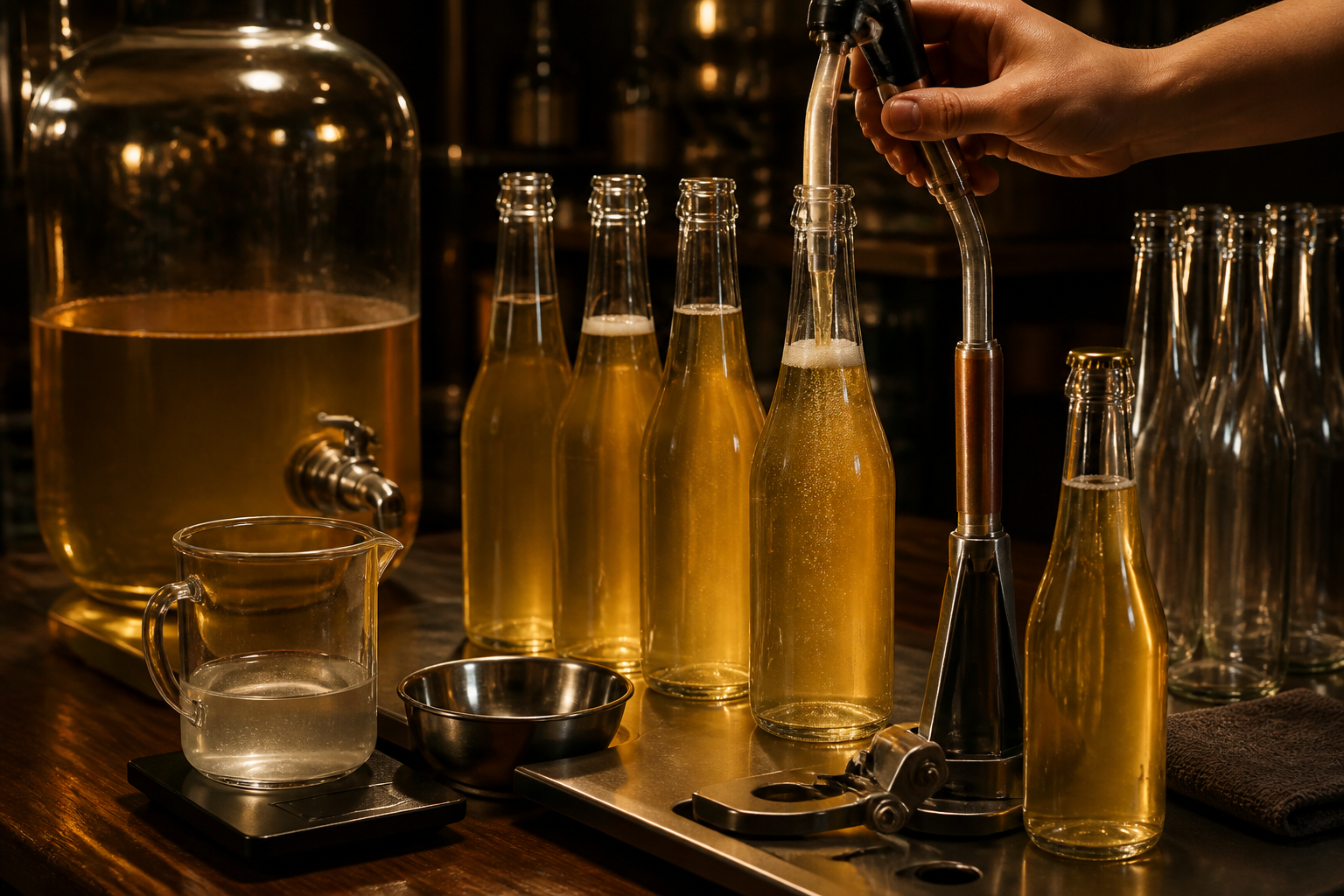
Prepare carbonation
Dissolve the 120 g of sugar for carbonation in a small amount of hot water. Let it cool and mix it gently with the beer in a disinfected container to avoid incorporating oxygen.
- 13
Bottle beer
Fill pressure-resistant bottles, leaving about 3 cm of space at the top, and close them immediately. Let them sit between 18 and 20 °C for 10-14 days to develop gas, then store them cold.
- 14
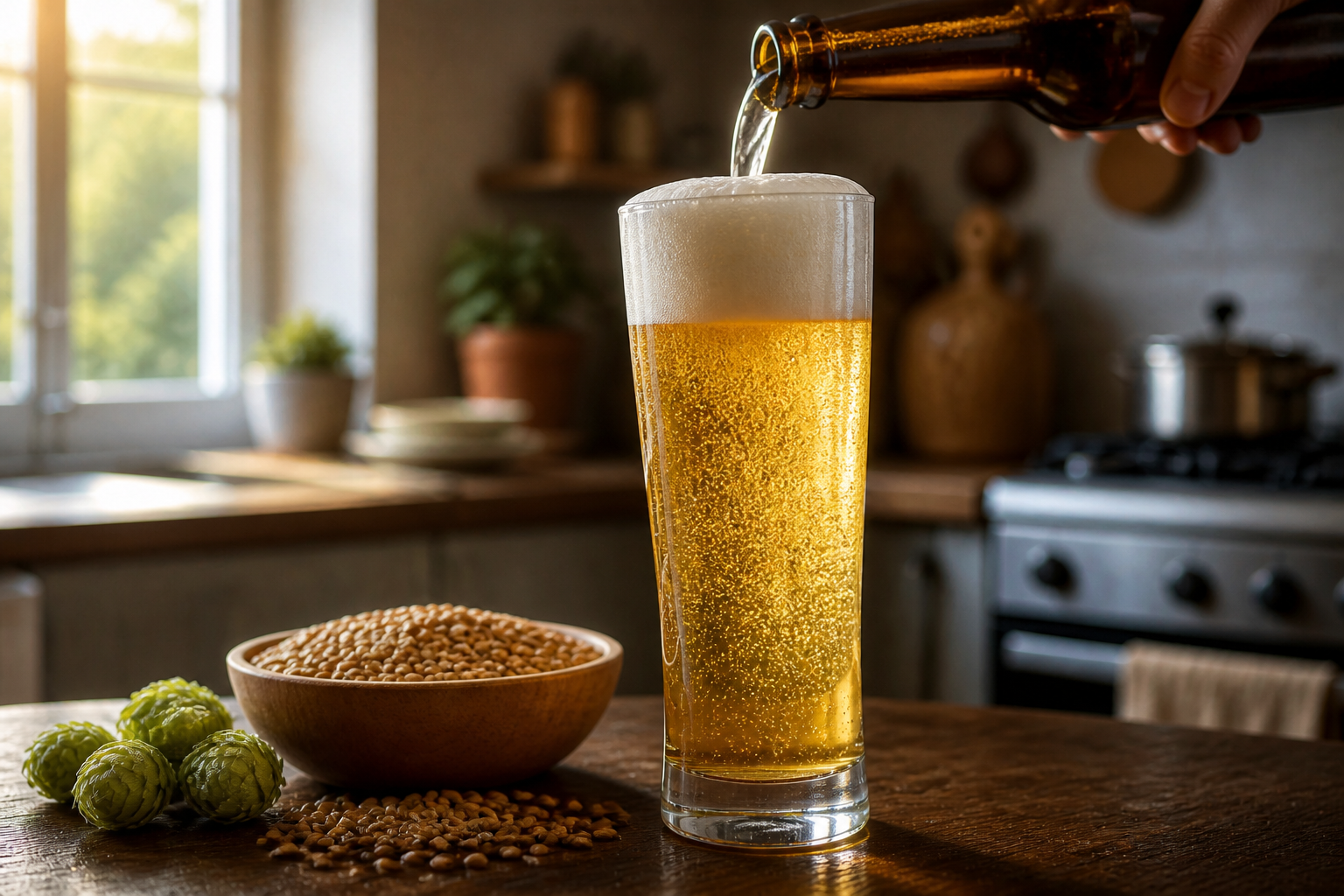
Serve lager
Serve the beer between 4 and 6 °C in a clean, slightly inclined glass. Look for a pale golden appearance, white foam, lively carbonation, floral and spicy aroma, and a light, dry, refreshing taste.
- Disinfect all equipment that comes into contact with the wort or beer.
- Avoid exceeding 68 °C during mashing and don't squeeze the grain bag forcefully.
- Maintain fermentation between 10 and 12 °C, perform the rest at 15-16 °C, and mature between 2 and 4 °C.
- Check that the density is stable before bottling.
- Use bottles designed for carbonated beverages and check that they don't leak or have excess pressure.
- Don't drink unfermented wort.
- If you don't have specific cooling equipment, you can mature the beer in the refrigerator with the fermenter well closed and protected.