
Traditional Mexican Dishes
The Best Recipe for Mexican-Style Gorditas
Mexican gorditas filled with pressed pork rinds, soft corn dough, golden exterior, and a homemade tomato, serrano pepper, and cilantro stew. A traditional, abundant, and adaptable recipe to the flavors of each region.
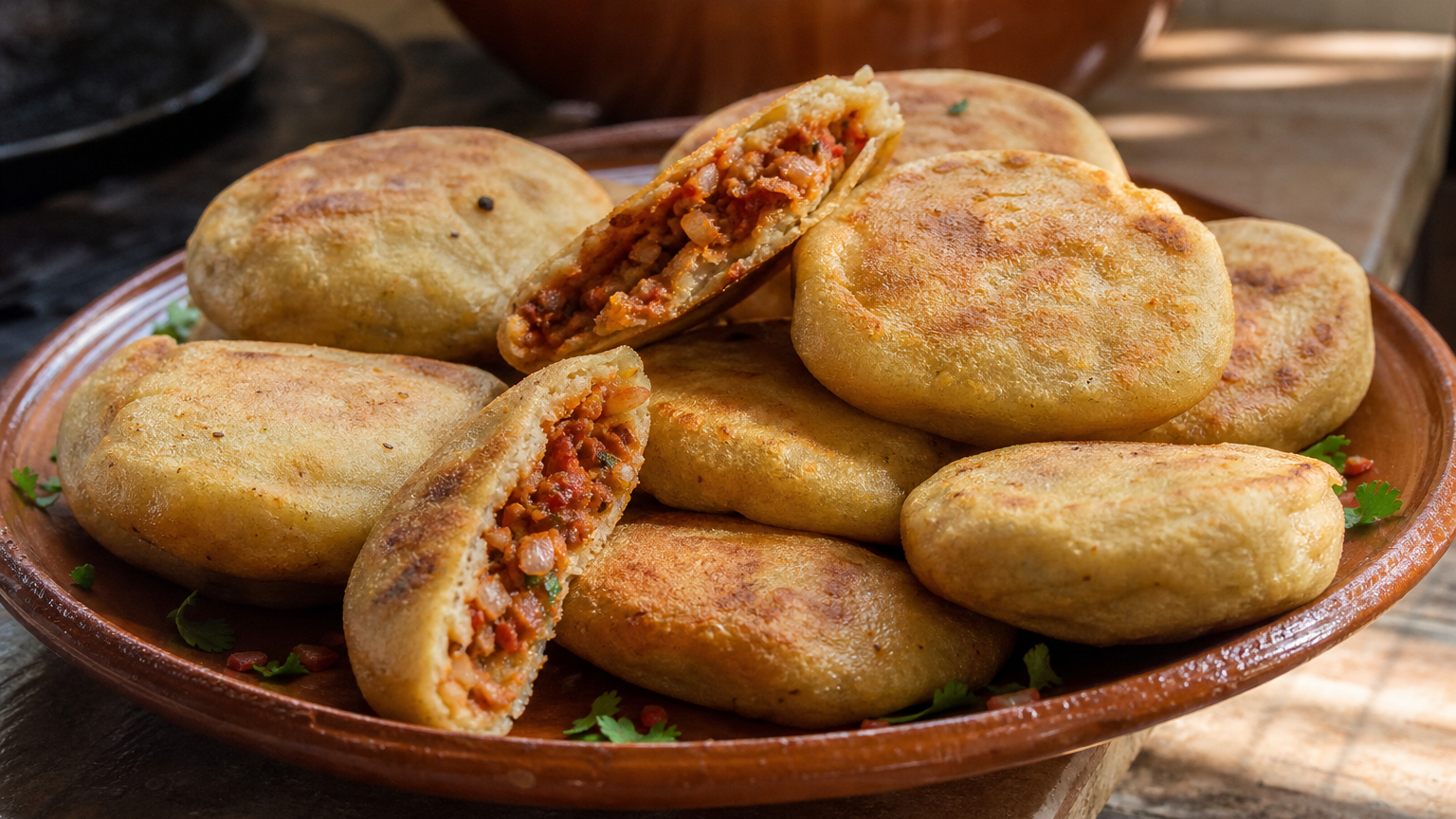
These gorditas are thicker than a tortilla and are filled with a thick stew to keep their shape. The dough is cooked on the griddle until it is golden on the outside and soft on the inside.
01
Ingredients
Have everything ready before you begin.
- ✓500 g of nixtamalized corn flour
- ✓450 ml of lukewarm water, approximately
- ✓1 teaspoon of salt
- ✓1 tablespoon of lard
- ✓350 g of pressed pork rinds
- ✓1/2 white onion finely chopped
- ✓1 serrano pepper chopped
- ✓1 clove of garlic finely chopped
- ✓2 ripe tomatoes chopped
- ✓2 tablespoons of vegetable oil for the filling
- ✓1 cup of fresh cilantro chopped
- ✓Enough vegetable oil to grease the griddle and brown the gorditas
02
Step-by-step method
- 01
Prepare the filling
Prepare the filling. Heat a skillet over medium heat, add the 2 tablespoons of vegetable oil, and incorporate the onion. Cook for 3 or 4 minutes, until it is transparent and soft.
- 02
Add the garlic and serrano pepper
Add the garlic and serrano pepper. Cook for 1 minute more. To reduce the spiciness, remove the seeds from the pepper before chopping it.
- 03
Add the tomatoes and cook for 5 to 7 minutes, until they partially disintegrate and form a thick sauce, without excess liquid.
Add the tomatoes and cook for 5 to 7 minutes, until they partially disintegrate and form a thick sauce, without excess liquid.
- 04
Incorporate the shredded or chopped pressed pork rinds
Incorporate the shredded or chopped pressed pork rinds. Mix and cook for 8 to 10 minutes, stirring occasionally.
- 05
Taste the stew before adding salt, as the pressed pork rinds are usually seasoned. If it is too dry, add 1 or 2 tablespoons of water, only if necessary. Turn off the heat, add the cilantro, and set aside.
Taste the stew before adding salt, as the pressed pork rinds are usually seasoned. If it is too dry, add 1 or 2 tablespoons of water, only if necessary. Turn off the heat, add the cilantro, and set aside.
- 06
Prepare the dough
Prepare the dough. Place the corn flour and salt in a large container. Gradually add the lukewarm water while mixing with your hand.
- 07
When the dough starts to form, incorporate the lard and knead for 4 or 5 minutes. It should be soft, moist, and flexible, without sticking too much to your fingers.
When the dough starts to form, incorporate the lard and knead for 4 or 5 minutes. It should be soft, moist, and flexible, without sticking too much to your fingers.
- 08
If the dough cracks when forming a ball, add a few more drops of water
If the dough cracks when forming a ball, add a few more drops of water. If it sticks, add a small amount of flour. Cover the dough and let it rest for 10 minutes.
- 09
Divide the dough into 10 equal portions and form balls
Divide the dough into 10 equal portions and form balls. Keep them covered to prevent drying.
- 10
Flatten each ball between your hands until you form a thick disk, about 10 cm in diameter and approximately 1 cm thick. You can also use a tortilla press, without pressing too hard.
Flatten each ball between your hands until you form a thick disk, about 10 cm in diameter and approximately 1 cm thick. You can also use a tortilla press, without pressing too hard.
- 11
Place a generous portion of the filling in the center, leaving a border of about 1 cm free. Bring the edges towards the center and close them carefully.
Place a generous portion of the filling in the center, leaving a border of about 1 cm free. Bring the edges towards the center and close them carefully.
- 12
Seal the union and gently flatten again to recover the round shape. If a crack appears, close it with your lightly moistened fingers.
Seal the union and gently flatten again to recover the round shape. If a crack appears, close it with your lightly moistened fingers.
- 13
Heat a griddle or heavy skillet over medium heat and grease it with a very thin layer of vegetable oil.
Heat a griddle or heavy skillet over medium heat and grease it with a very thin layer of vegetable oil.
- 14
Place the gorditas without piling them up
Place the gorditas without piling them up. Cook them for 5 to 6 minutes on the first side, until golden spots appear. Flip them over and cook for another 5 or 6 minutes.
- 15
Turn the edges for a few moments so that they cook evenly. For a more golden and crispy crust, brush a few drops of oil on both sides during the last minute.
Turn the edges for a few moments so that they cook evenly. For a more golden and crispy crust, brush a few drops of oil on both sides during the last minute.
- 16
Remove the gorditas and let them rest for a moment on a plate covered with a clean cloth. Serve them hot, as is or with a lateral slit to add a little more cilantro.
Remove the gorditas and let them rest for a moment on a plate covered with a clean cloth. Serve them hot, as is or with a lateral slit to add a little more cilantro.
- Add the water gradually, as absorption may vary depending on the flour.
- The filling should be thick and moist, but not liquid, to avoid breaking the dough.
- Cook over medium constant heat: a griddle that is too hot will brown the surface before the dough is cooked inside.
- Keep the portions of dough covered while forming the gorditas to prevent them from drying out.
- You can substitute the flour with fresh tortilleria dough; in that case, you may need a little less water.
- The lard can be substituted with a tablespoon of vegetable oil.
- The pressed pork rinds can be changed for cooked beans or another thick stew, avoiding fillings with too much broth.