
Traditional Spanish Dishes
The best recipe for Salmorejo in the style of Spain
A cold Andalusian cream, thick and silky, where ripe tomato meets olive oil, bread, and a touch of garlic. It is served with cooked egg and serrano ham for a traditional finish full of contrast.
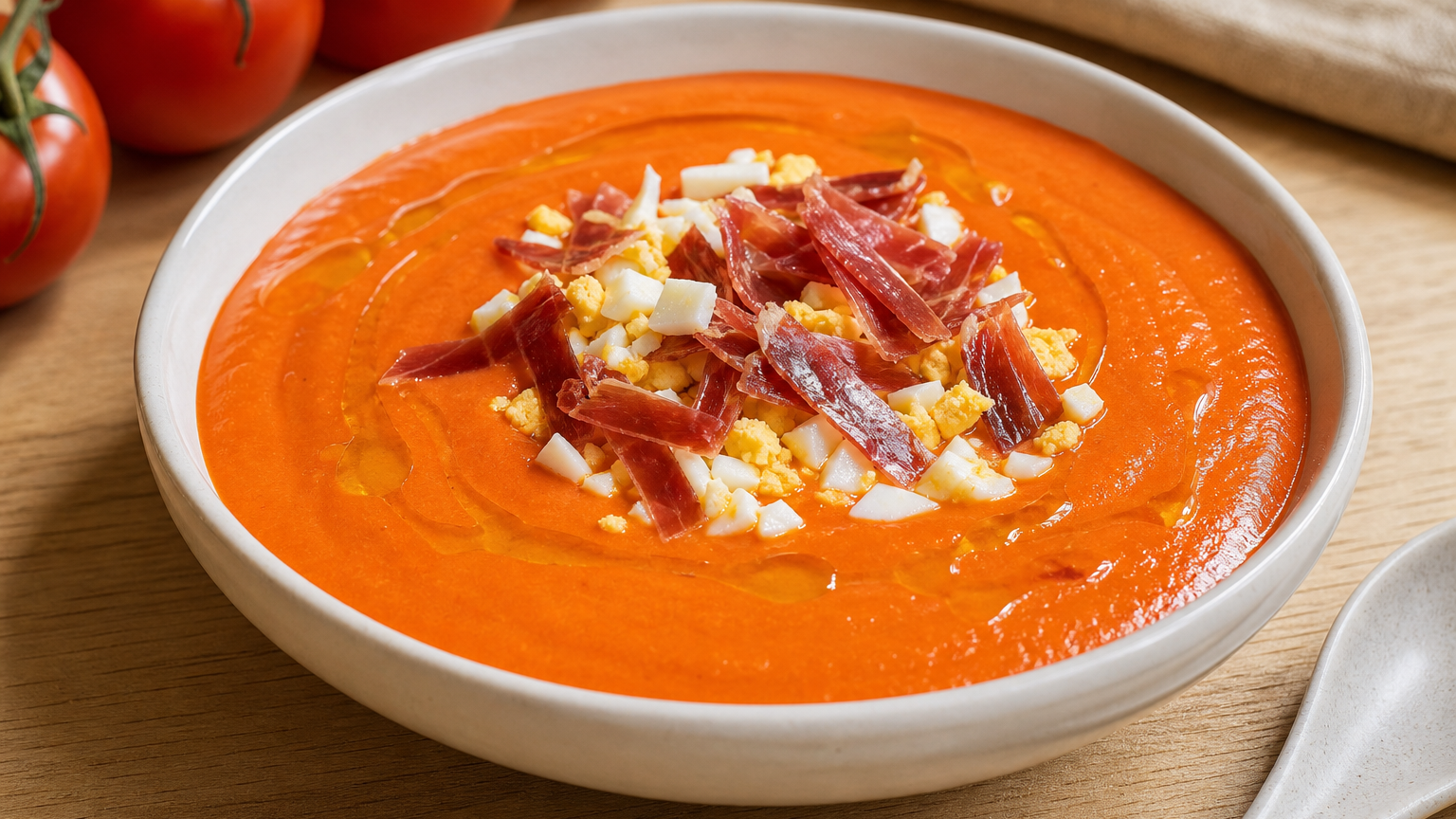
This Cordoban salmorejo combines simple ingredients with careful emulsion and good cold rest to achieve a velvety texture and a fresh, slightly acidic, and deeply tomatoey flavor.
01
Ingredients
Have everything ready before you begin.
- ✓1 kg of ripe tomatoes, preferably pear tomatoes
- ✓200 g of white bread from the previous day
- ✓120 ml of extra virgin olive oil
- ✓1 small garlic clove
- ✓1 tablespoon of sherry vinegar
- ✓8 g of salt
- ✓4 eggs
- ✓80 g of serrano ham
02
Step-by-step method
- 01
Prepare the tomatoes
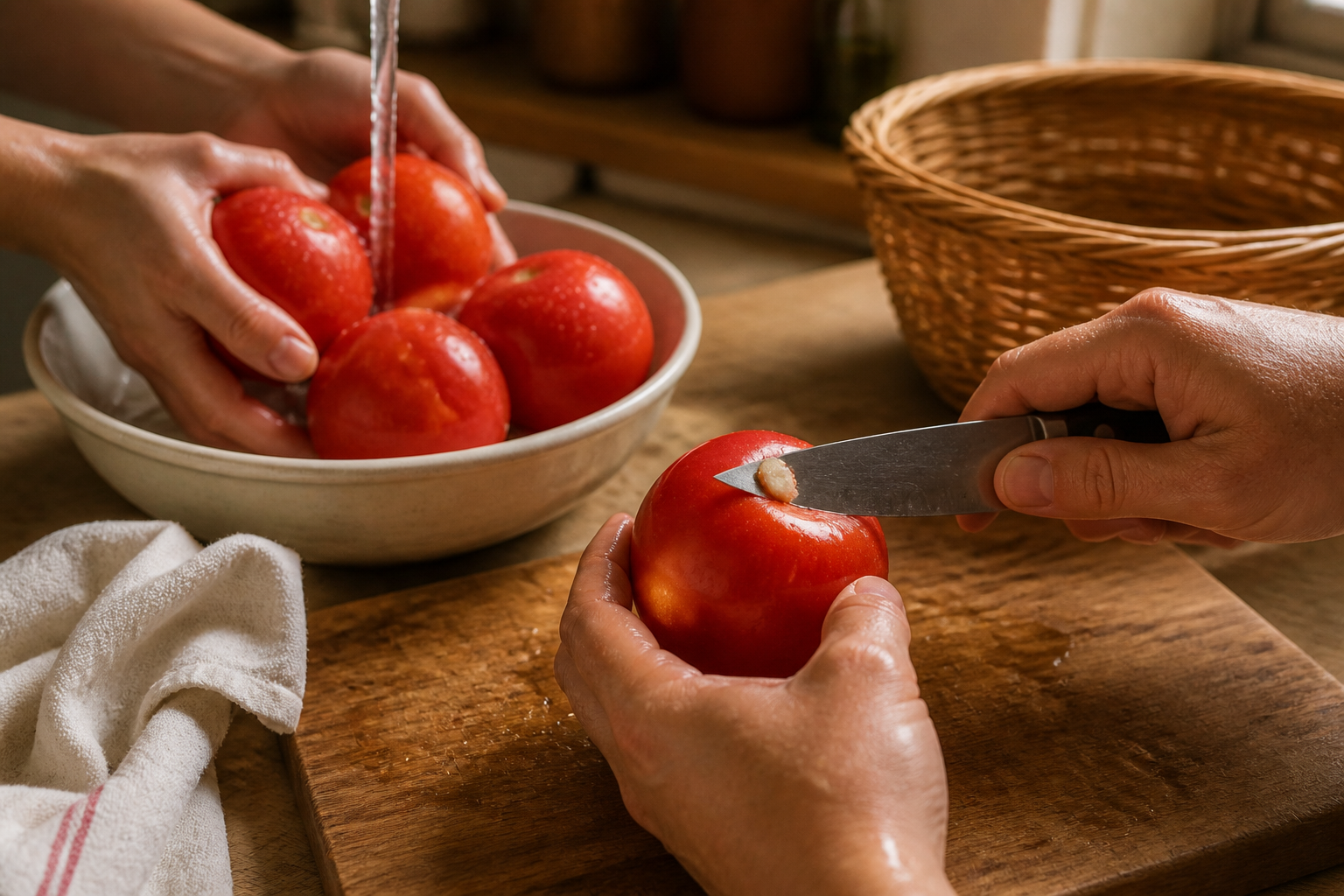
Wash the tomatoes, remove the hard part of the stem, and keep them at room temperature. It is not necessary to peel them if you are going to strain the mixture later.
- 02
Crush the base
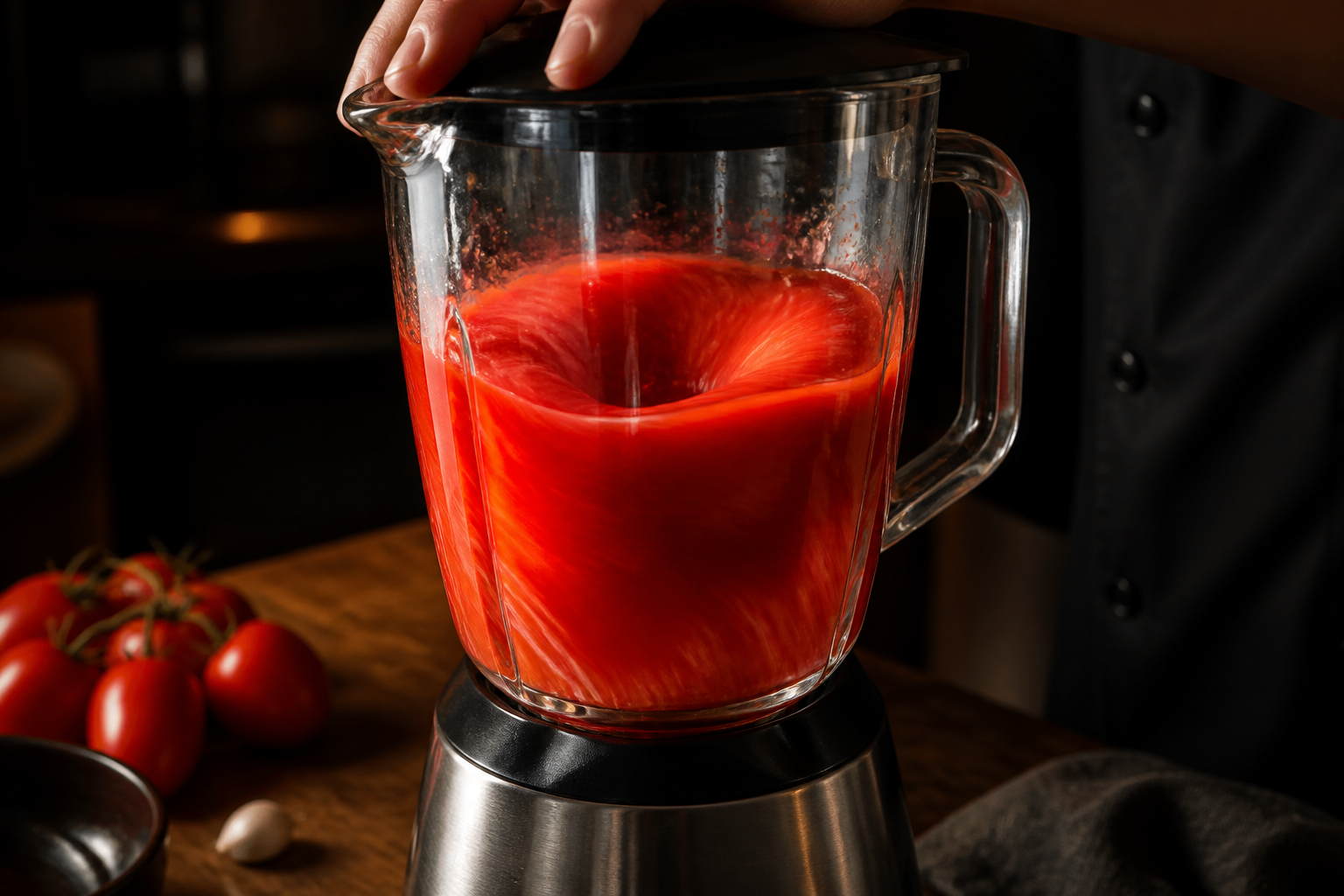
Cut the tomatoes into large pieces and place them in the blender jar. Add the garlic, salt, and sherry vinegar. Blend for one or two minutes, until you get a liquid and uniform mixture.
- 03
Hydrate the bread
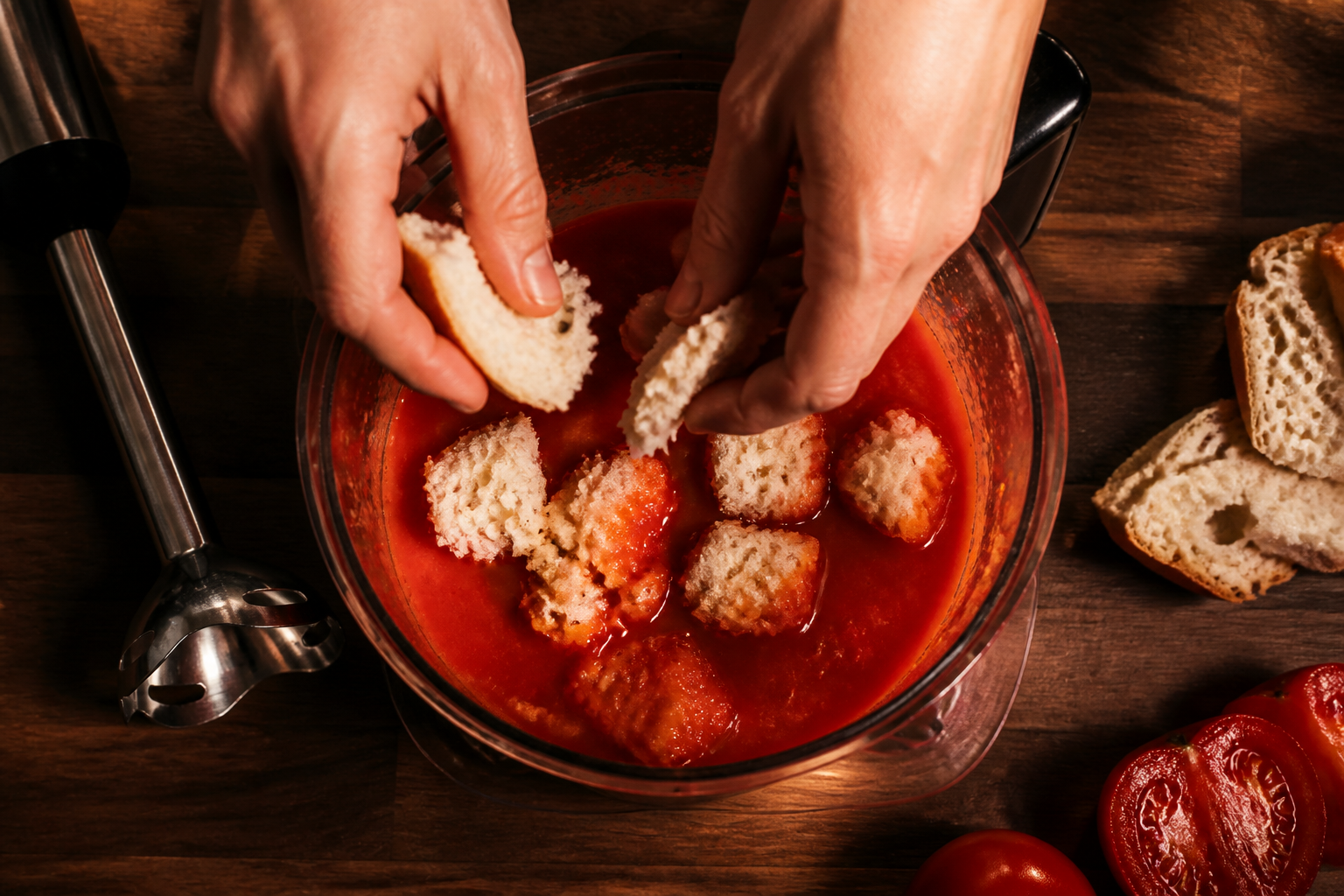
Add the white bread cut into pieces. If it is too hard, let it rest for five minutes inside the crushed tomato before blending again. Do not add water.
- 04
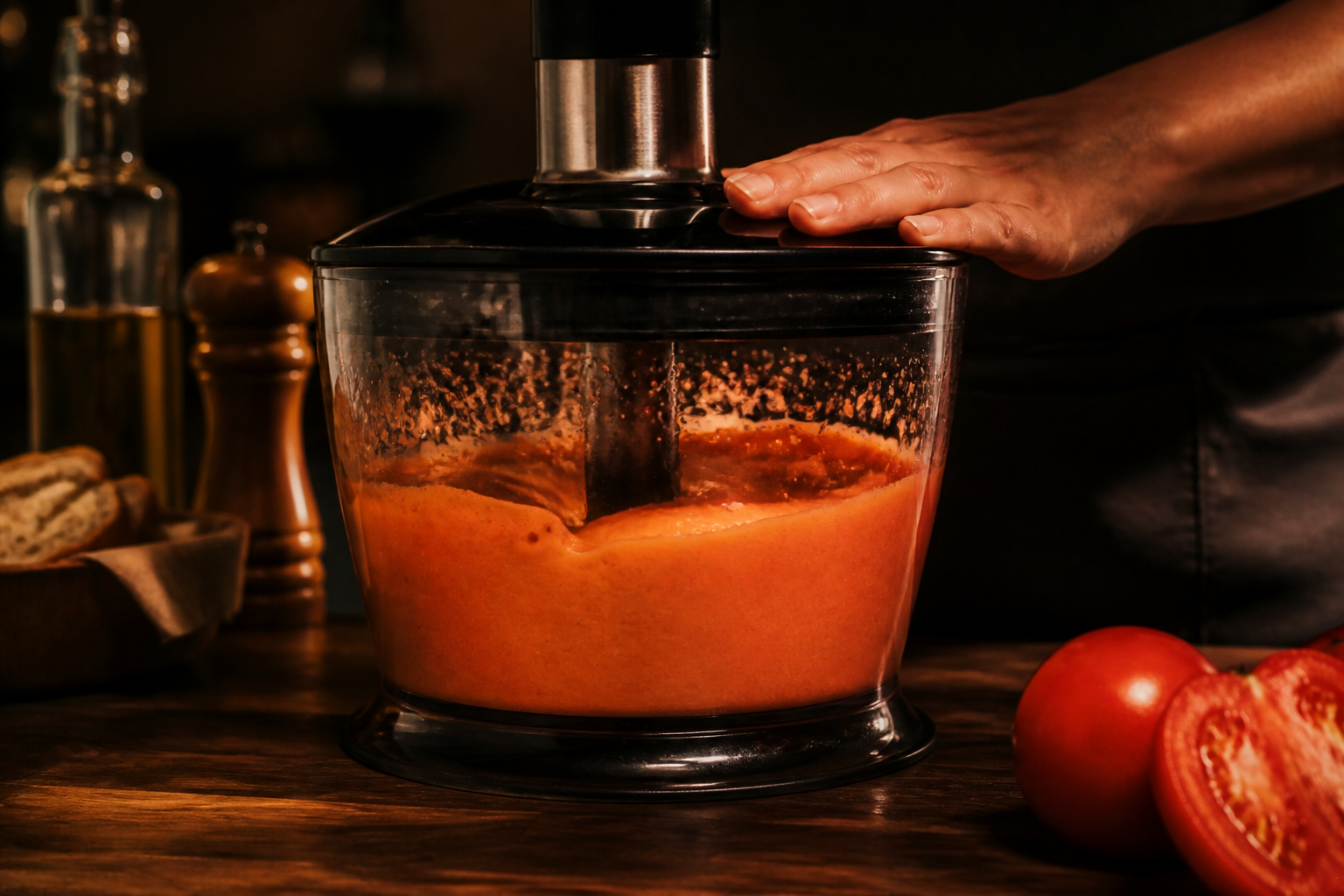
Blend the mixture
Blend again until no visible pieces remain and the preparation starts to thicken, acquiring a texture similar to a light cream.
- 05
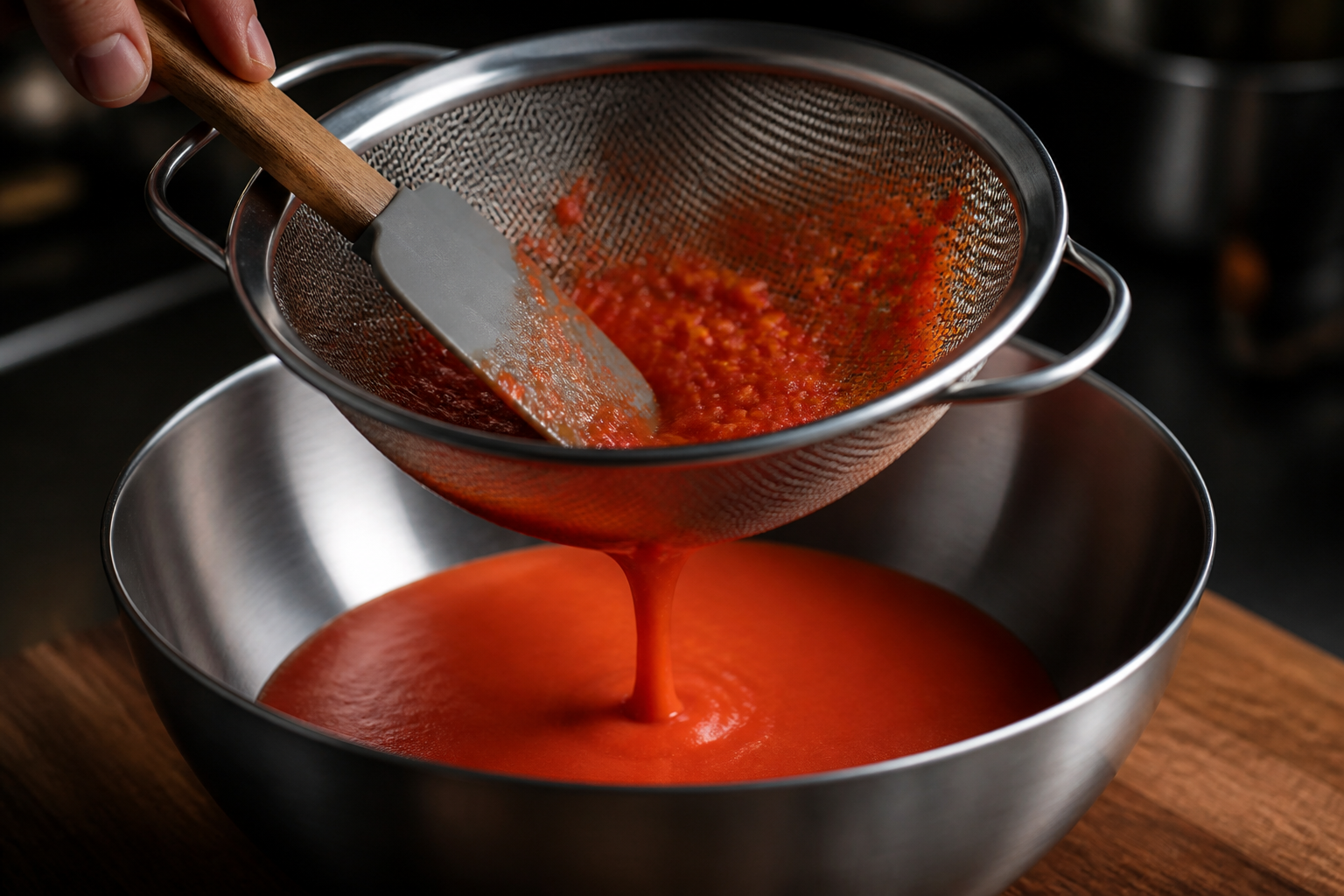
Strain the cream
Pass the mixture through a fine strainer with the help of a ladle or spatula to remove skin and seed remains.
- 06
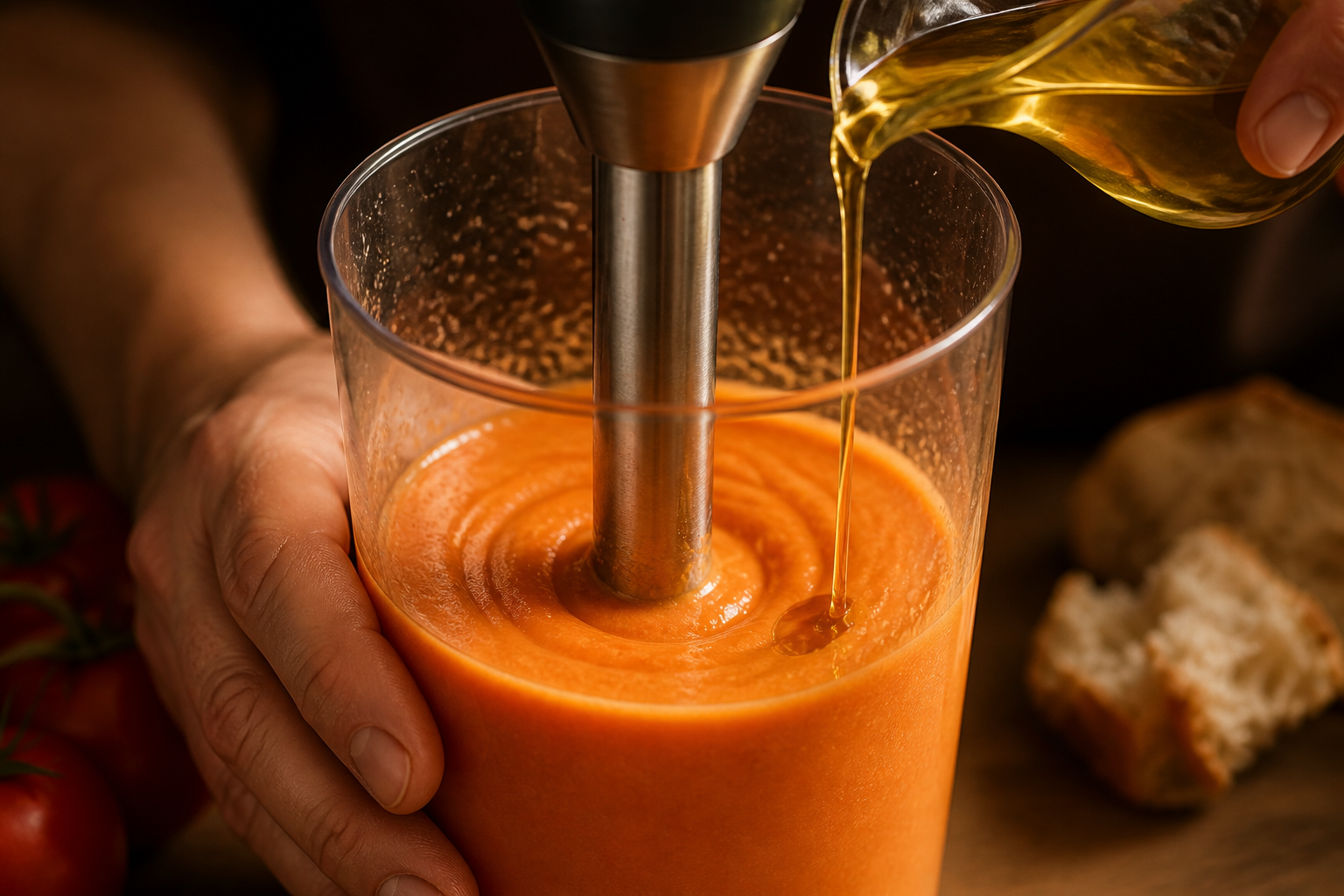
Emulsify with oil
Put the smooth base back in the blender. Beat at medium speed while incorporating the oil slowly, in a continuous thread, until the cream becomes shiny, thick, and velvety.
- 07

Adjust the flavor
Taste the cream and correct only if necessary. Look for a fresh flavor, slightly acidic, with the garlic present without being aggressive and a rounded finish of olive oil.
- 08
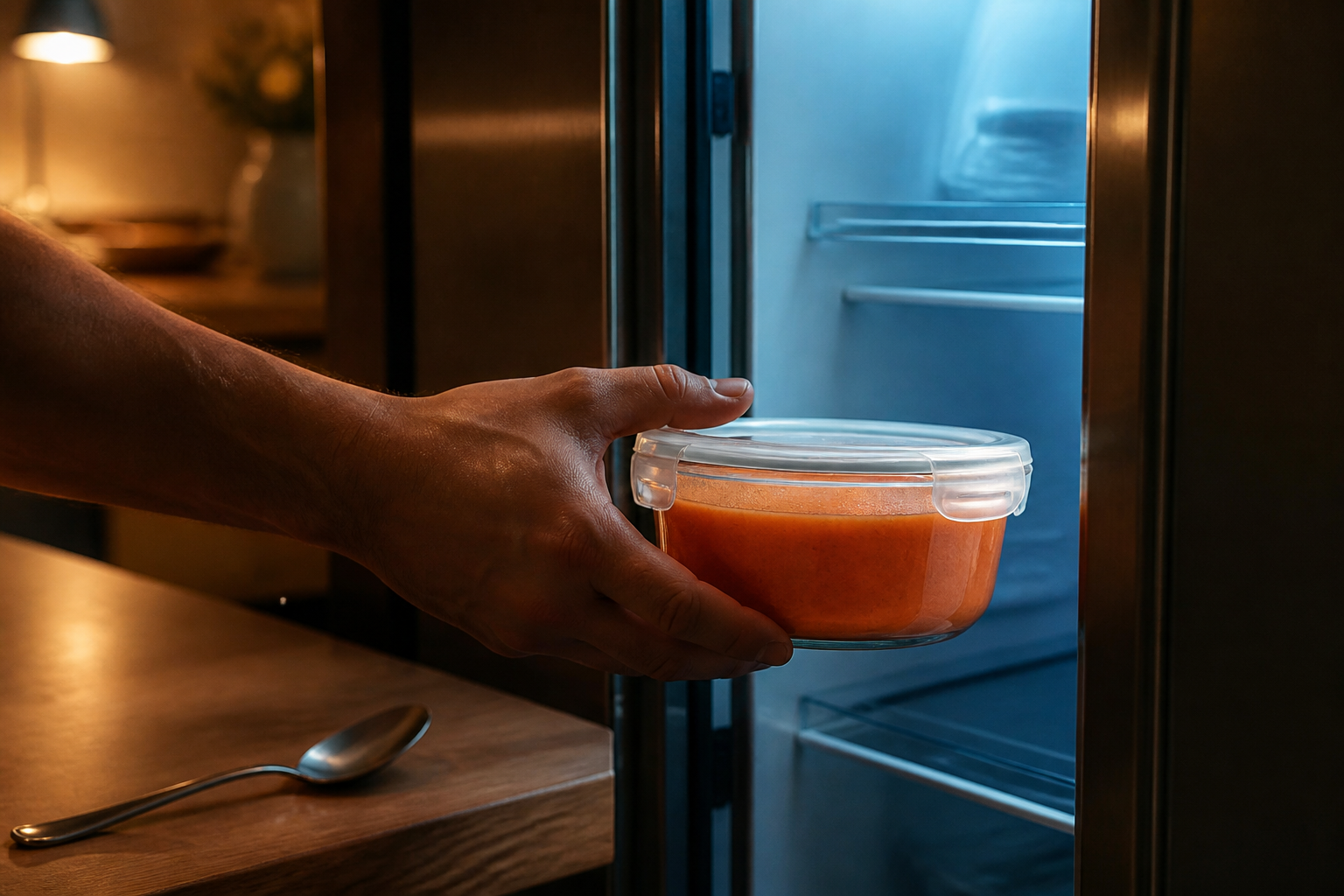
Chill the salmorejo
Transfer the preparation to a container with a lid and refrigerate for at least two hours so that it cools, the bread finishes hydrating, and the flavors integrate.
- 09
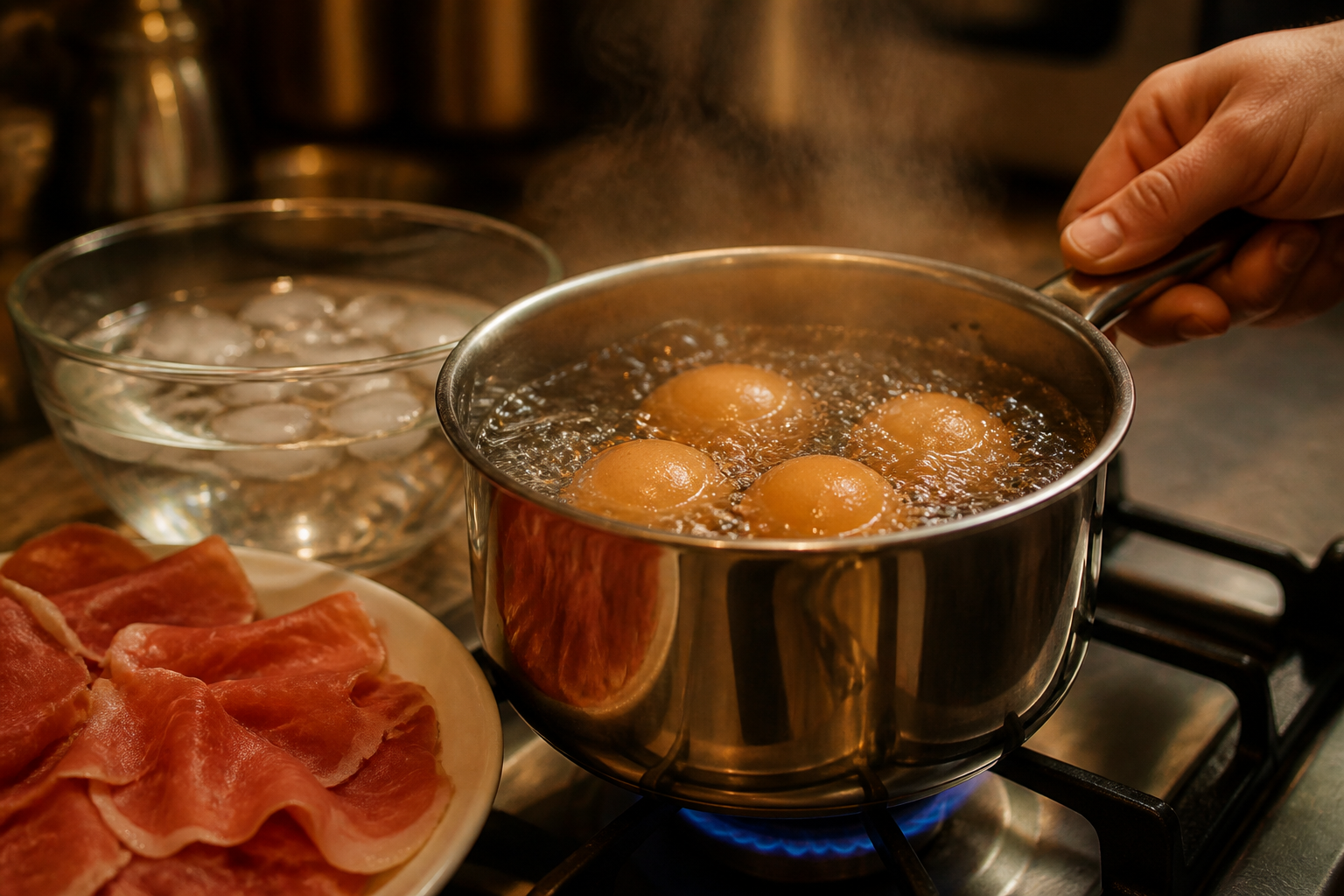
Cook the eggs
Boil the eggs in boiling water for ten minutes. Pass them to cold water, peel them, and chop them into small pieces. Also, cut or crumble the serrano ham into thin strips.
- 10
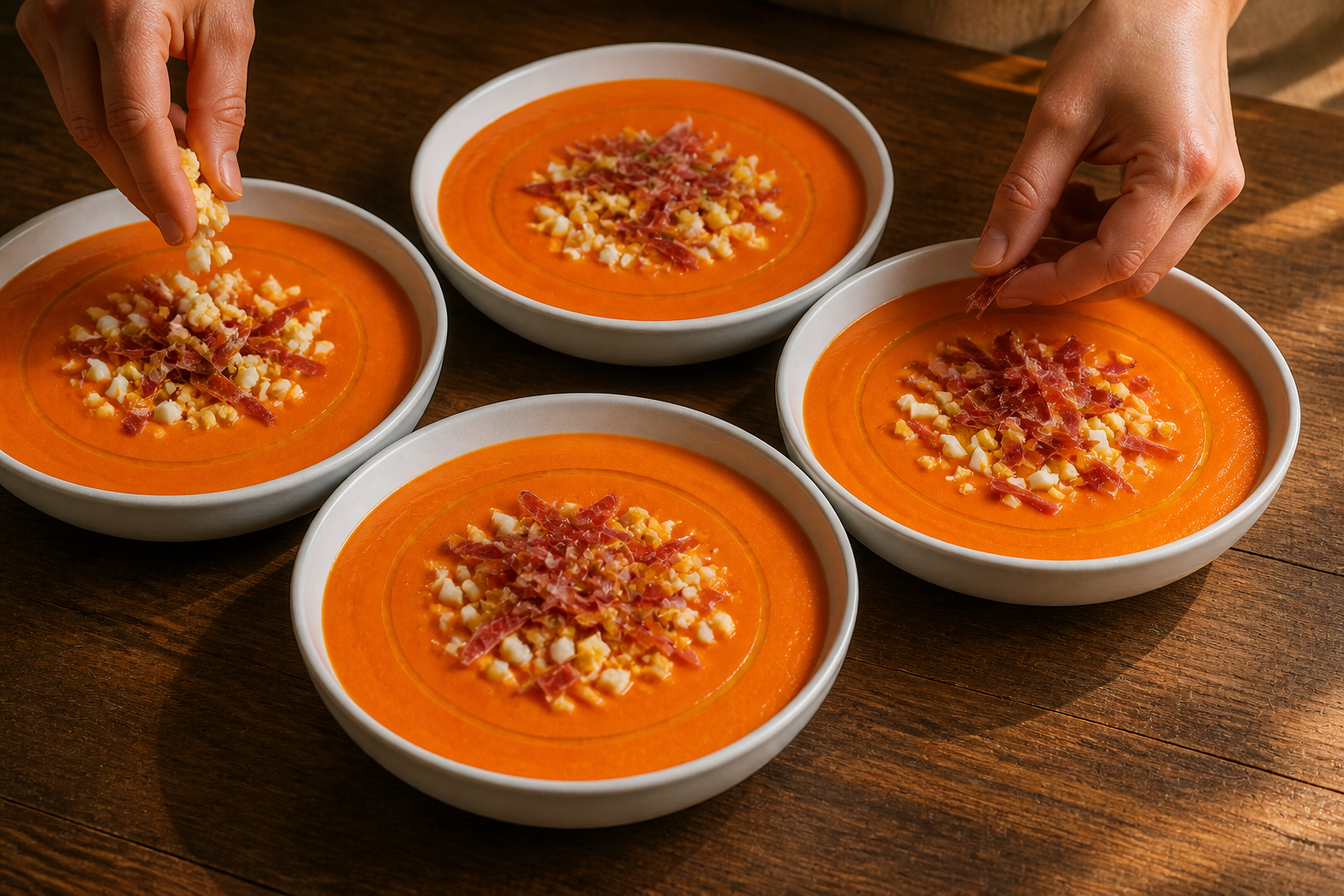
Serve and decorate
Gently stir the salmorejo and distribute it in low bowls or deep plates. Add the chopped egg and ham, and finish with a fine thread of extra virgin olive oil.
- Use very ripe, aromatic, seasonal tomatoes at room temperature.
- The white bread from the previous day provides body without needing to add water.
- Incorporate the oil slowly to favor emulsion.
- Strain the mixture if you are looking for an especially fine texture.
- Let it cool for at least two hours before serving.
- Well covered and refrigerated, it can be kept for up to two days, although it offers better texture and aroma during the first twenty-four hours.
- You can serve it as an appetizer, tapas, or with toasted bread slices.