
Traditional Spanish Dishes
Menestra de Verduras in Textures: The Authentic Spanish Recipe
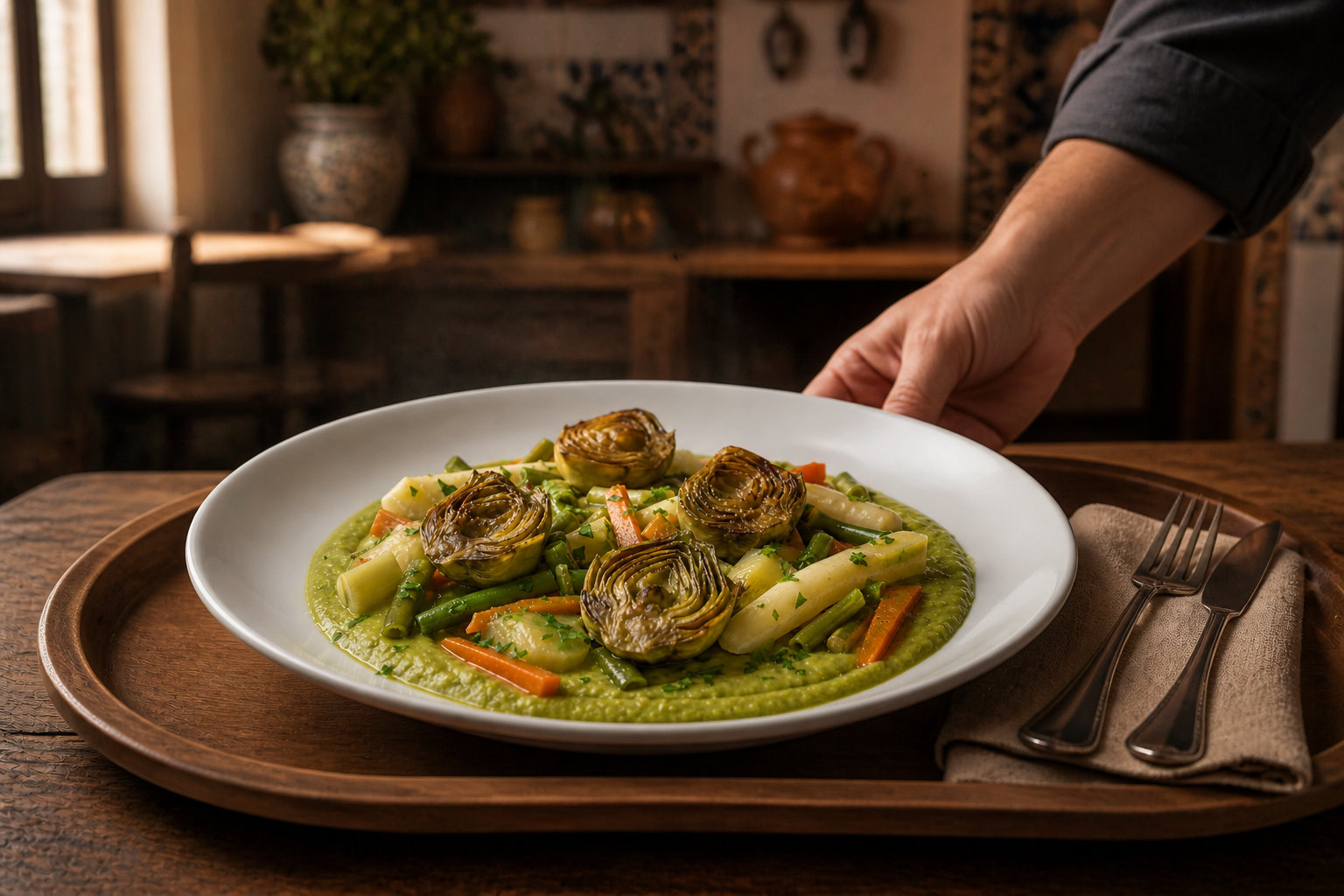
A colorful Spanish menestra, full of contrasts, with tender vegetables bound in a light sauce, silky pea cream, white asparagus, and golden artichokes.
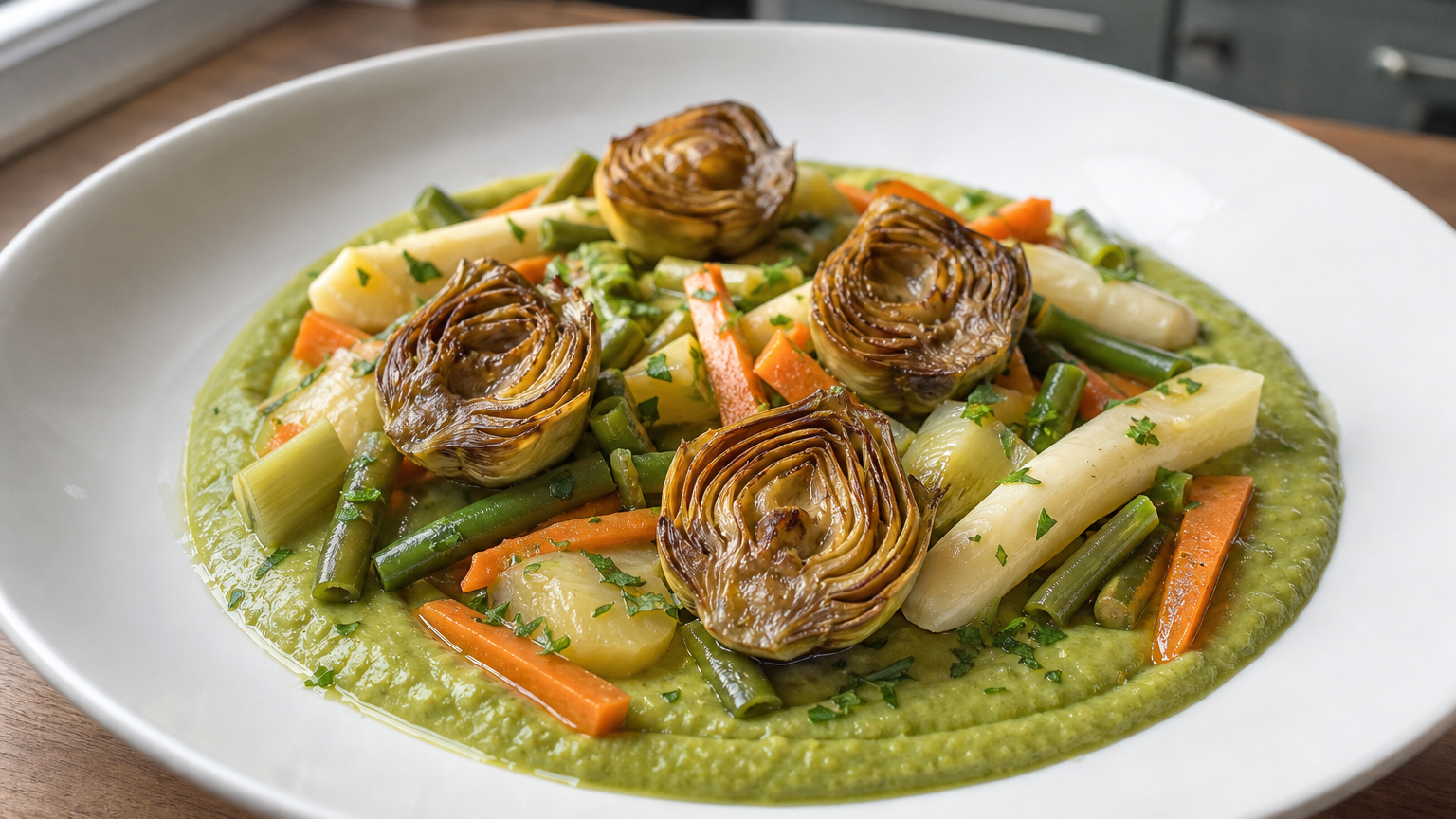
This version of vegetable menestra combines different textures without losing its homemade character. Each element is cooked separately to preserve its point, color, and flavor, and then assembled into an elegant and comforting dish.
01
Ingredients
Have everything ready before you begin.
- ✓4 artichokes
- ✓2 carrots
- ✓2 leeks
- ✓2 medium potatoes
- ✓200 g of green beans
- ✓150 g of shelled peas
- ✓150 g of cooked white asparagus
- ✓1 liter of vegetable broth
- ✓2 cloves of garlic
- ✓4 tablespoons of extra virgin olive oil
- ✓1 tablespoon of wheat flour
- ✓1/2 teaspoon of salt
- ✓Black pepper to taste
- ✓Juice of 1/2 lemon
- ✓2 tablespoons of chopped fresh parsley
02
Step-by-step method
- 01
Prepare the vegetables
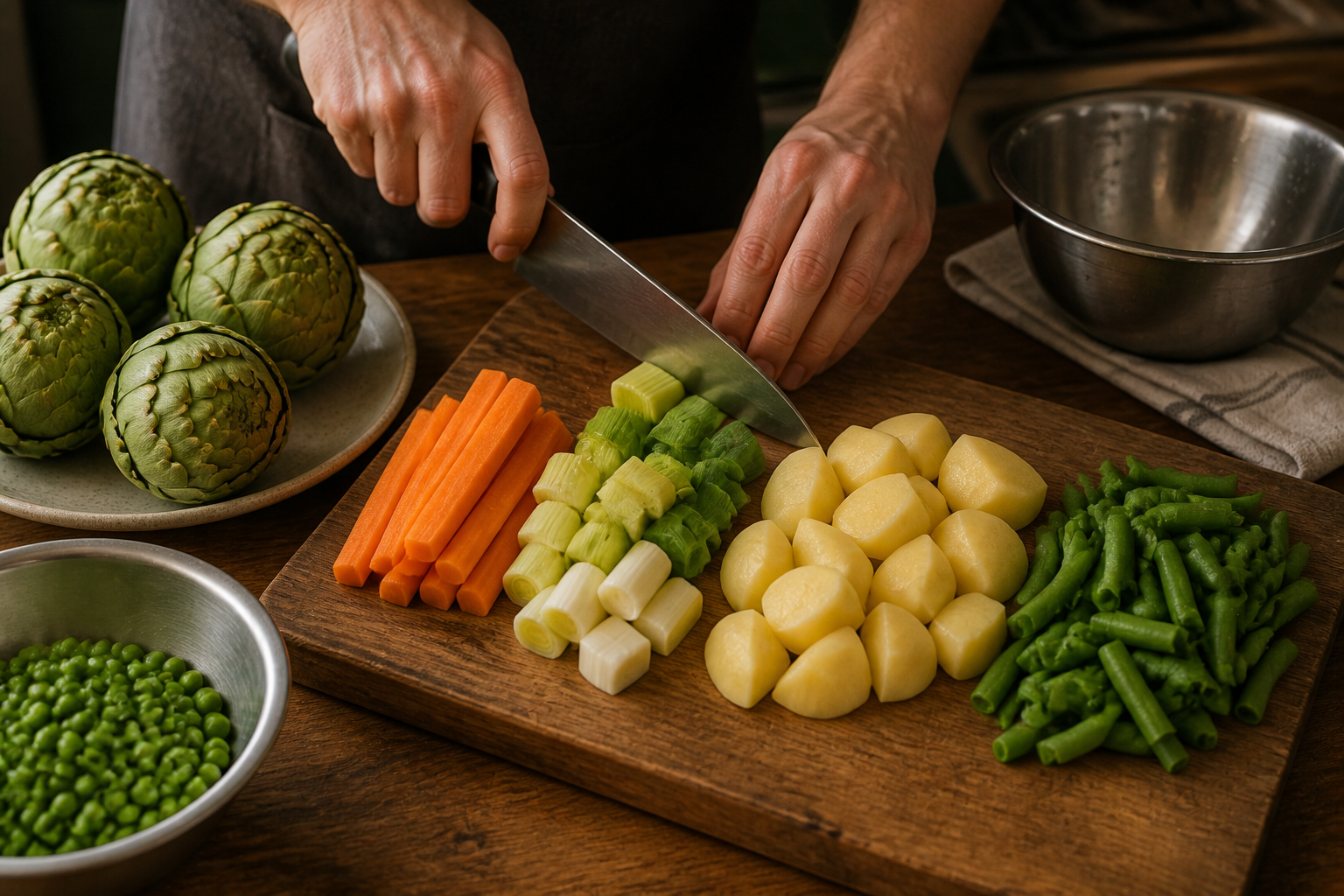
Clean the vegetables. Peel the carrots and cut them into thick sticks. Remove the toughest green part from the leeks, wash them, and cut them into four-centimeter pieces. Peel the potatoes and cut them into medium-sized pieces of similar size. Remove the tips from the green beans and cut them into four or five centimeter pieces.
- 02
Cook the vegetables
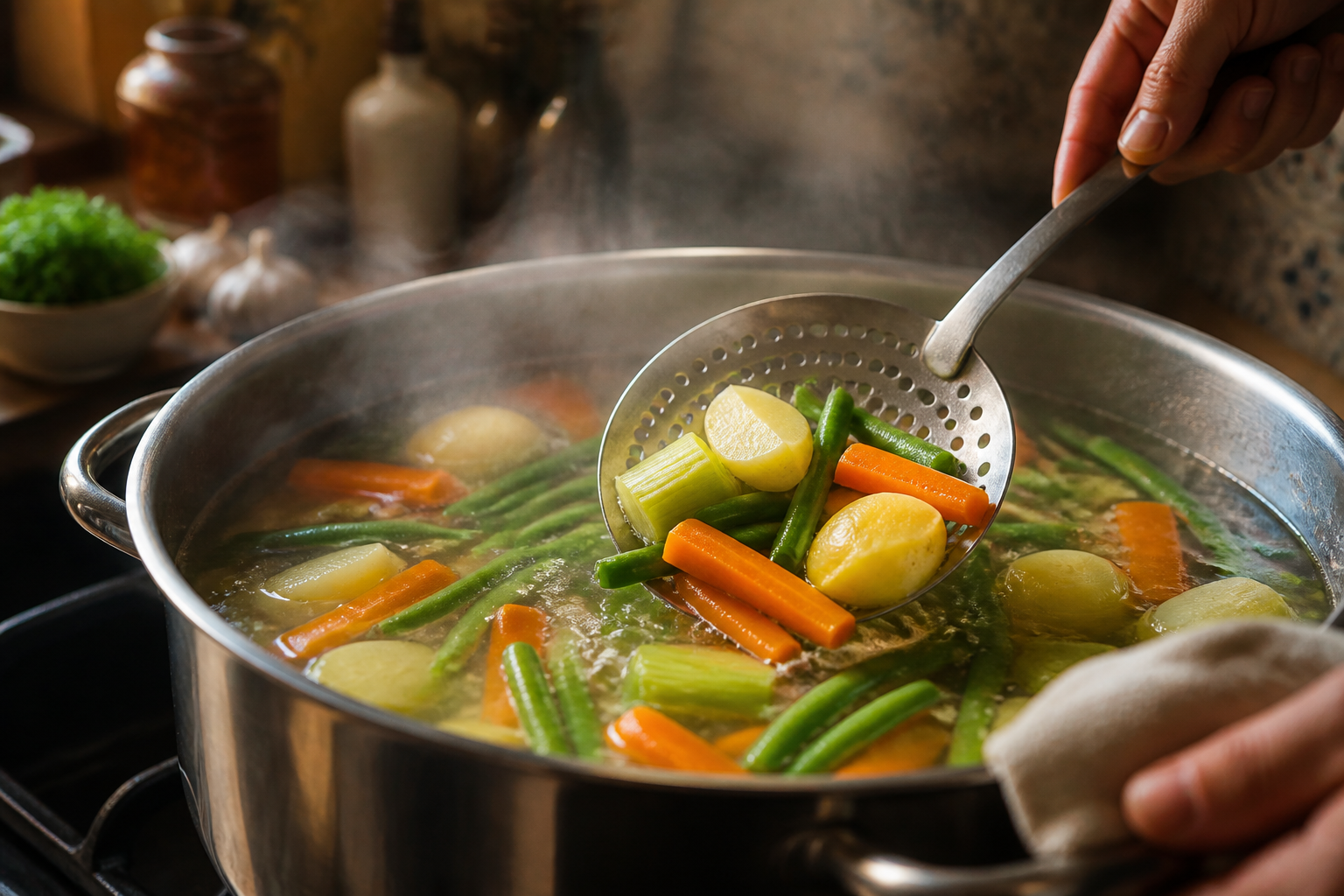
Put a large pot with water and half a teaspoon of salt. When it boils, add the carrots, leeks, potatoes, and green beans. Cook for ten or twelve minutes, until they are tender but firm. If the potato needs more time, remove it at the end of the cooking time for the other vegetables.
- 03
Clean the artichokes
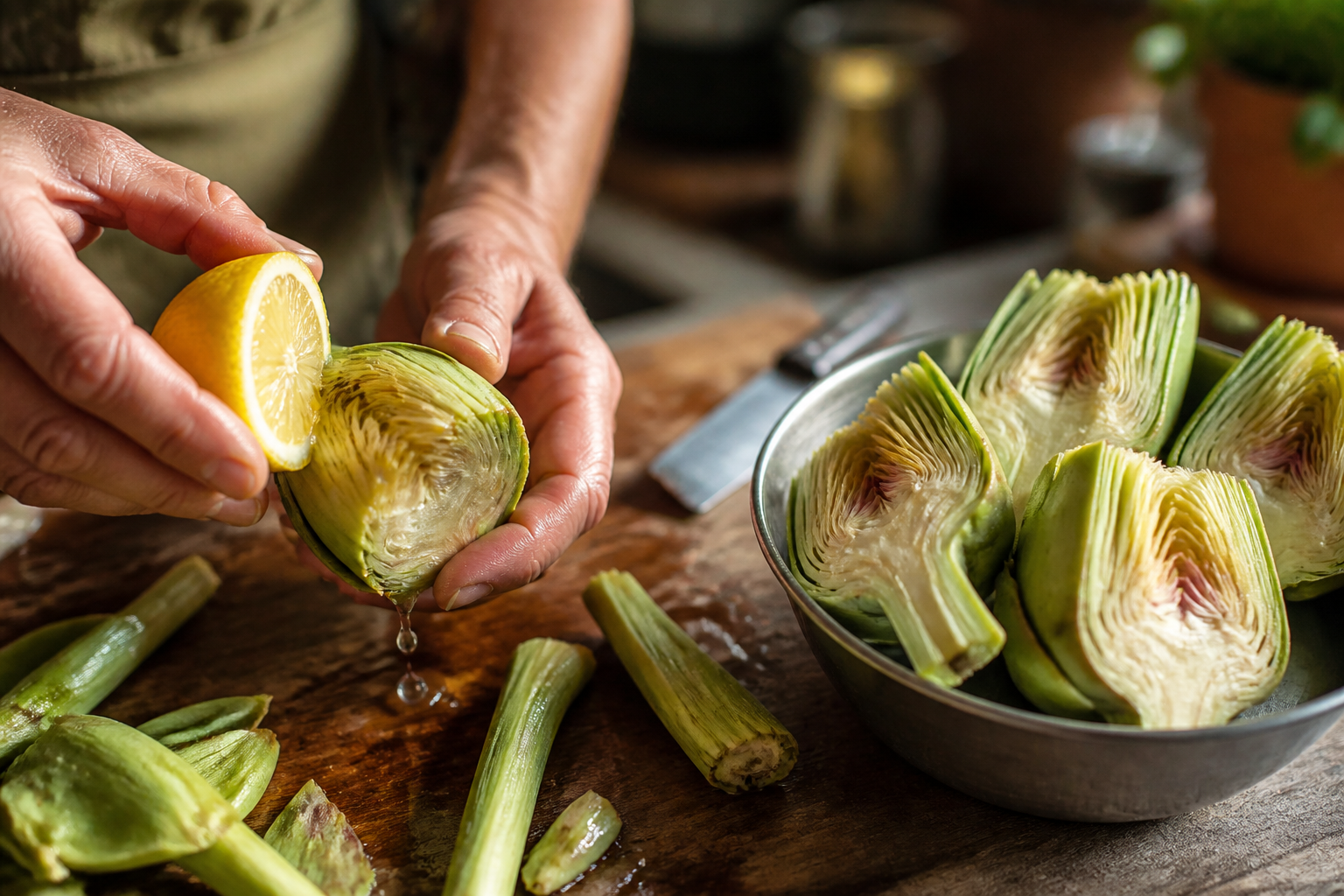
Remove the tough outer leaves, cut the tips, and lightly peel the stems. Rub the artichokes with the juice of half a lemon to prevent them from darkening and cut them into halves or quarters.
- 04
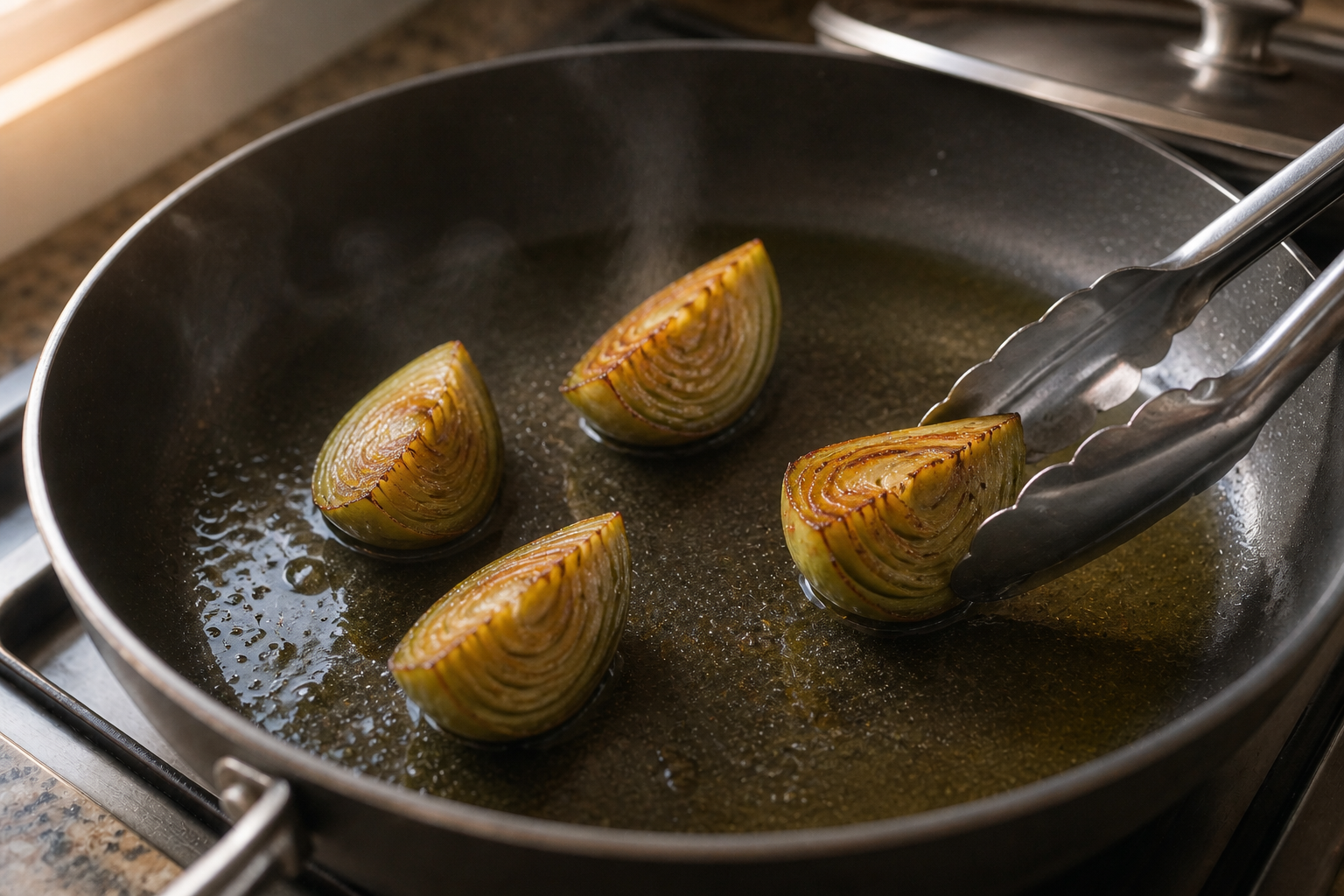
Brown the artichokes
Heat a skillet with two tablespoons of olive oil. Add the artichokes and cook over medium heat for six to eight minutes, turning them carefully, until they are golden brown on the outside and tender in the center. If they are large, cover the skillet for a couple of minutes. Set them aside.
- 05
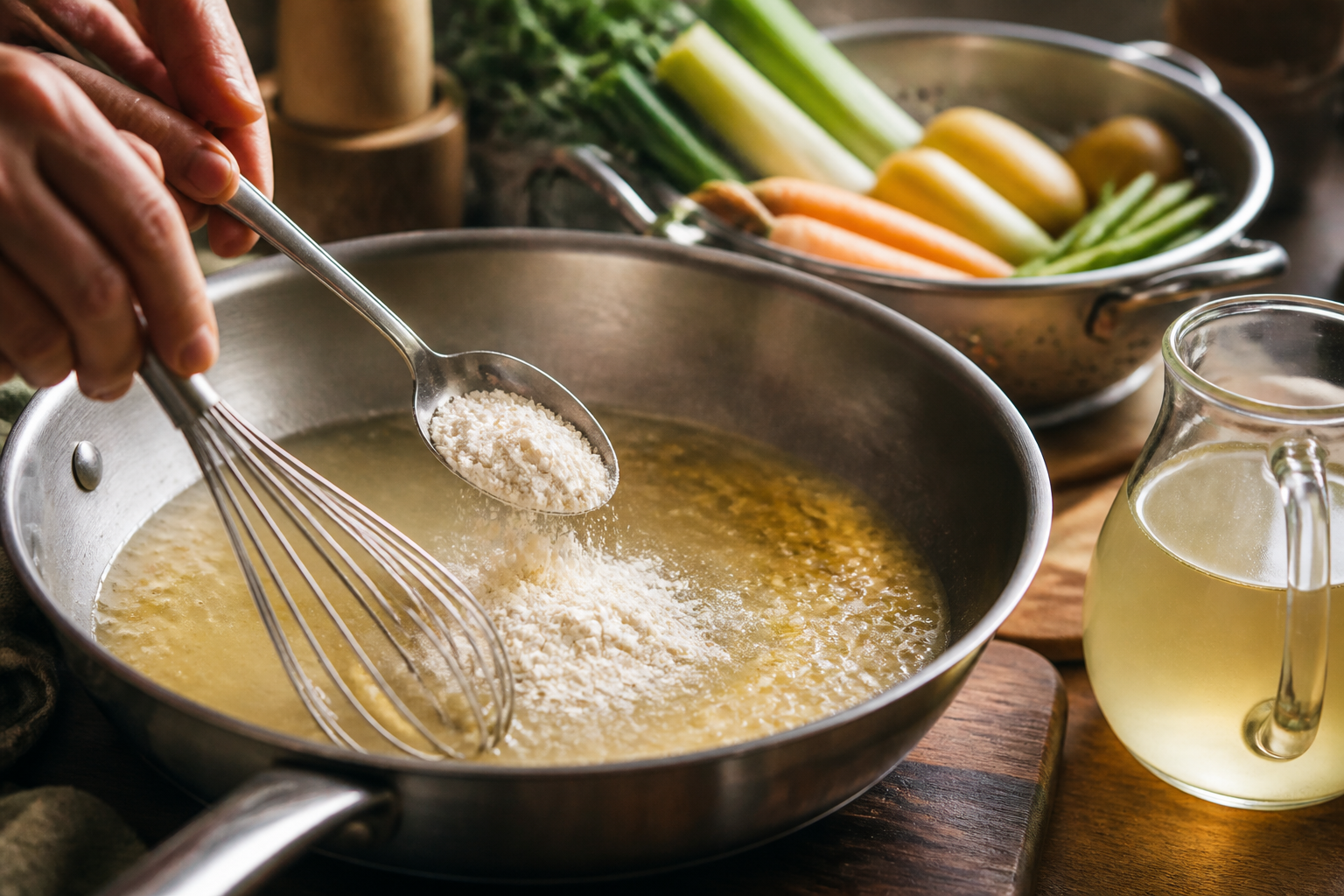
Prepare the sauce
Drain the vegetables and reserve the cooking water. In another pot or saucepan, heat a tablespoon of oil and add a chopped clove of garlic. Cook for a few seconds without browning too much, add the flour, and stir for a minute.
- 06
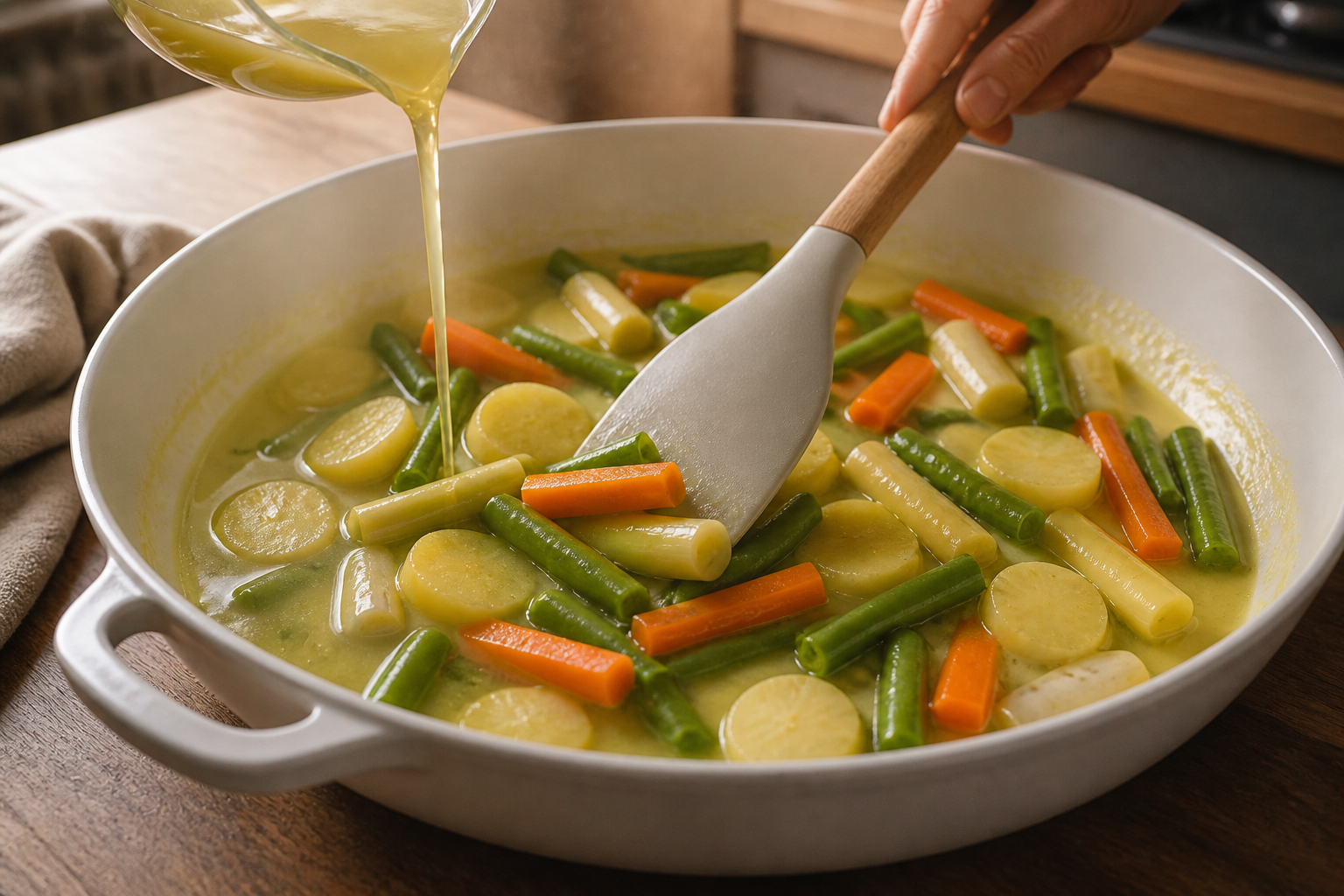
Bind the vegetables
Gradually add 250 milliliters of vegetable broth, stirring to avoid lumps. Cook for three or four minutes, until the sauce thickens slightly. Add the carrots, leeks, potatoes, and green beans, mixing gently. Adjust the salt and add more cooking water if the sauce is too dense.
- 07
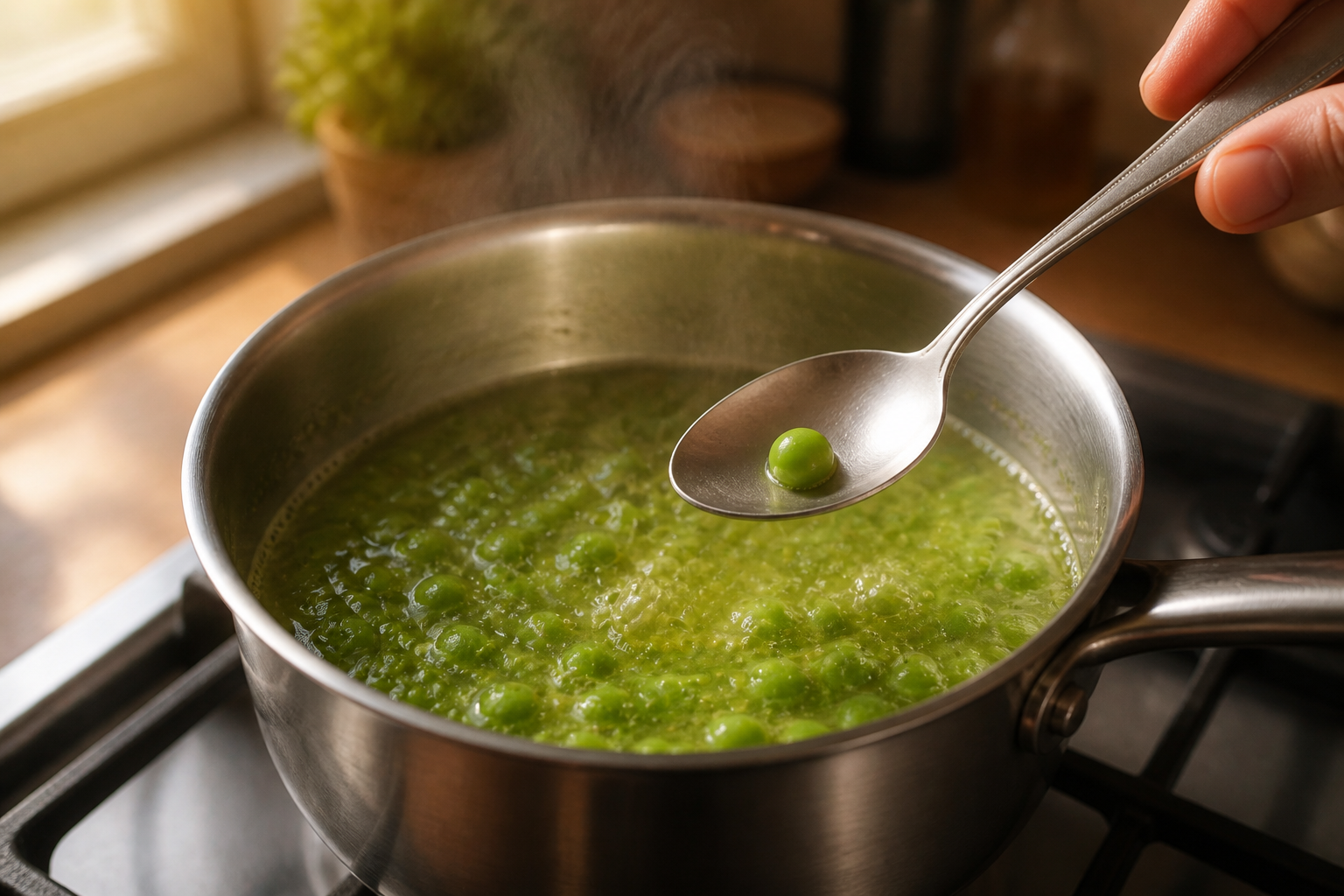
Cook the peas
Put the peas in a saucepan with some of the remaining vegetable broth and cook for four or five minutes, until they are tender and retain their green color.
- 08
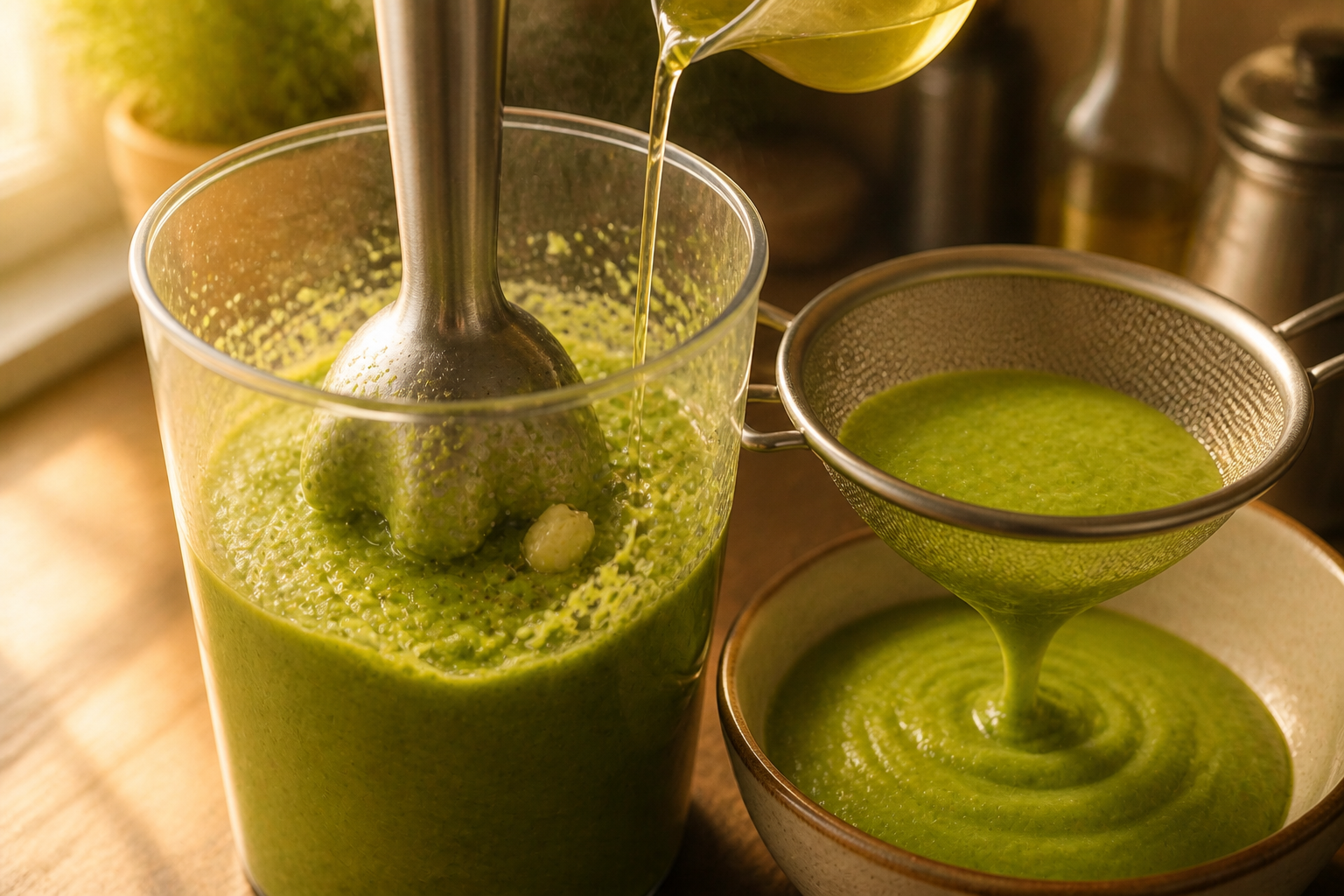
Blend the cream
Blend the peas with the second clove of garlic, a tablespoon of olive oil, and black pepper. Add broth gradually until you get a smooth and creamy cream. For a finer texture, pass it through a strainer.
- 09
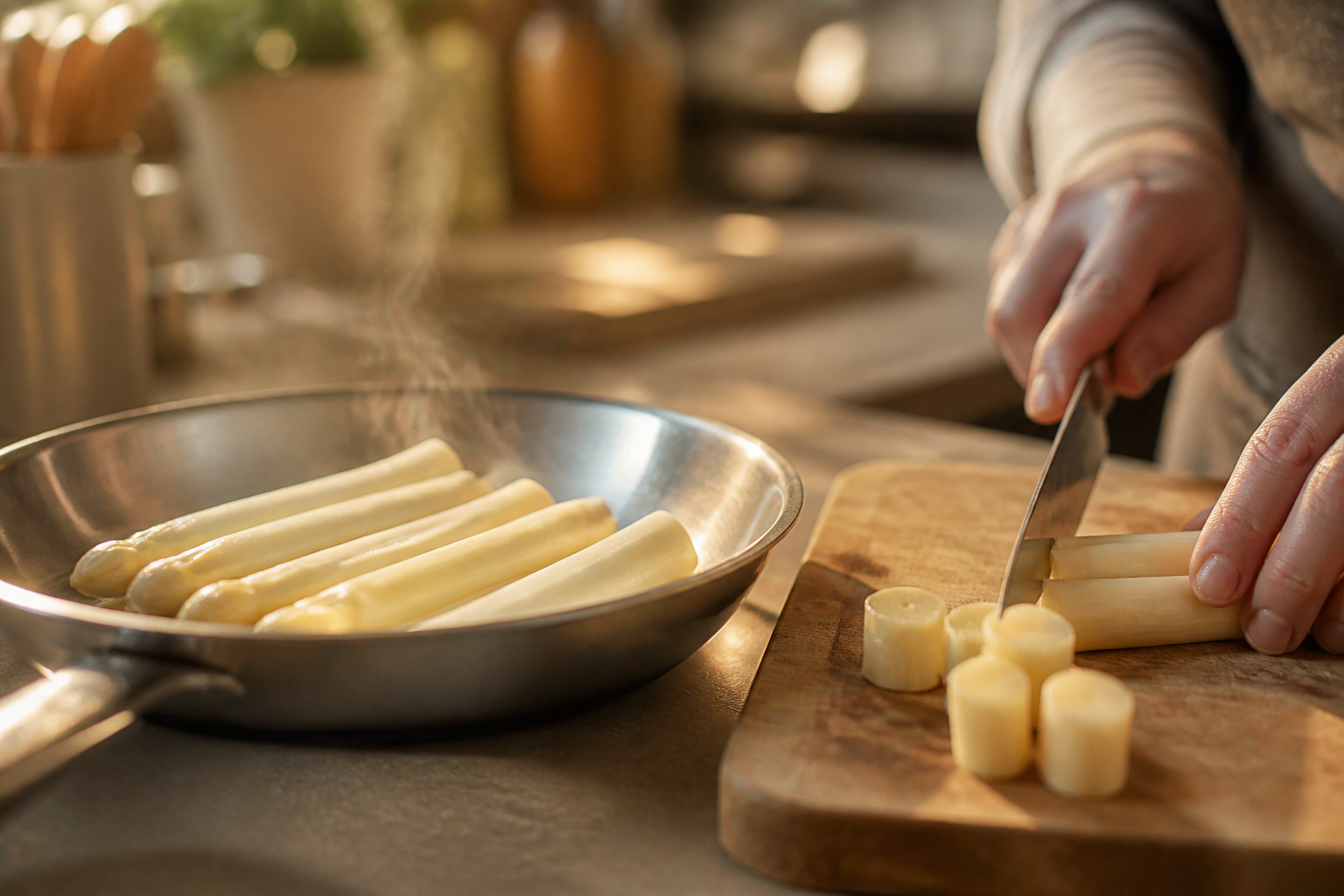
Heat the asparagus
Briefly heat the cooked white asparagus in a clean skillet or in the saucepan used for the sauce. Cut them into large pieces so they can be distinguished when serving.
- 10
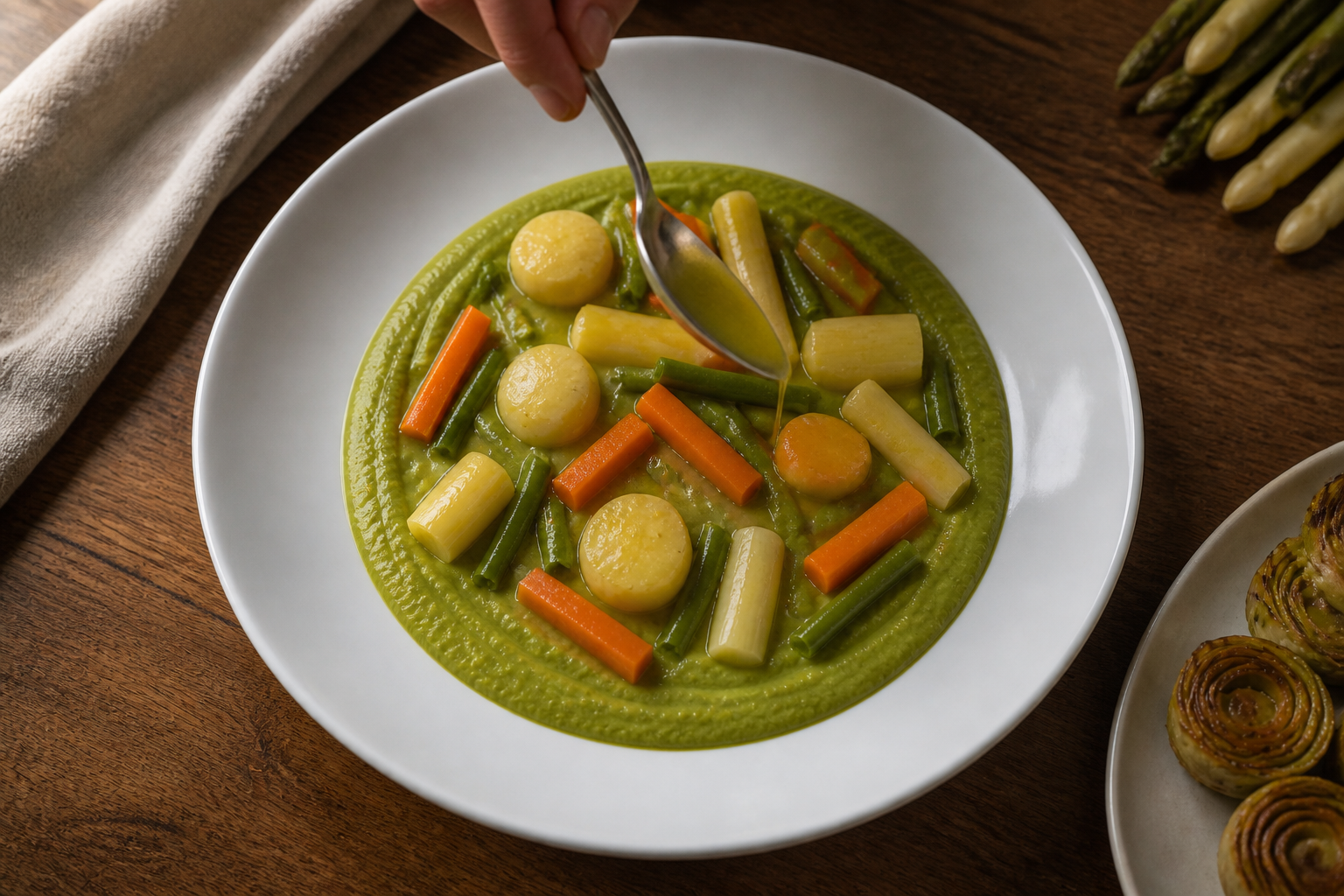
Assemble the dish
Place a base of pea cream. Distribute the bound vegetables on top: potato, carrot, leek, and green beans. Add the asparagus and finish with the golden artichokes.
- 11
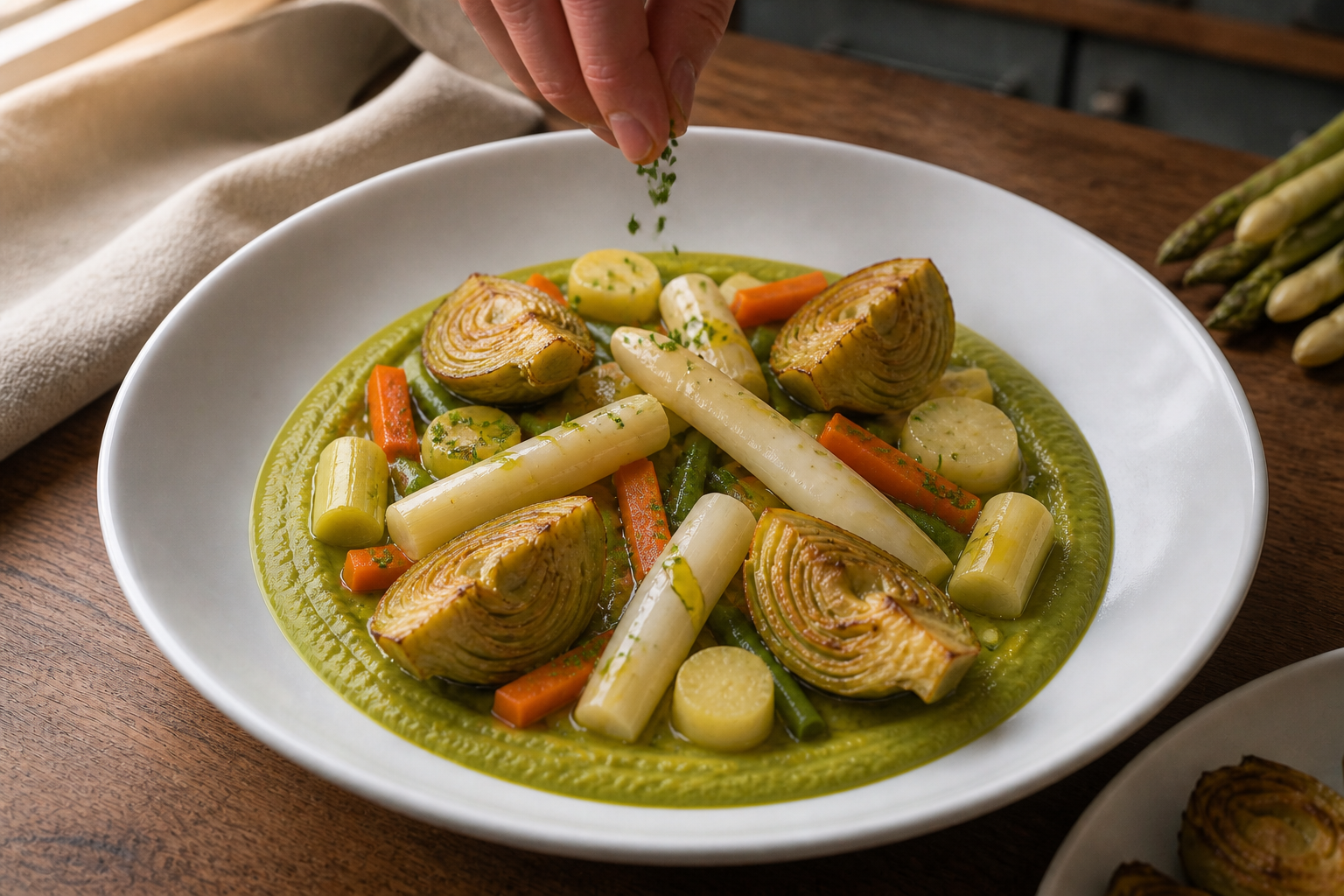
Finish and serve
Distribute the chopped fresh parsley and add a few drops of the remaining olive oil from the skillet. Serve the menestra hot, but not boiling, to better appreciate its flavors and textures.
- 12
Organize in advance
If you prepare it in advance, cook the vegetables and sauce separately, keep the pea cream aside, and assemble the dish just before serving.
- Cook the vegetables until they are tender but firm to preserve their shape, color, and texture.
- Reserve the cooking water to adjust the consistency of the sauce and cream.
- Prepare the pea cream without cream to maintain a fresh and natural flavor.
- Brown the artichokes over medium heat so they are tender on the inside and toasted on the outside.
- Cooked white asparagus only needs to be briefly heated.
- For a seasonal version, you can substitute some of the vegetables with tender broad beans or add cooked cardoon.