
Traditional Spanish Dishes
Prepare Asturian Fabada, a Spanish Classic
A slow-cooked Asturian fabada, with creamy fabes, chorizo, morcilla, and panceta in a deep and comforting broth. A classic spoon dish to enjoy calmly and share.
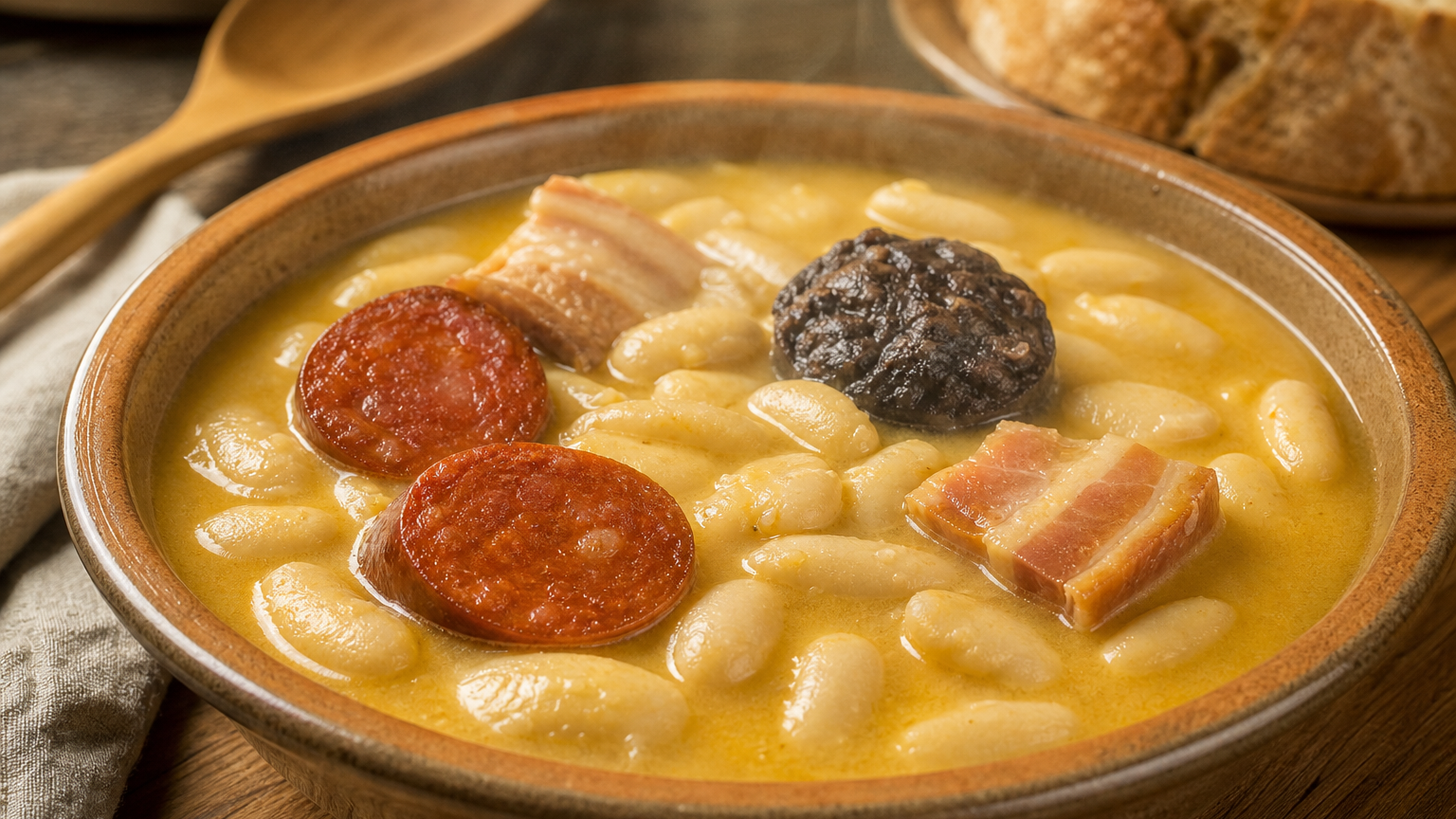
The fabes are hydrated overnight and then cooked gently with the compango, onion, bay leaves, and saffron until they are tender and creamy.
01
Ingredients
Have everything ready before you begin.
- ✓500 g of dried Asturian fabes
- ✓2 Asturian chorizos
- ✓2 Asturian morcillas
- ✓200 g of cured panceta
- ✓1 small onion
- ✓2 bay leaves
- ✓A few strands of saffron
- ✓Water, approximately 1.5 liters
- ✓Salt to taste
02
Step-by-step method
- 01
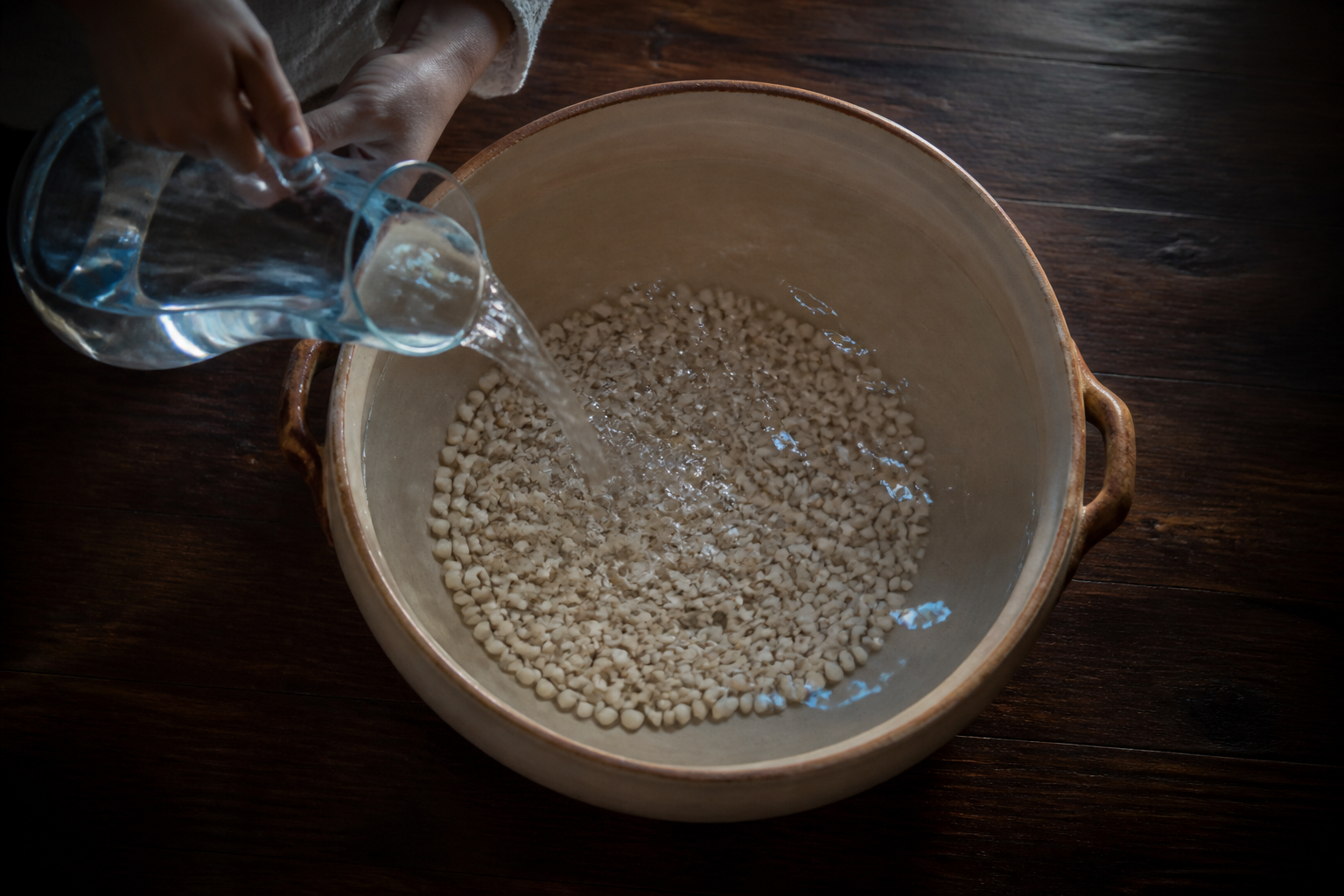
Soak the fabes
The day before, place the fabes in a large container, cover them with plenty of cold water, and let them hydrate for at least eight hours. The next day, drain and briefly rinse them under the tap.
- 02
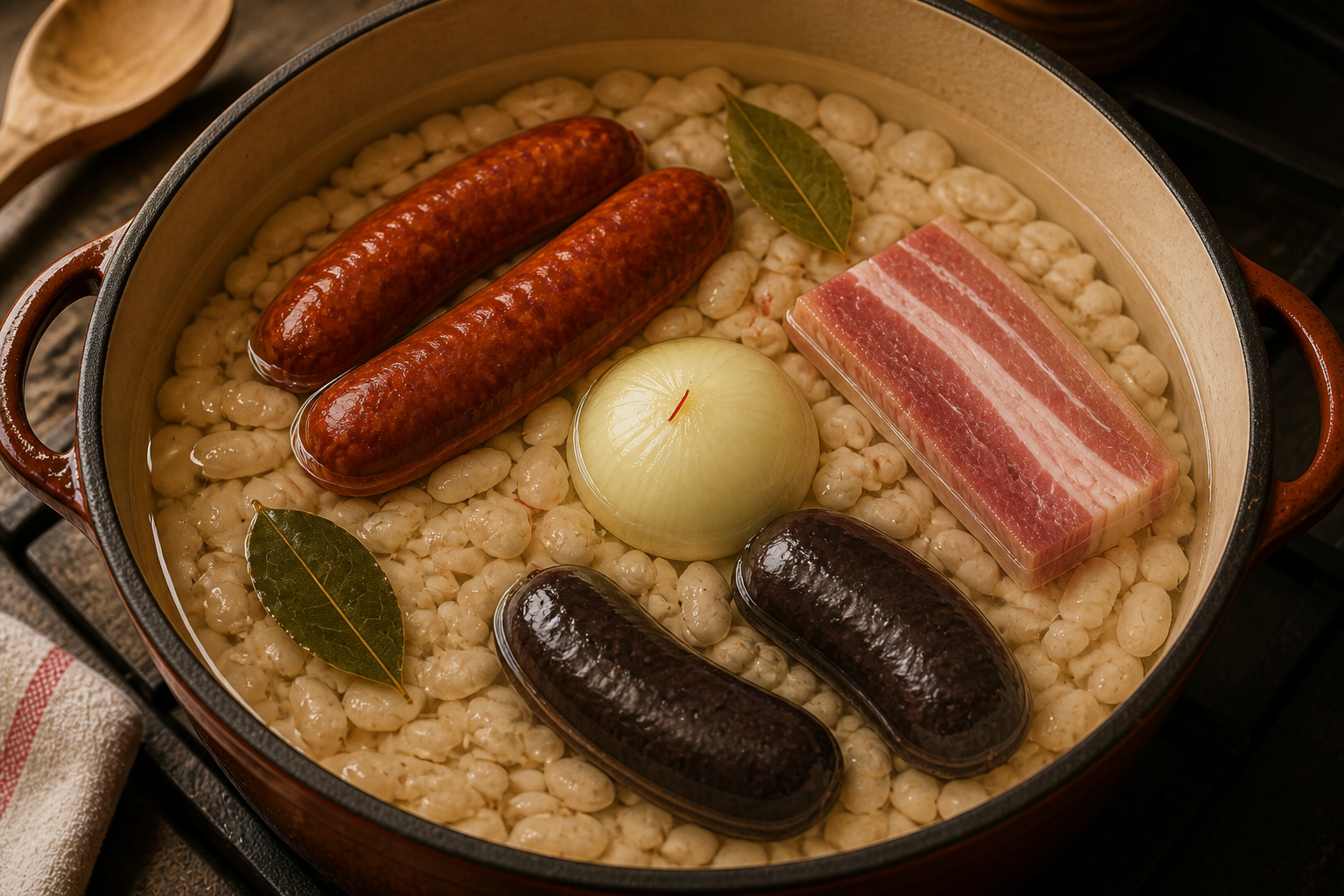
Assemble the pot
Put the fabes in a large pot and add cold water to cover them by about three centimeters. Add the peeled and whole onion, bay leaves, and saffron. Place the panceta, chorizos, and morcillas on top.
- 03
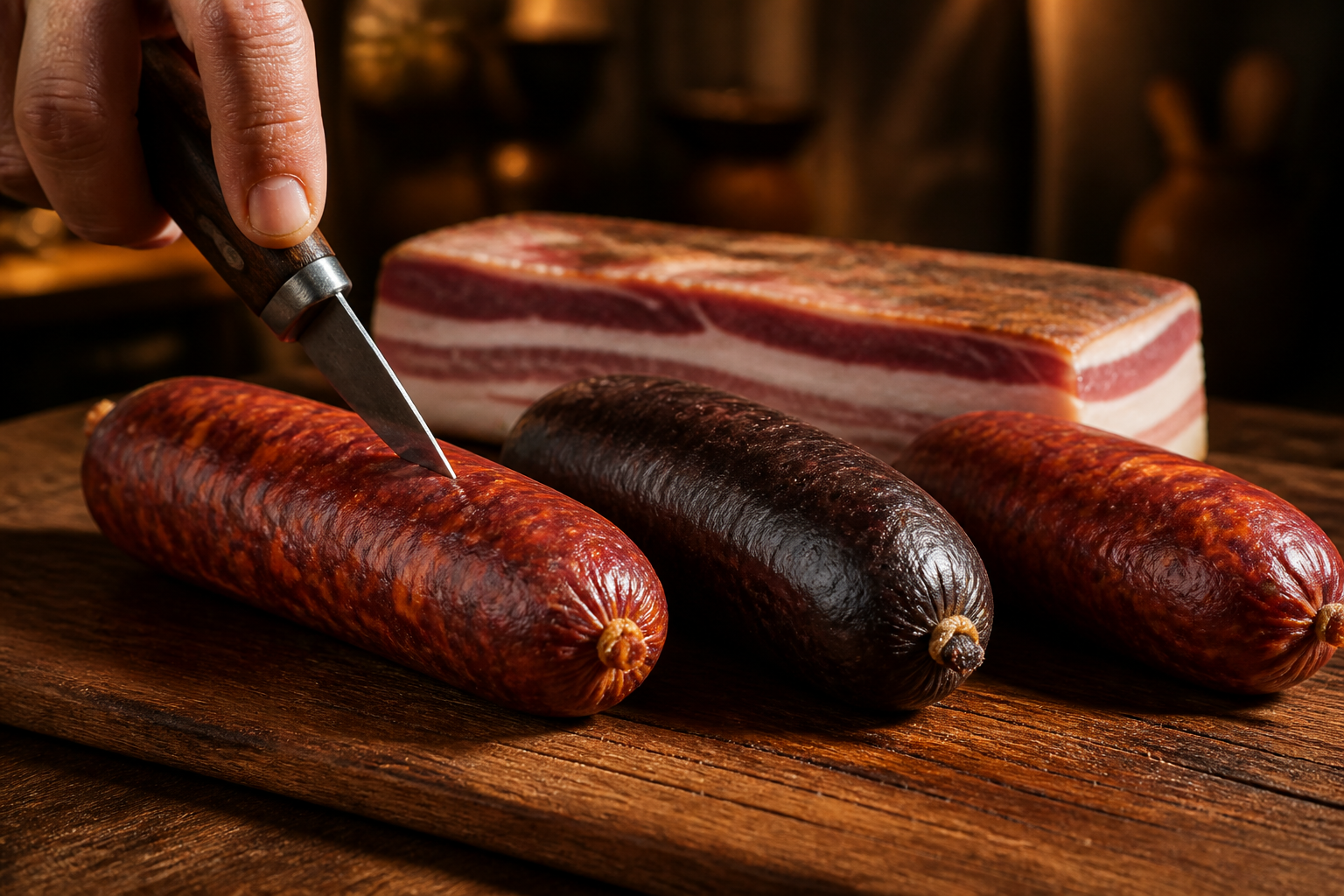
Prick the compango
Lightly prick the chorizos and morcillas with the tip of a knife, once or twice, so that they release flavor without breaking during cooking.
- 04
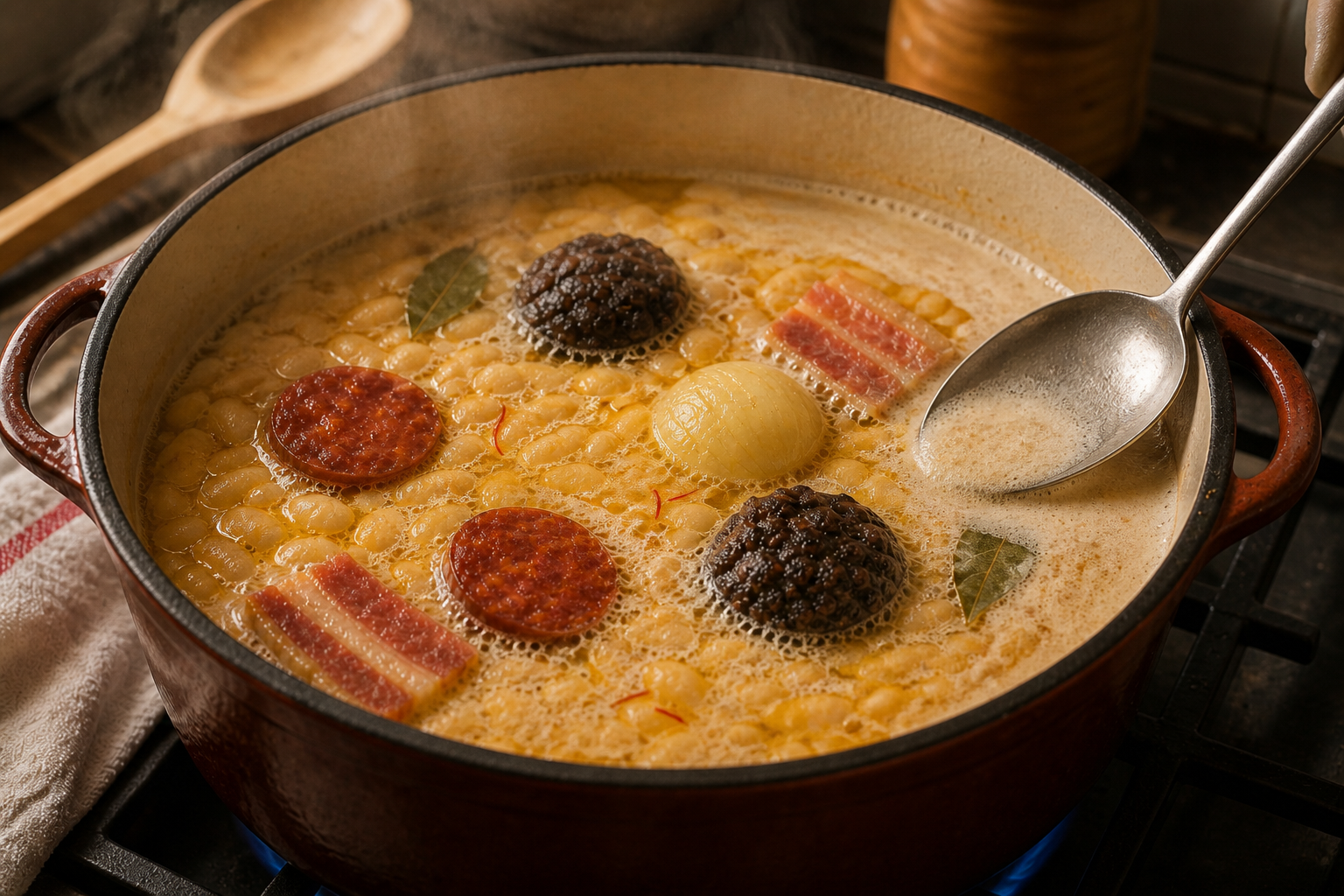
Remove the foam
Heat over medium heat until a slow boil is reached. When foam appears on the surface, remove it with a spoon.
- 05
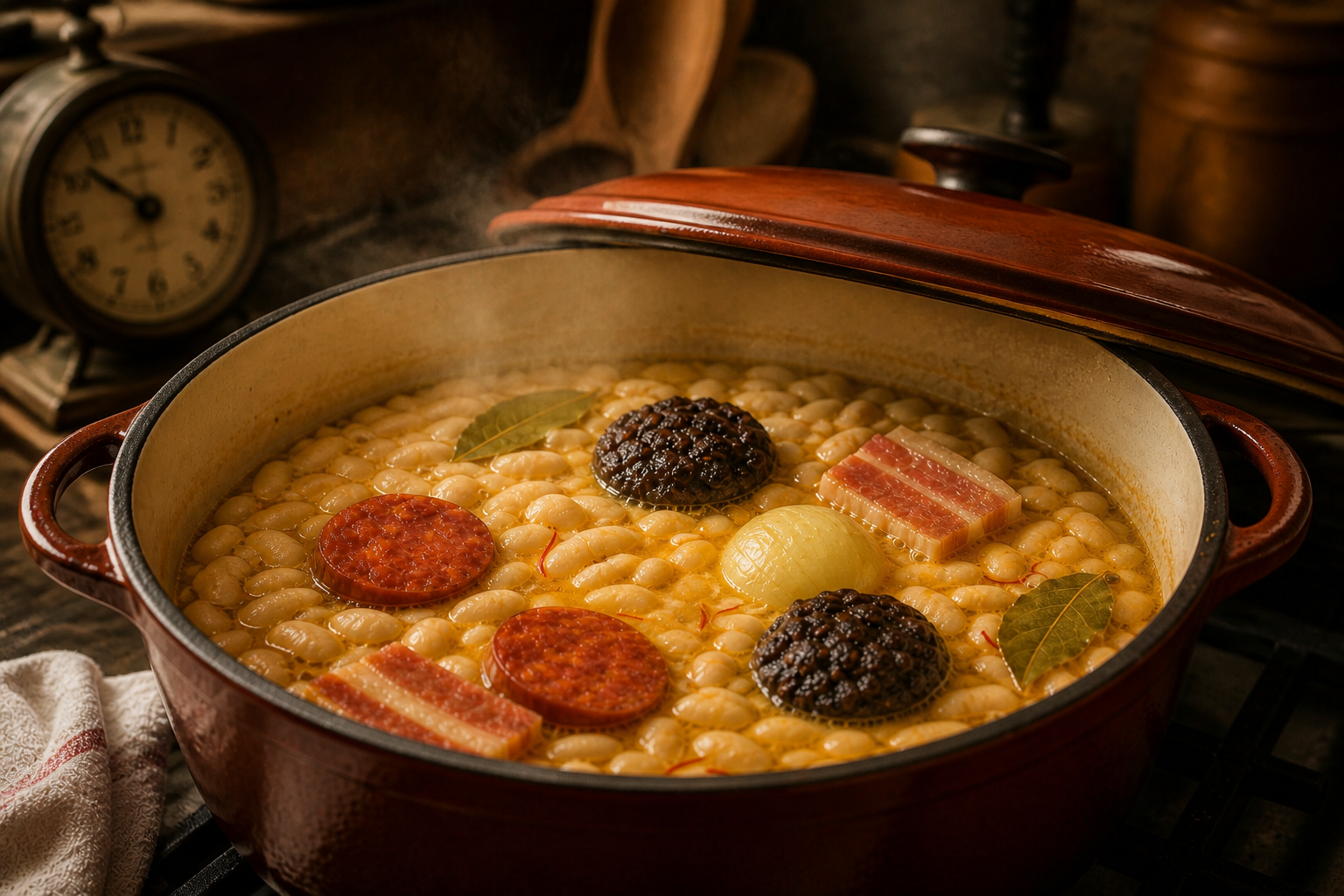
Cook gently
Reduce the heat to a minimum and cook for about two and a half to three hours, maintaining a very gentle simmer to keep the fabes whole.
- 06
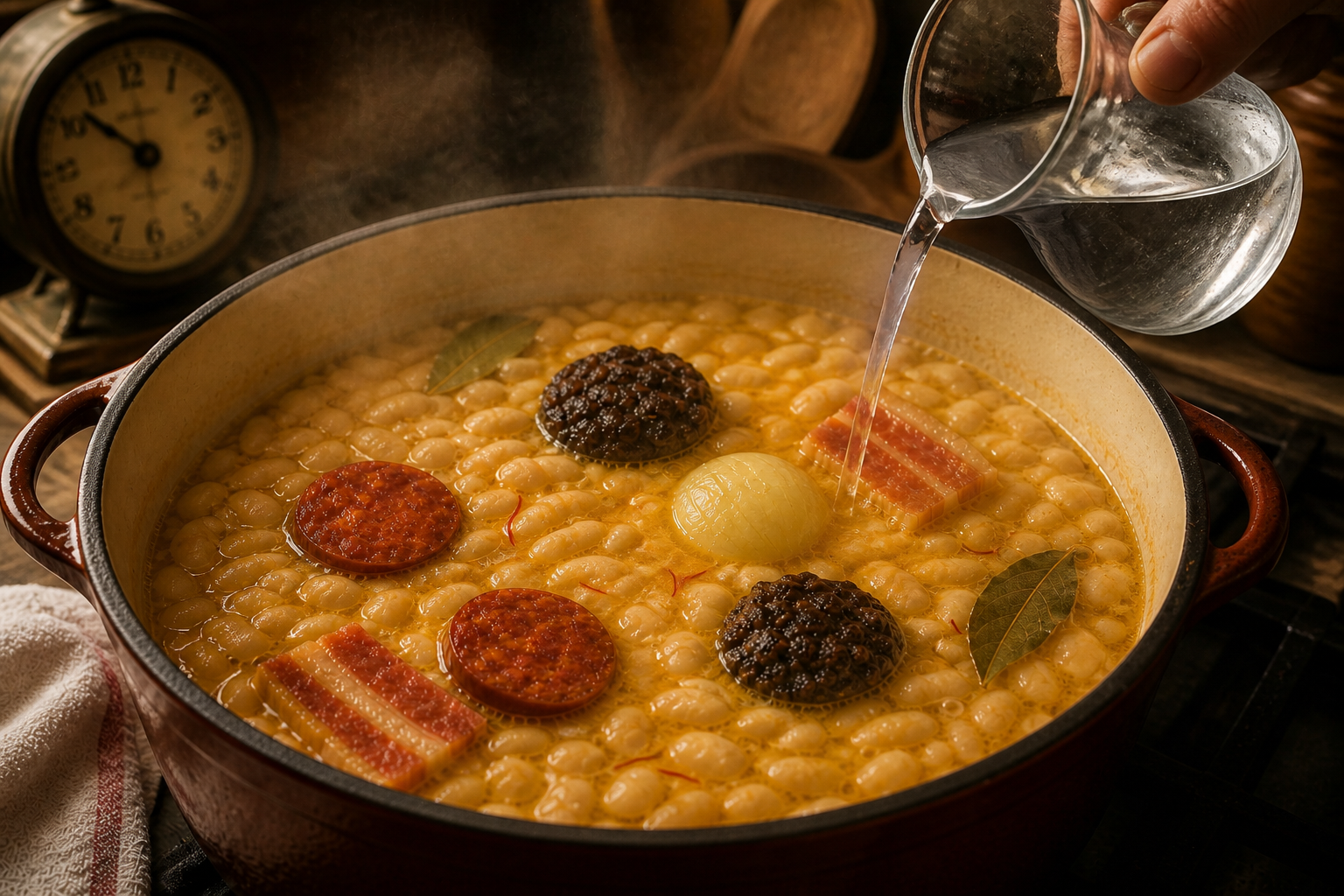
Add cold water
Keep the ingredients covered with liquid. If the water is consumed before the fabes are tender, add cold water slowly to slow down the simmer and favor a smooth texture.
- 07
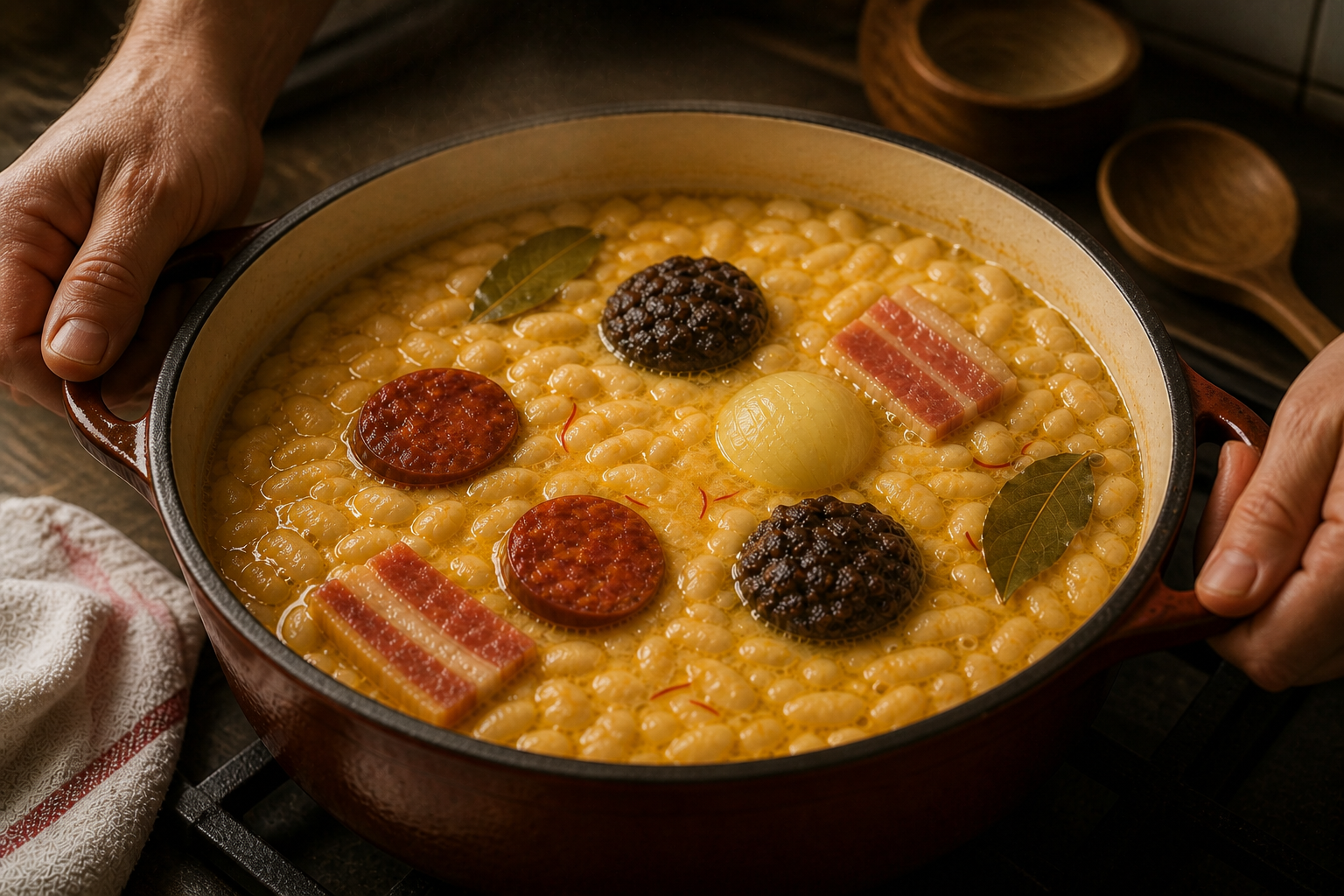
Stir the pot
During cooking, move the pot with circular and delicate movements. Do not stir with a spoon to avoid breaking the fabes. Remove some of the fat from the surface only if you want a lighter result.
- 08
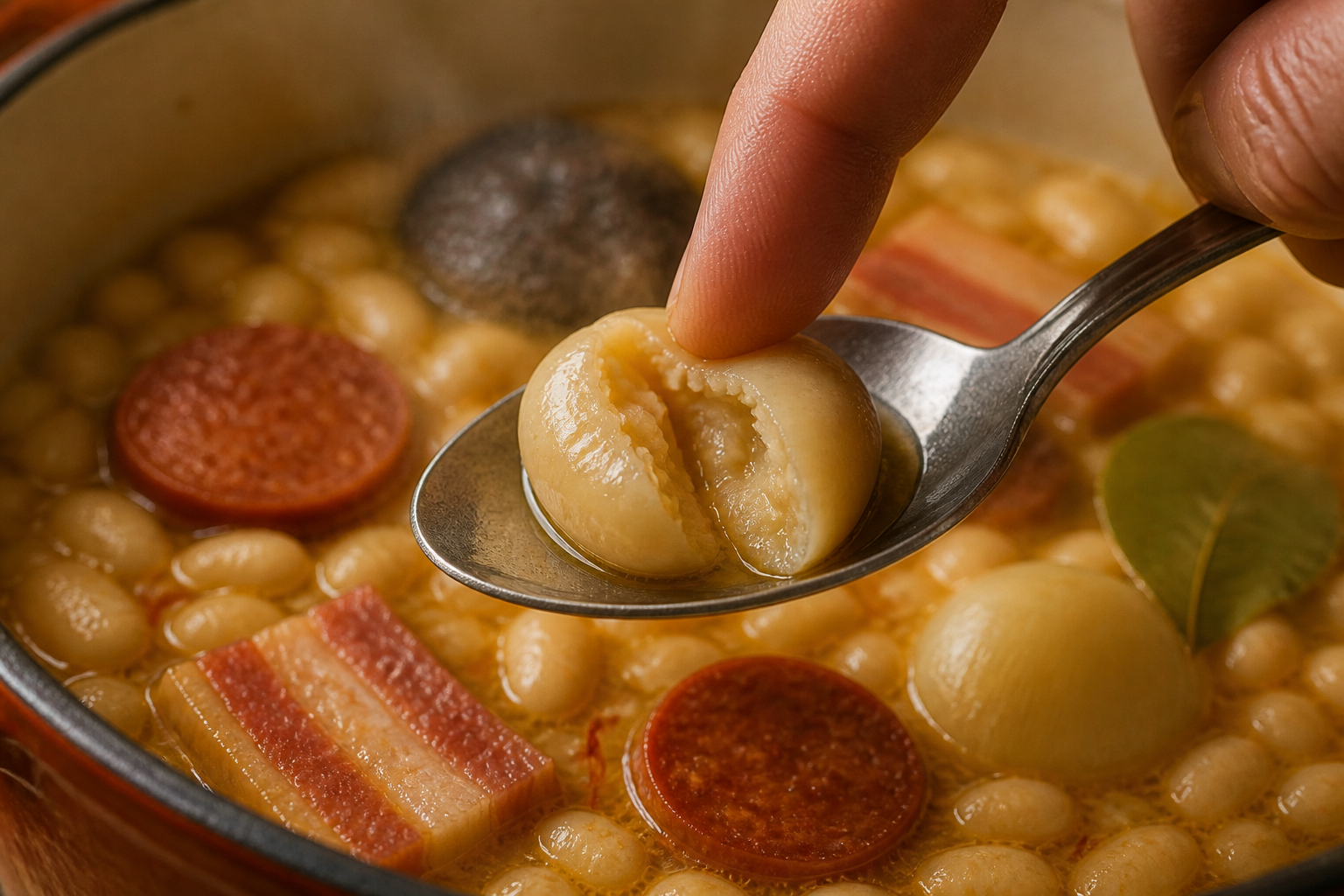
Check the point
After about two hours, try a fabe. It should be very tender and creamy inside, without a hard skin. If it offers resistance, continue cooking and check every fifteen minutes. Add salt when they are almost tender.
- 09
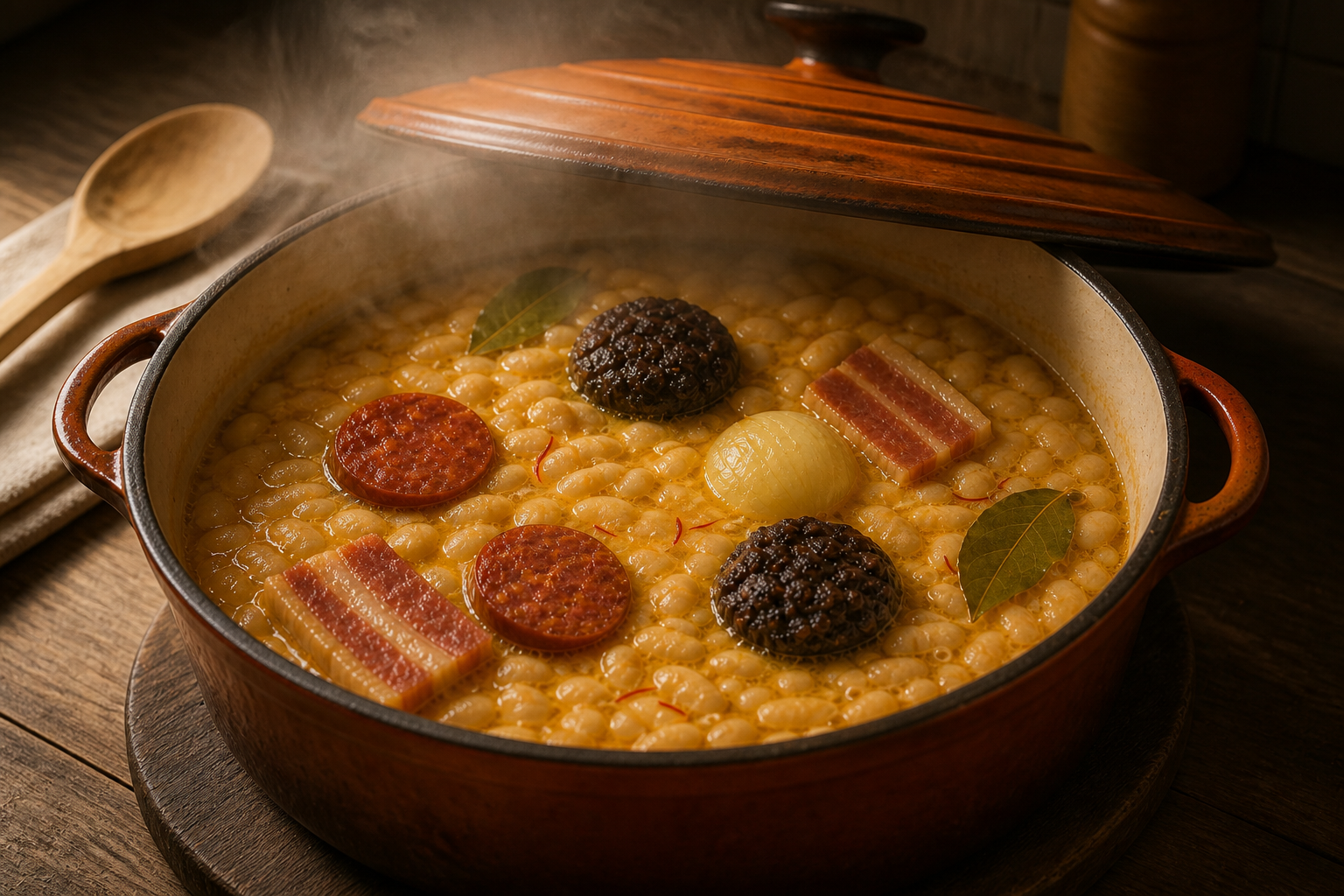
Rest and cut
Turn off the heat and let the pot rest for about twenty minutes. Remove the onion and bay leaves, take out the compango, and cut the panceta into pieces, the chorizos into thick slices, and the morcillas whole or into slices.
- 10
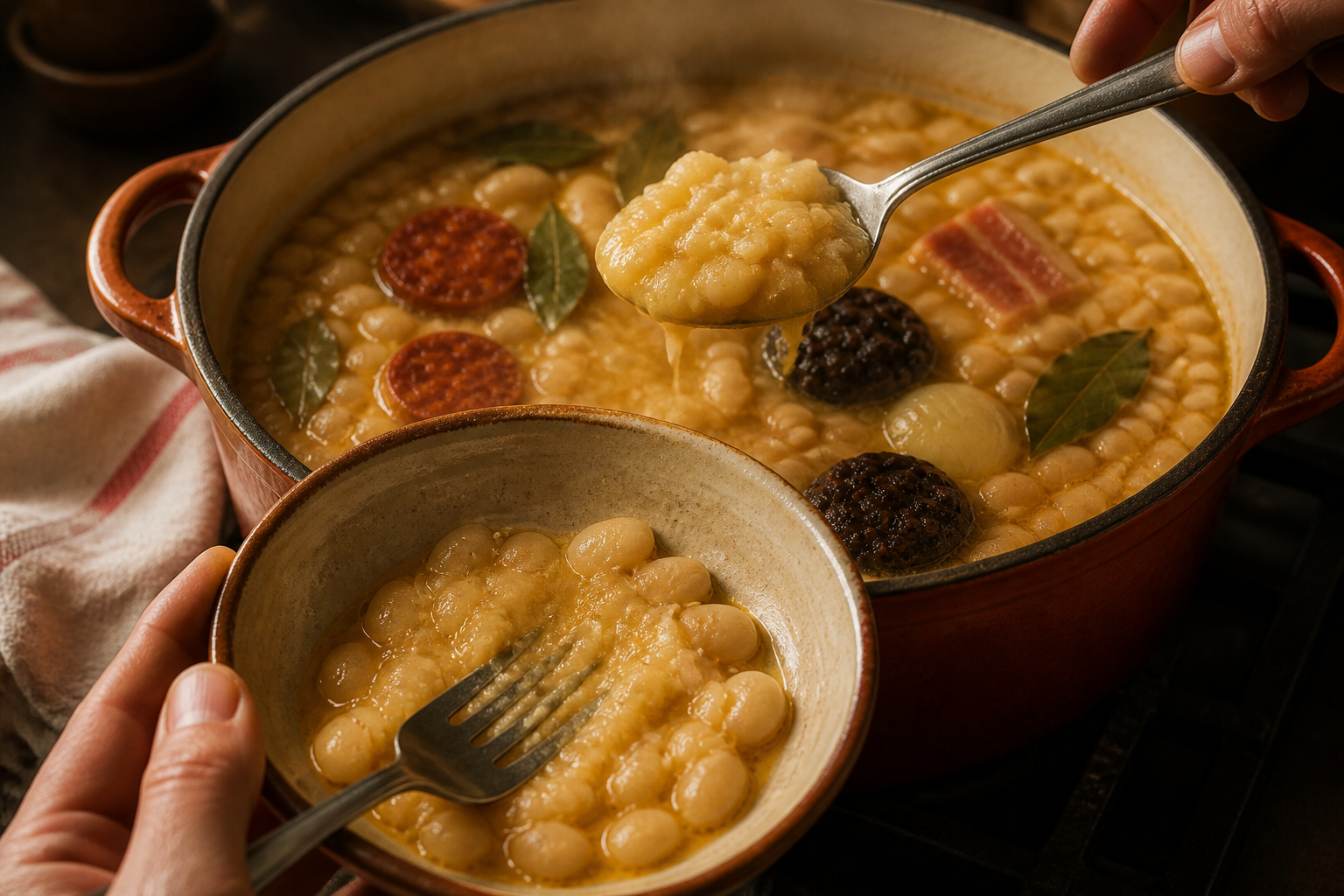
Thicken the broth
Optionally, mash a few fabes with a fork with a little liquid and return them to the pot to thicken the broth. Do not mash the onion.
- 11
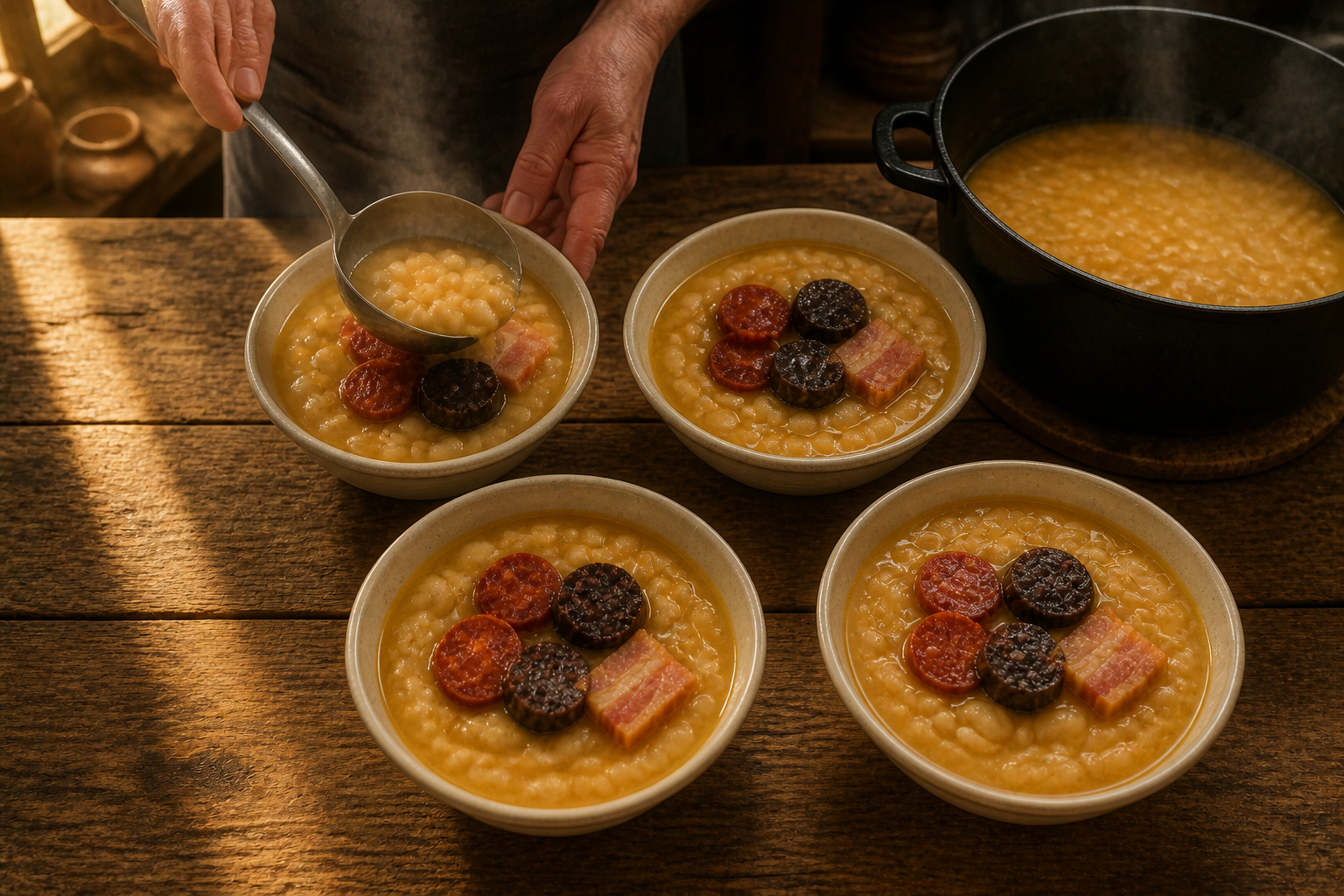
Serve the fabada
Serve very hot in deep plates. First, distribute the fabes with their broth and place the chorizo, morcilla, and panceta on top.
- Soak the fabes overnight and use a large container, as they will increase in size.
- Cook over very low heat and avoid stirring with a spoon so that the fabes do not break.
- If they need more liquid, add cold water slowly.
- Add salt at the end, as the panceta, chorizo, and morcilla already provide flavor and salt.
- The fabada can rest and is usually more flavorful the next day.
- If you prepare it in advance, cool it quickly, store it in the refrigerator, and reheat it over low heat without boiling strongly.