
Traditional French Dishes
French Macaron Recipe
French macarons made with almond flour, smooth tops, a delicate foot, and a creamy vanilla filling. A precise recipe to achieve at home the contrast between a lightly crunchy exterior and a tender interior.
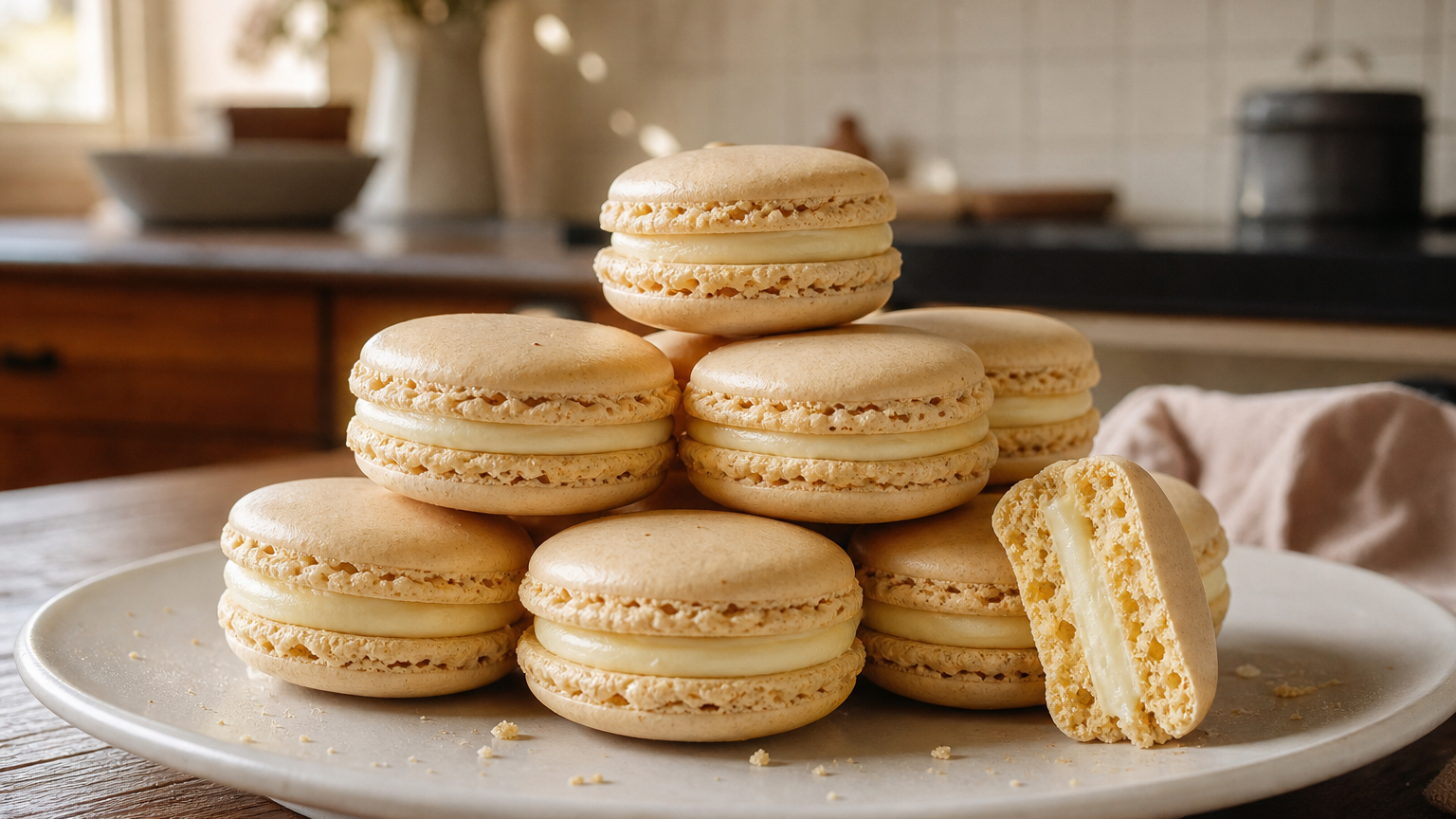
Prepare these classic French macarons by following each stage: from sifting and meringue to resting, baking, and filling with buttercream.
01
Ingredients
Have everything ready before you begin.
- ✓125 g of almond flour
- ✓125 g of powdered sugar for the tops
- ✓100 g of egg whites at room temperature
- ✓100 g of granulated sugar
- ✓1/4 teaspoon of cream of tartar
- ✓1/2 teaspoon of vanilla extract for the tops
- ✓1 pinch of salt for the tops
- ✓100 g of unsalted butter, softened
- ✓120 g of powdered sugar for the filling
- ✓30 ml of liquid cream or milk cream
- ✓1/2 teaspoon of vanilla extract for the filling
- ✓1 pinch of salt for the filling
02
Step-by-step method
- 01
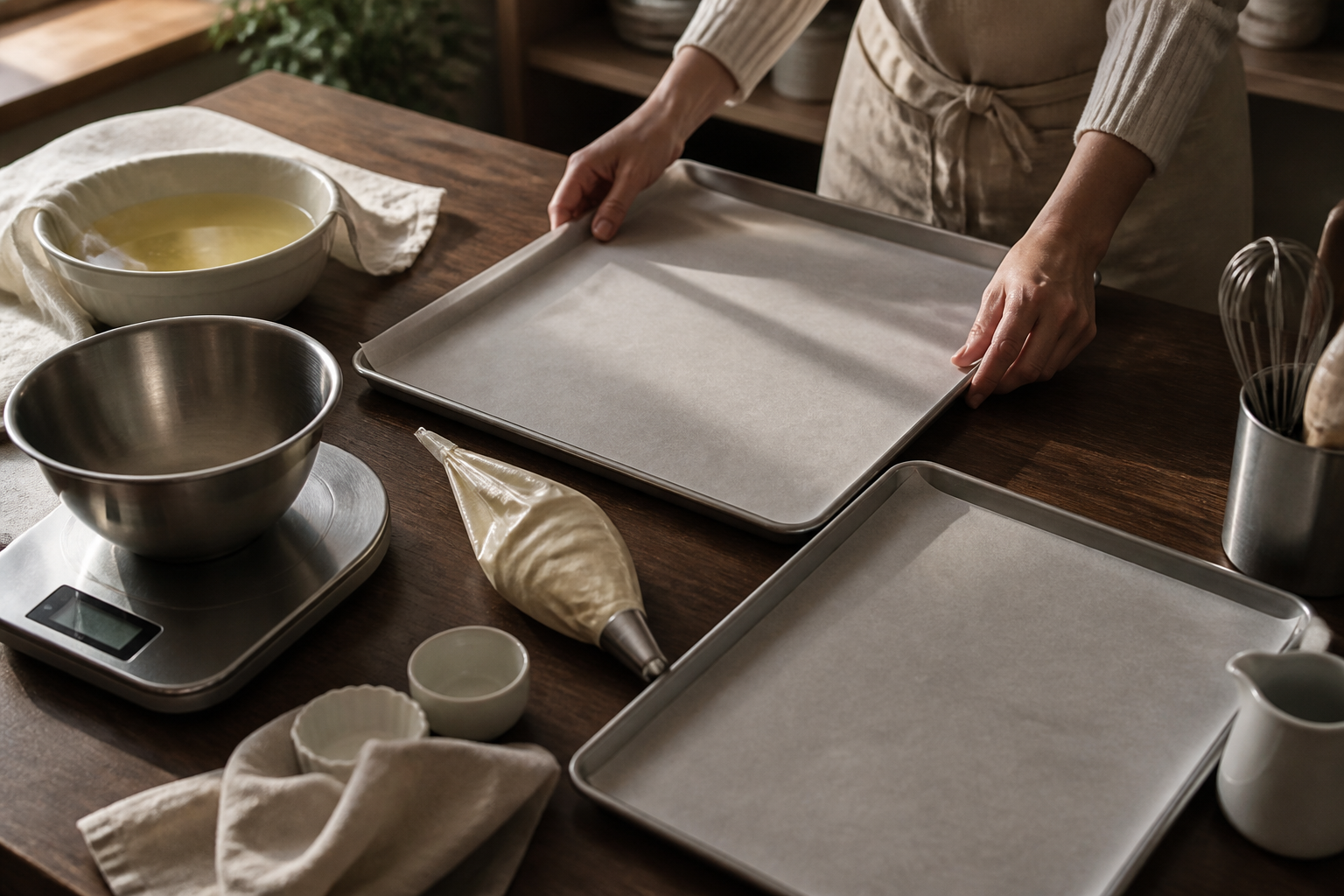
Prepare ingredients and equipment
Leave the egg whites at room temperature. Weigh all the ingredients and prepare a piping bag with a round tip, two trays, and flat baking paper.
- 02
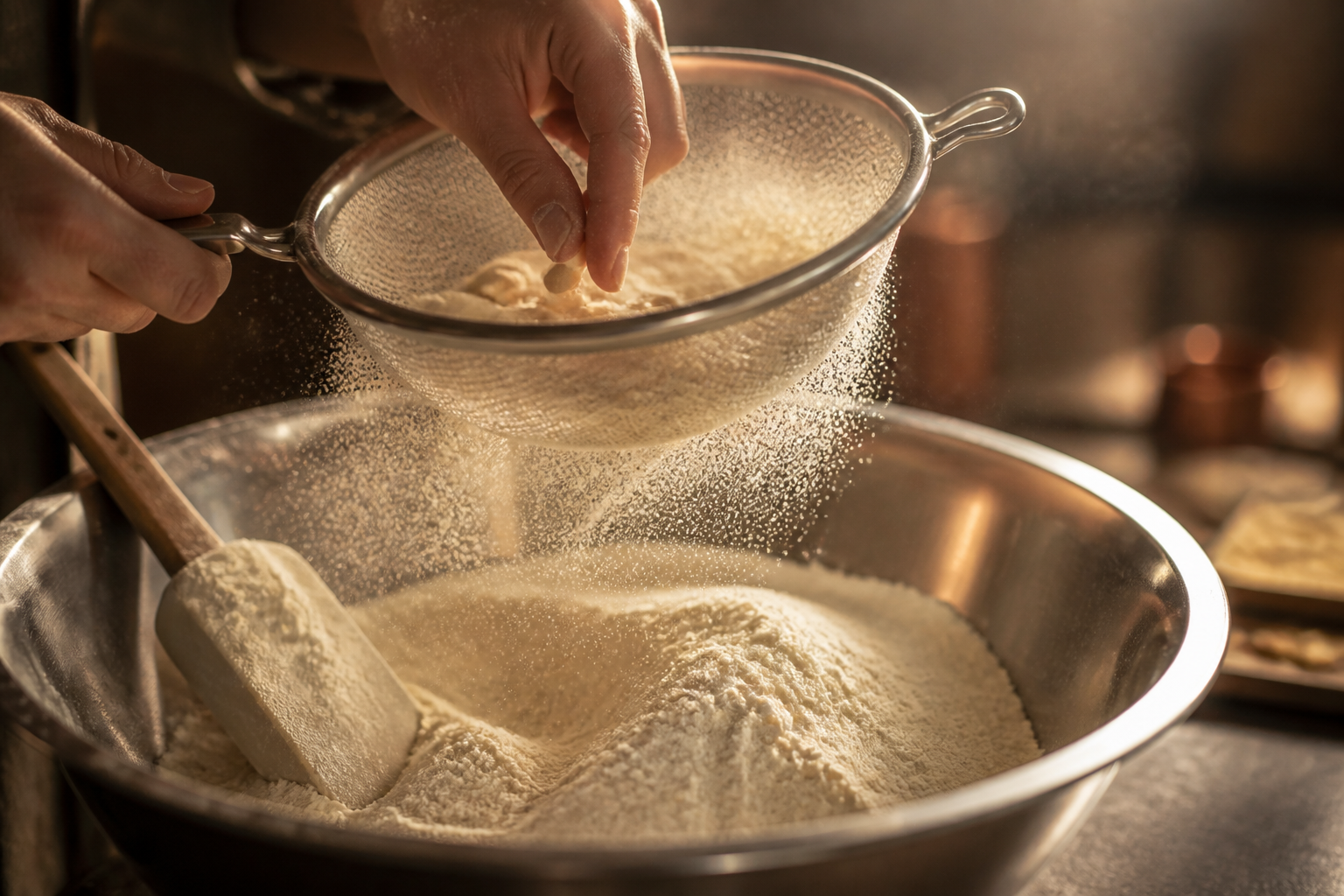
Sift dry ingredients
Sift the almond flour and powdered sugar into a large container. Mix both ingredients and set aside; discard any large pieces left in the sieve.
- 03
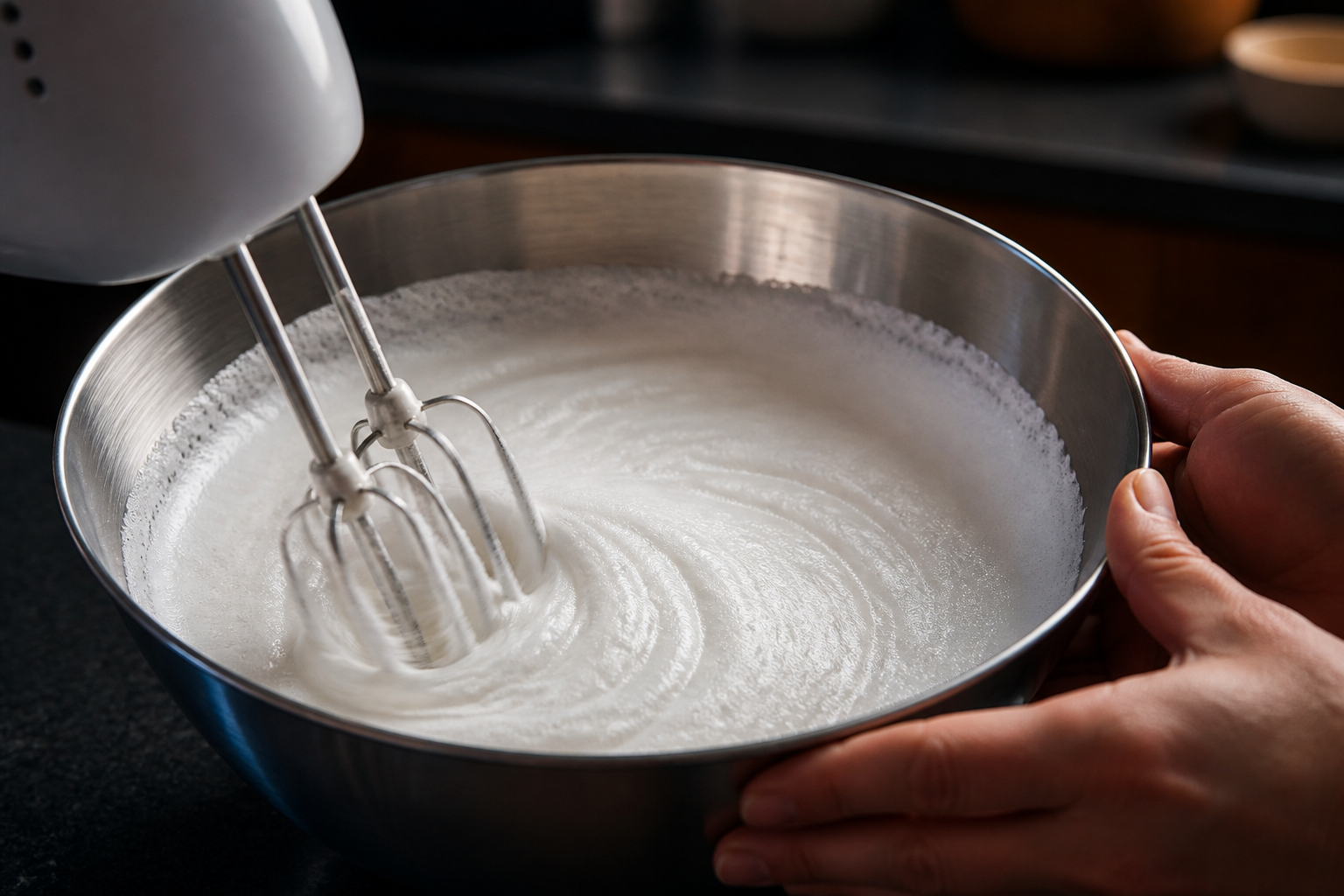
Form the foam
Place the egg whites, cream of tartar, and salt in a clean, dry container. Beat at medium speed until a white foam forms.
- 04
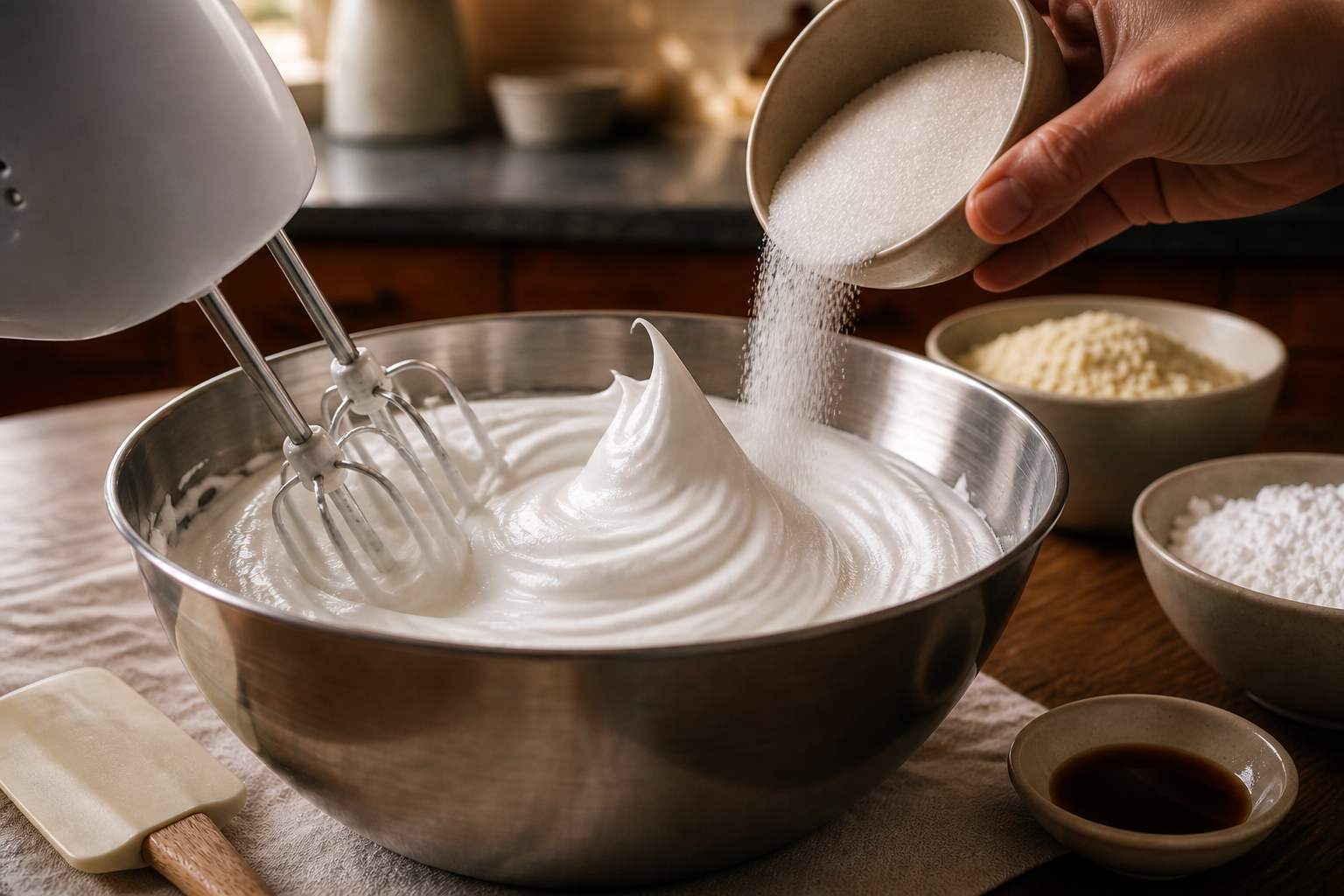
Make the meringue
Gradually add the granulated sugar while continuing to beat. Continue until a firm and shiny meringue forms, capable of holding its peaks.
- 05
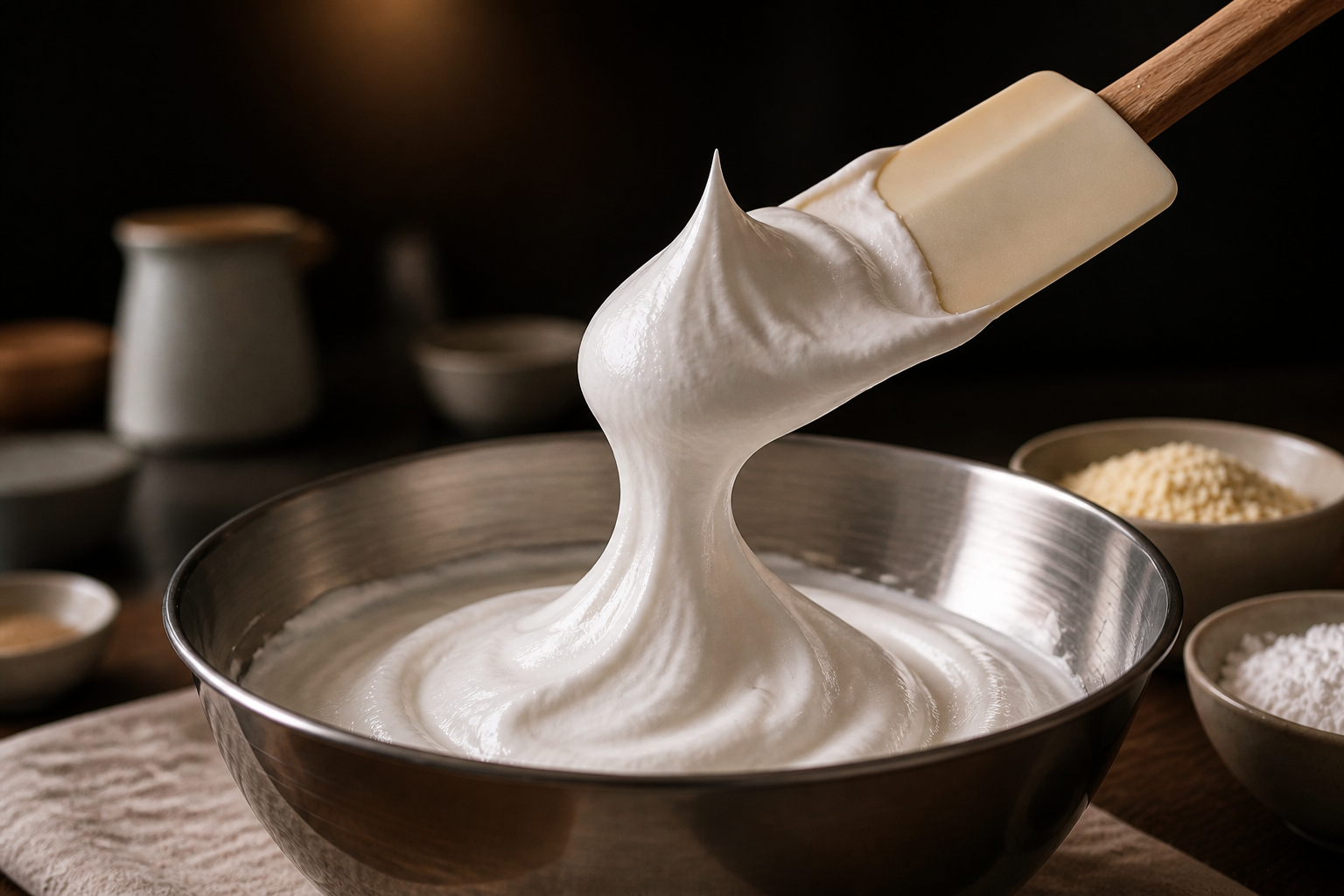
Flavor the meringue
Add the vanilla and beat for just a few seconds more. Avoid overbeating so the meringue doesn't become dry or brittle.
- 06
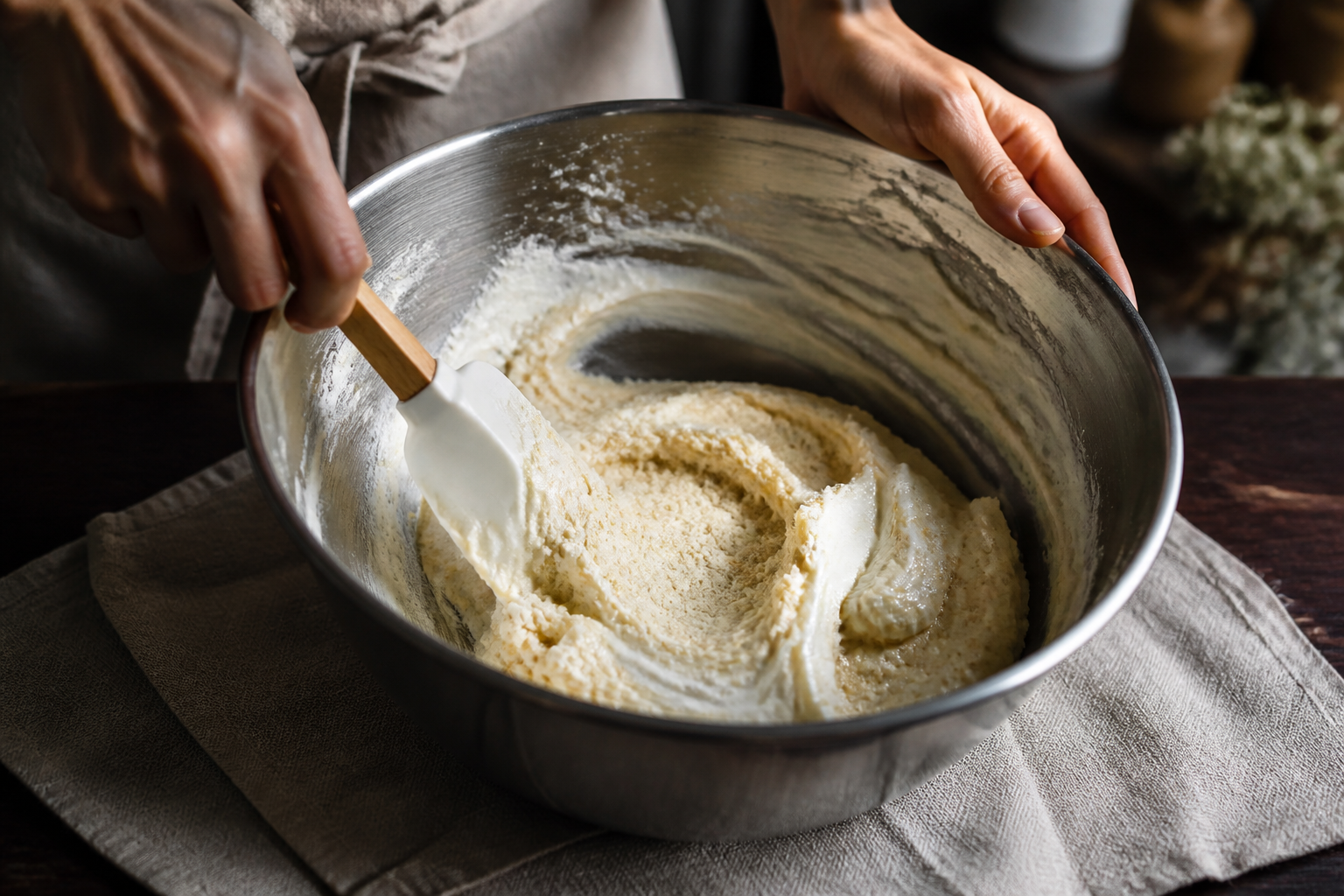
Start the macaronage
Incorporate the dry ingredients in two or three additions. Mix with a spatula and enveloping movements, scraping the bottom and sides of the container.
- 07
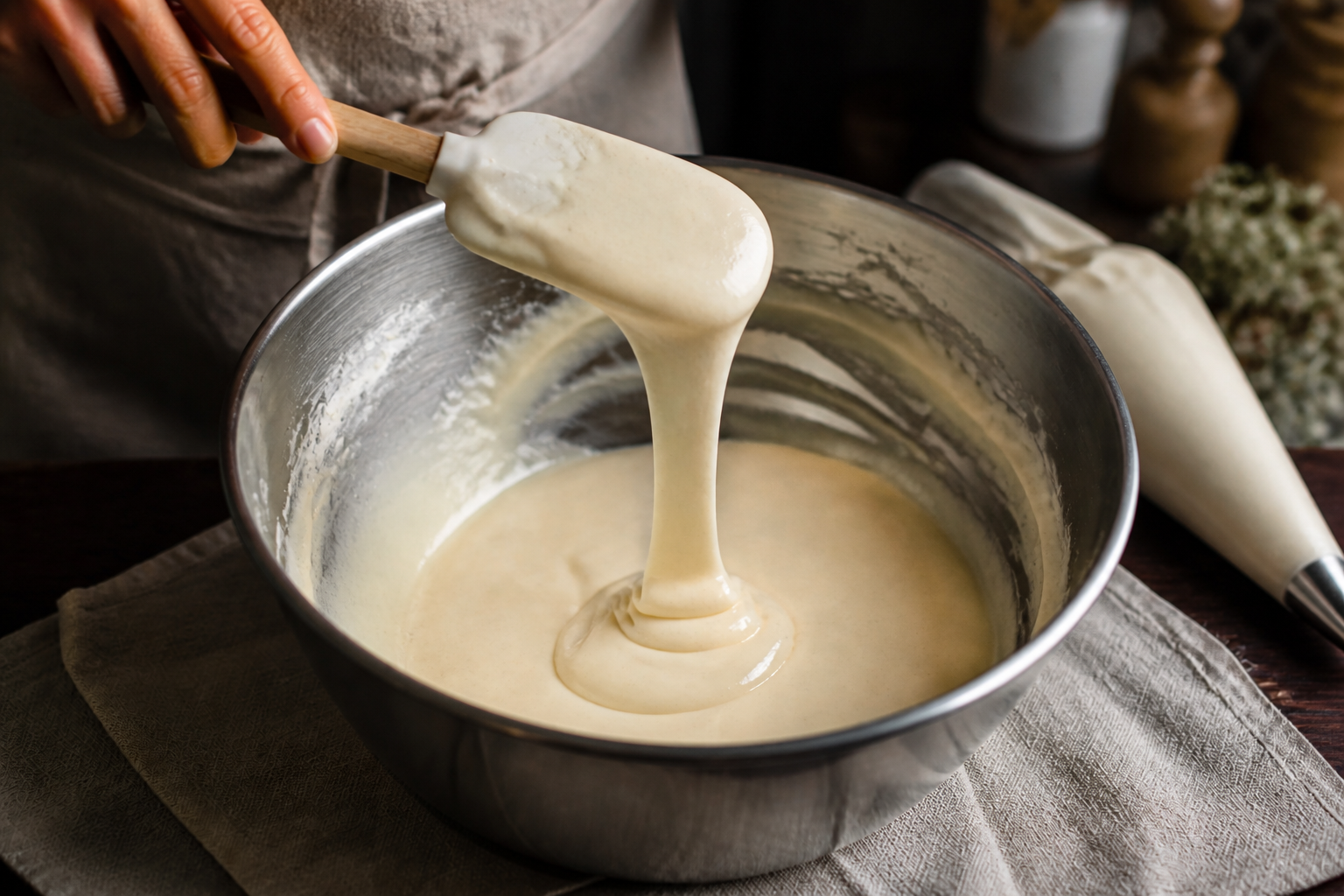
Check the texture
Continue mixing with wider movements and gently press part of the batter against the walls of the bowl. It should fall in a continuous ribbon that integrates in about ten to fifteen seconds.
- 08
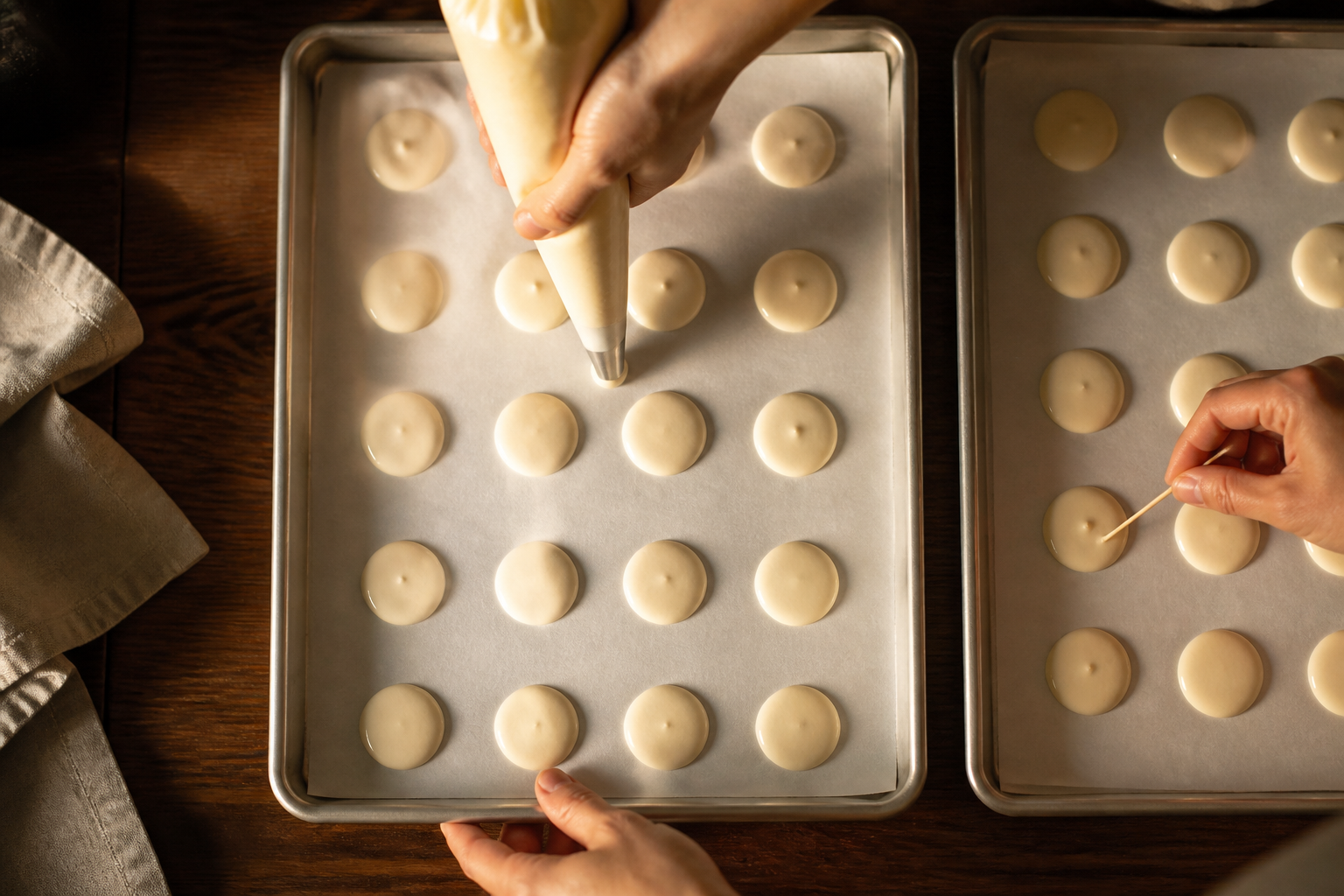
Form the tops
Transfer the batter to the piping bag and form circles of three or four centimeters on the trays, leaving space between them. Keep the piping bag vertical and finish each circle with a small twist.
- 09
Remove air bubbles
Gently tap the trays against the counter. Pop visible bubbles with a toothpick.
- 10
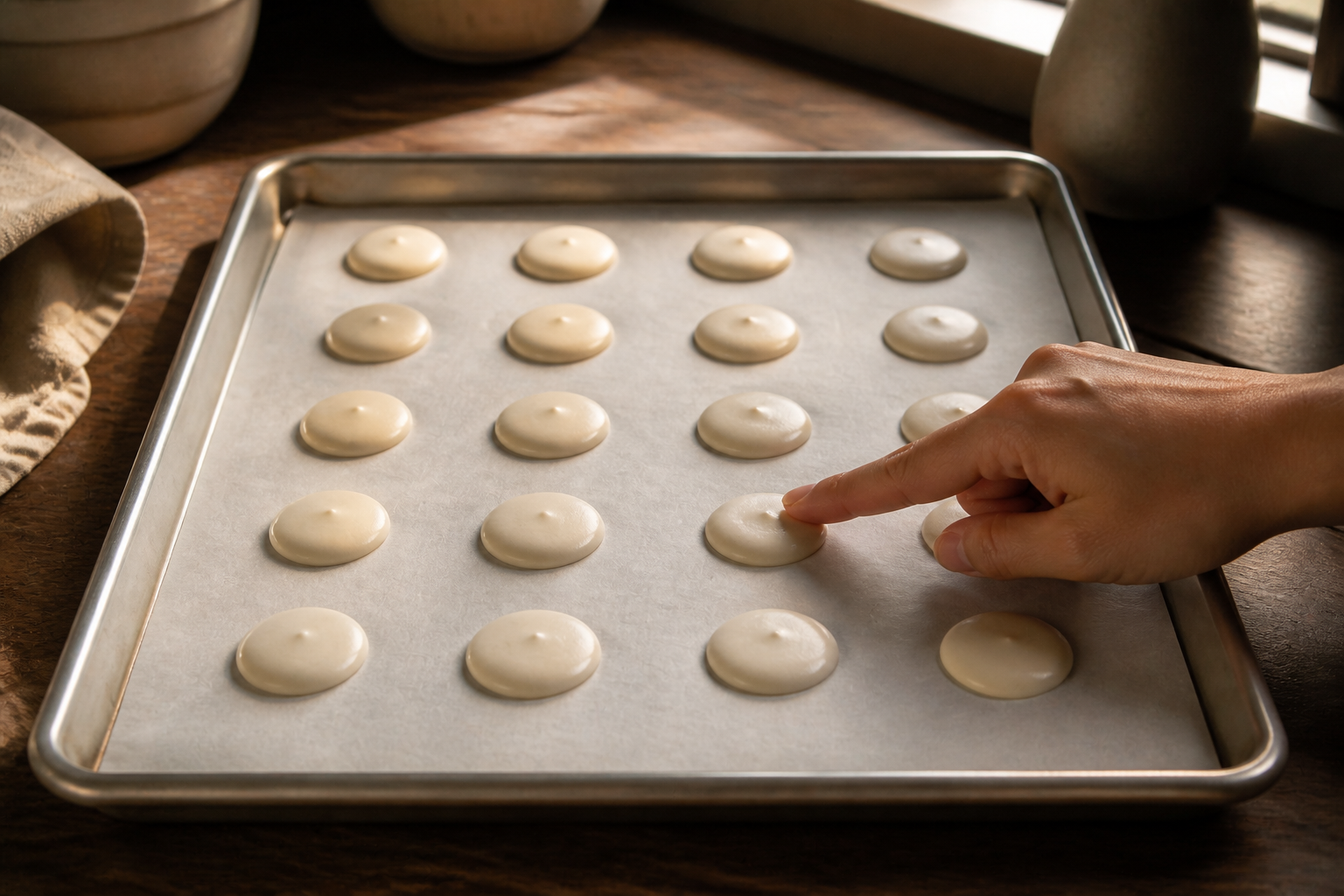
Rest the tops
Let the circles rest for thirty to sixty minutes, depending on the ambient humidity, until the surface is dry to the touch and doesn't stick to your finger.
- 11
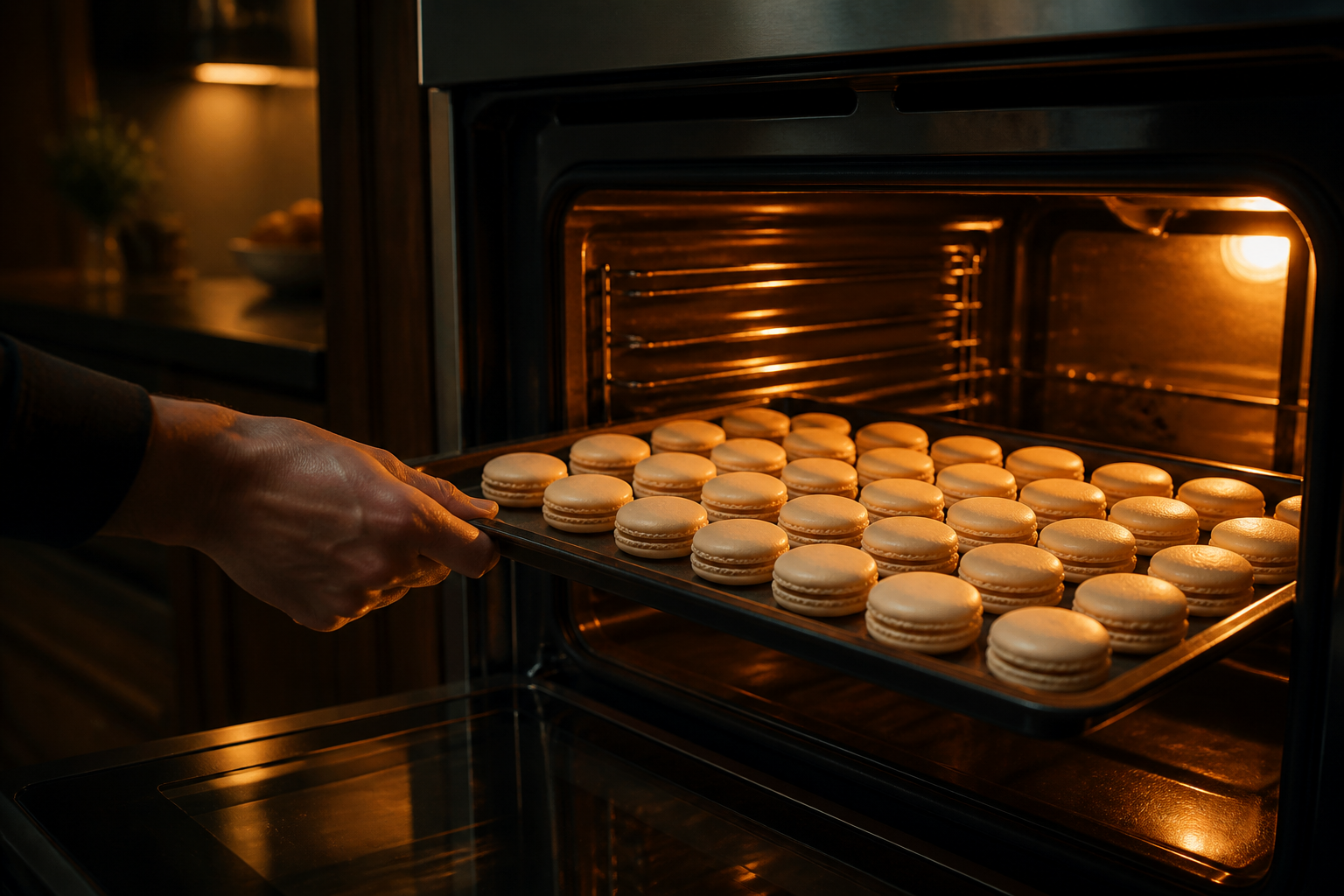
Bake the macarons
Preheat the oven to 150 °C, with top and bottom heat and without a fan if possible. Bake one tray at a time for about fourteen to sixteen minutes. Rotate the tray halfway through cooking only if the oven heats unevenly.
- 12
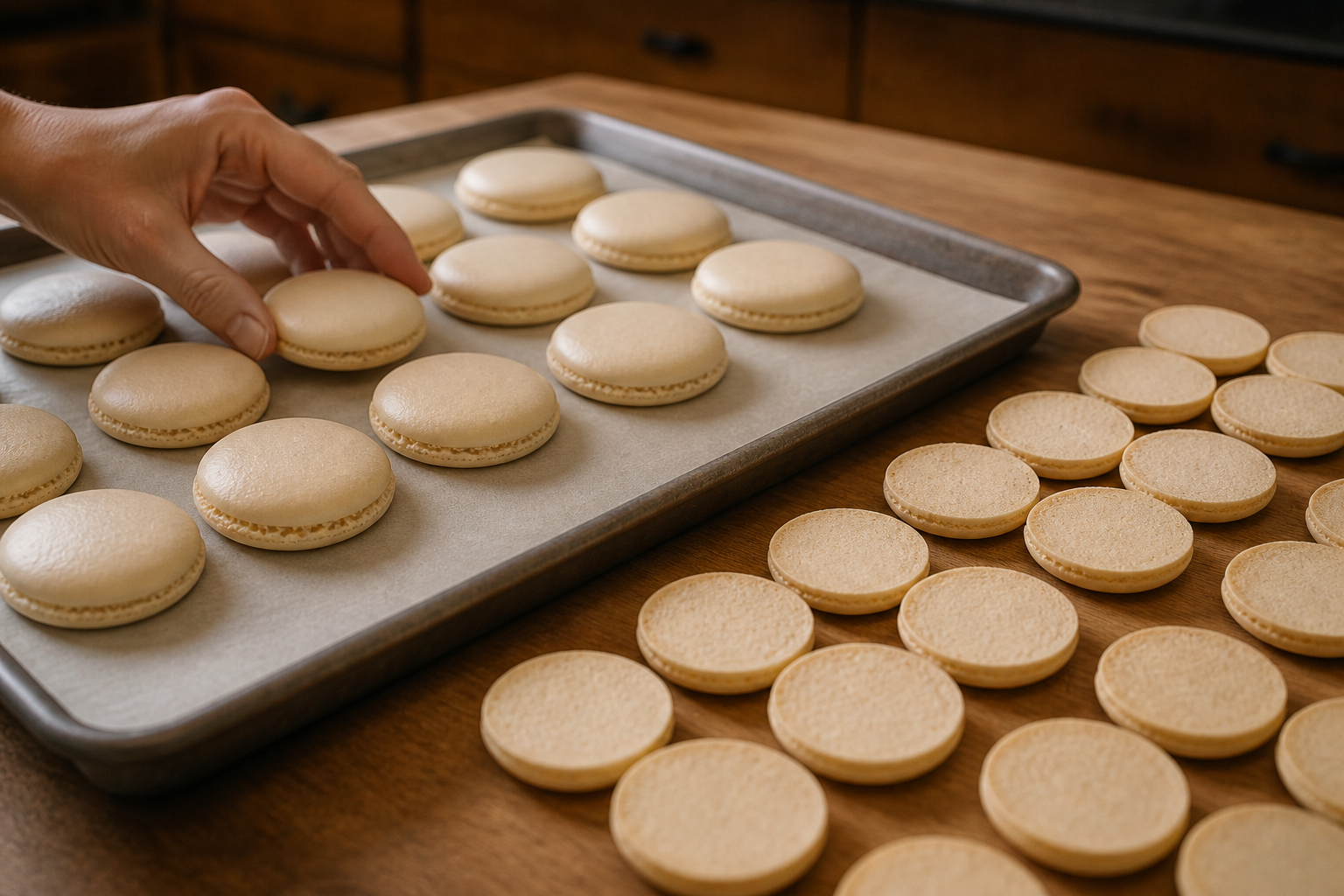
Cool and pair tops
Remove the tray and let the tops cool completely before peeling them off. If they stick to the paper, they may need one or two minutes more of cooking. Pair the tops by size and place them face up.
- 13
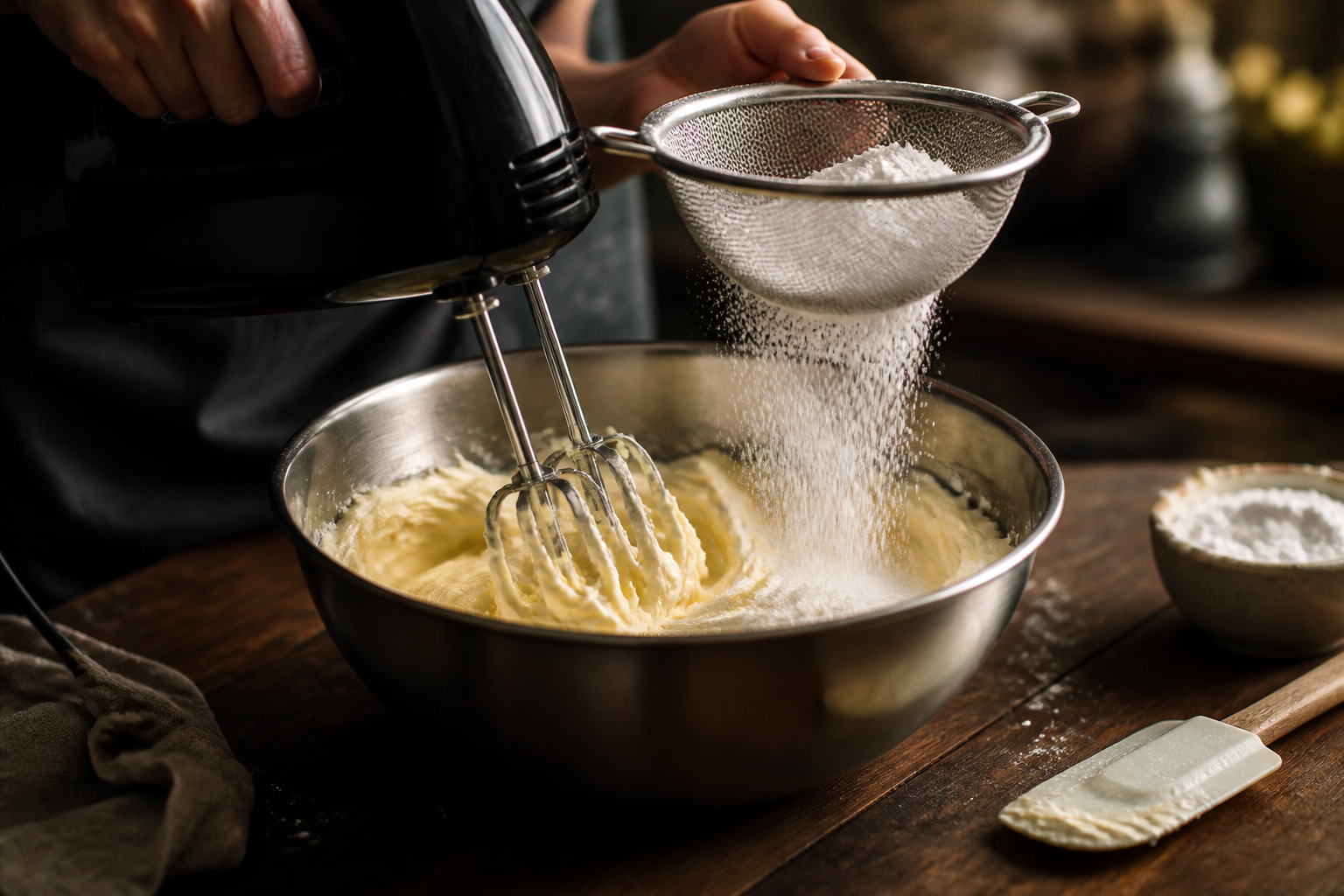
Beat the butter
Beat the softened butter for a few minutes, until it looks lighter and fluffier. Gradually incorporate the sifted powdered sugar, starting at low speed.
- 14
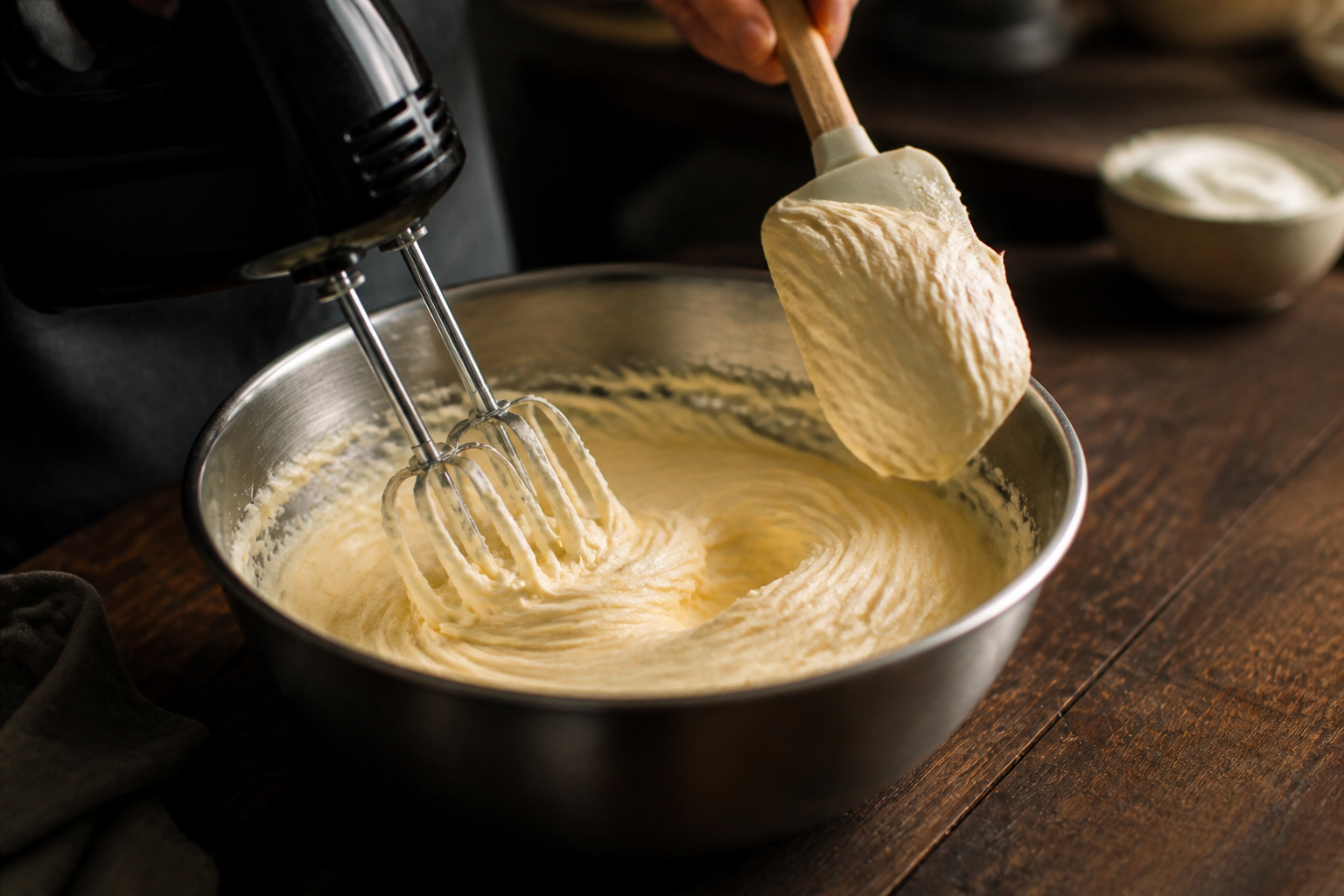
Finish the cream
Add the cream, vanilla, and salt. Beat until a smooth, airy, and easy-to-spread cream forms. If it becomes too soft, refrigerate it for a few minutes.
- 15
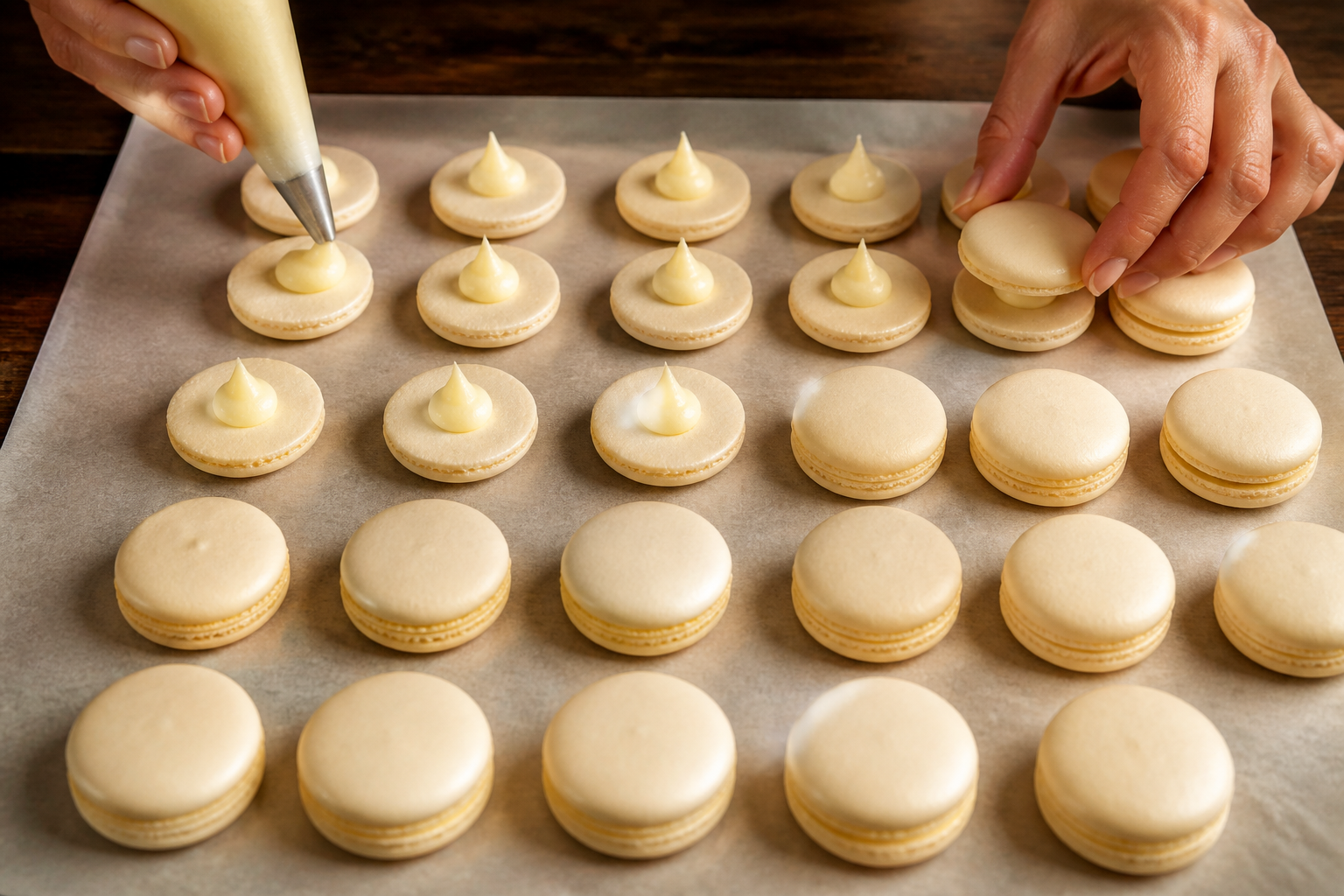
Fill and close
Transfer the cream to another piping bag and place a small amount in the center of half of the tops. Cover with the remaining tops and press gently to distribute the filling without overflowing.
- 16
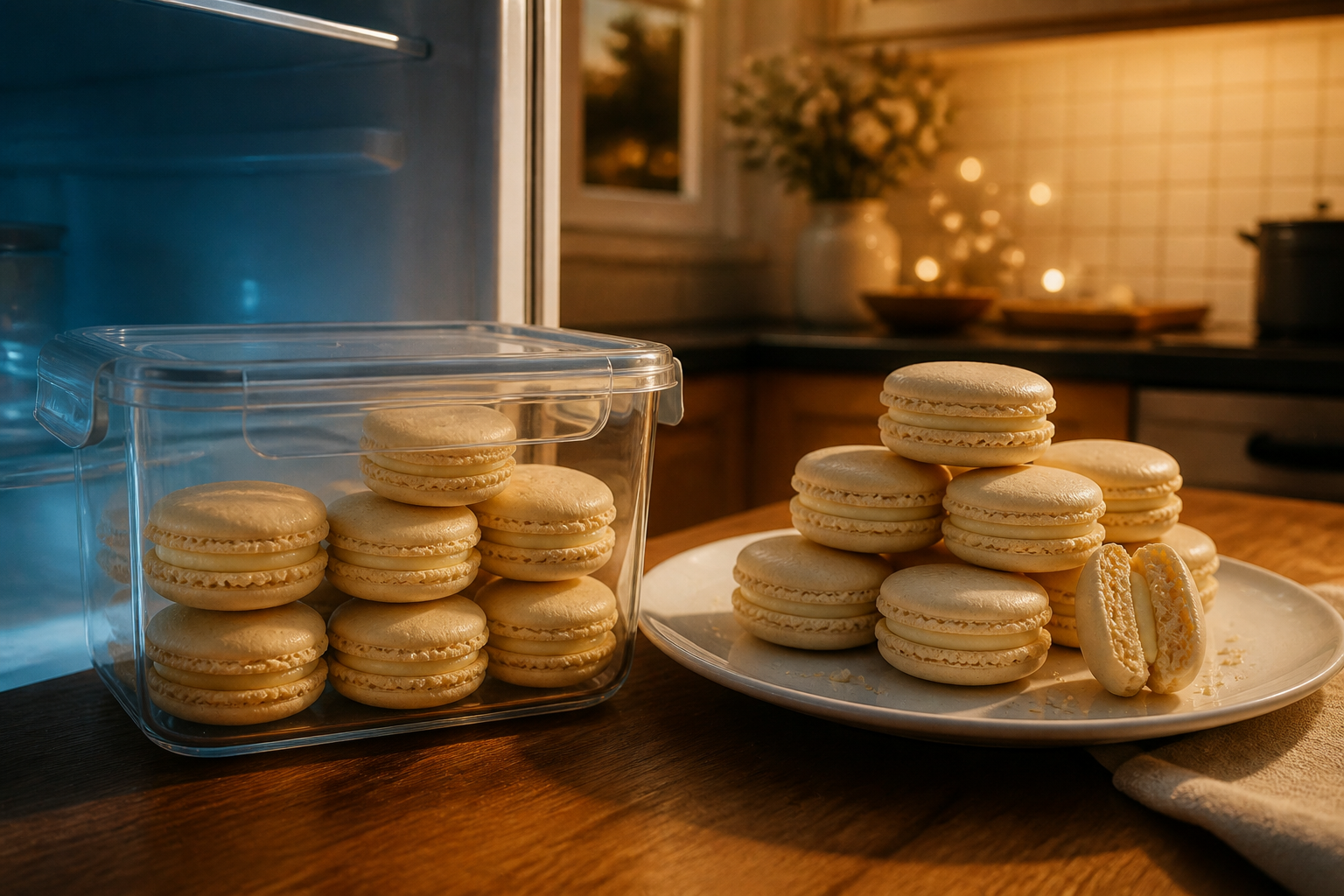
Rest before serving
Store the filled macarons in a closed container in the refrigerator for at least one night. Let them sit at room temperature for about twenty minutes before serving.
- Weigh all the ingredients precisely to control the texture.
- Sift the almond flour and powdered sugar to get smoother tops.
- Don't overbeat the meringue or the batter during the macaronage.
- Let the tops rest until they're dry to the touch before baking.
- Bake one tray at a time and let cool completely before peeling off the tops.
- If they crack, check that the mixture isn't too thick and that the resting time was sufficient.
- If they don't form feet, it may be due to insufficient resting time, low oven temperature, or unstable meringue.
- To avoid interior holes, control the macaronage and tap the trays to release air.